A hundred death metal albums not from the USA
The final period in this series is also the ultimate motivation for this little exercise. There are few who would deny that death metal peaked between 1991-92. The established narrative has it that the genre then wobbled throughout the rest of the 90s, with some bands undertaking ill conceived commercial ventures, and many more simply calling it a day. In Decibel’s book on Scott Burns, the chapters from 1996 onwards do have a very morning-after-the-night-before feel. Deicide returned to Morrisound to work with Burns one more time on ‘Serpents of the Light’ in 1997, and Suffocation’s ‘Despite the Sun’ EP recorded that some year would be the last death metal release Burns worked on. Burns, along with the bands he rose up with, knew their best material was probably behind them by that point. Death metal was moving into a different, more nebulous phase, highlighted by rise of Nile, one of the last silverbacks from the genre’s golden era to grow into a relatively successful career.
But concurrent to this a very different picture was emerging. One much harder to track simply because the instigators were much more diffuse. Death metal had spread across the globe. Newer artists, operating outside the Roadrunner and Earache pressure cookers, acted with a creative freedom arguably not seen in metal before, to an almost reckless degree. Scanning these albums, and many more besides, one begins to realise that the later blossoming of the genre from the early 2010s onwards was unknowingly retreading territory already explored in the late 90s. A history that has been largely lost to obscurity, not because these albums are unknown (although some are far less known than they should be), but because they are not conceptualised as belonging to the same historical moment. The same desire expressed by multiple artists from different corners of the globe. For instance, in the first three parts of this series Sweden and Finland dominated the shortlists. Completely by accident, for this final entry there are no Swedish entries, and Finland only has one.
A period that many now understand as death metal’s ultimate nadir is probably due a reappraisal. Perhaps in terms of numbers alone this was a dry spell. But lifting the rock reveals a wealth of unusual creatures lurking in the dark. A time when death metal, beyond its exhausted heartlands and away from excessive media scrutiny, operated with a creative freedom and adventure rarely seen in metal. A period that produced some of metal’s most avant-garde moments, ones that easily compete with similarly experimental moments in equivalent rock genres. Looking at the works in and of themselves, free of the received wisdom, allows us to salvage this era, and indeed the history of death metal as a whole, from the “enormous condescension of posterity”.
And with that I’m off to Brutal Assault. The normal churn of reviews punctuated by churlish rants will continue in earnest following my return. Thanks for reading.
Dominus: View to the Dim (Denmark, 1995)
Category: Useful Footnote
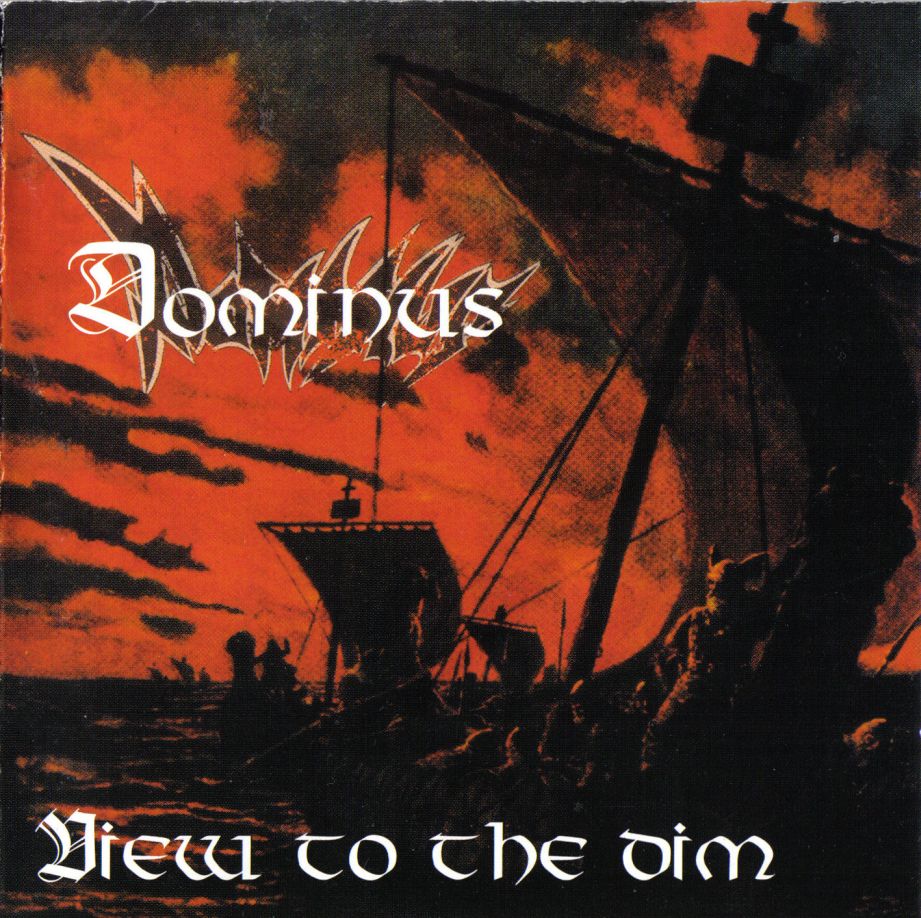
It took me longer than I’m willing to admit to clock that these guys went on to form Volbeat, despite it also being the title of their third album. Anyway, this debut shows that there was still plenty of room for route-one death metal in the mid-90s, and at this point Denmark was beginning to flex its muscles, this album being one of their strongest showings. Most obviously derived from the muscular Finnish style, with plenty of nods to Bolt Thrower along the way. This is epical death metal in both tone and theme. The sound feels like it is too big for the speakers, taking up any available space and still demanding more. Riffs oscillate between simple, bludgeoning atonality and soaring, dark melodies, thrilling in their efficacious simplicity. Unlike many historical/epic/Viking themed bands, Dominus place the listener within the setting, making them feel the violence and brutality of the source material as opposed to merely telling us a story about these distant times.
Maleficarum: Across the Heavens (Italy, 1995)
Category: Useful Footnote

This overlooked Italian gem integrates understated melodies with flowing, Immolation derived riffs. In fact it wouldn’t be unreasonable to read this as an expansion pack to ‘Dawn of Possession’. There’s a similar feeling of descending down into the bowels of the unknown articulated across a lot of the riffs. And despite a rather over enthusiastic snare sound, the bass manages to fill out the mix, providing rich atmospheric currents that really brings the material to life. Here the ugly and the beautiful side of death metal reside together, engaged in a delicate ballet for dominance.
Creepmime: Chiaroscuro (Netherlands, 1995)
Category: Further Reading

Following the oddball death/doom effort ‘Shadows’, Creepmime blossomed into a drab progressive metal outfit with this album. The similarities to something like ‘Spheres’ are obvious, but what Creepmime brought to this multifaceted, undulating style is a downbeat, drab atmosphere. For all the activity, rhythmic bounce, and clarity behind the playing, the atmosphere is grey, downtrodden, saturated with a lurking sense of dread. Where some prog expands out into the universe or burrows down into the untapped power of the human psyche, Creepmime furnished us with the soundtrack to paranoia and social isolation.
Neurosis: Verdun 1916 (Colombia, 1995)
Category: Useful Footnote
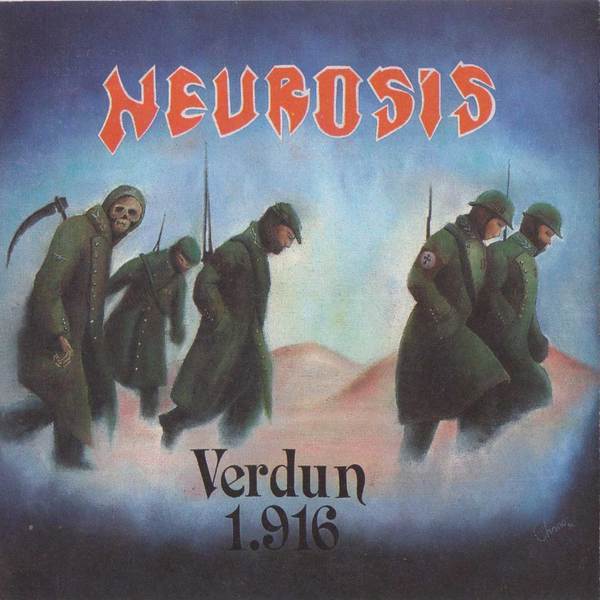
By 1995, death metal was both crisply defined and apportioned off into subgenres. Little wonder that even as early as this we begin to see throwbacks. The debut album from (the true) Neurosis is one such example, with a death/thrash album that could easily have come out in the mid-80s. But what they do bring to the table, fitting of the album’s source material, is a sparse sense of horror. The vocals are passionate and raw, the riffs, although mostly set in aggressive thrash runs, often articulate towards oddly mournful guitar leads that lend the music a grim fatalism. Death/thrash has always been South America’s forte, and wondrous curiosities like this demonstrate why.
Molested: Blod Draum (Norway, 1995)
Category: Core Text

The third significant Norwegian interjection on this list after Darkthrone and Cadaver, and something of a cult classic. This album is pure chaos. A very idiosyncratic mix furnishes non-linear music that behaves like technical or brutal death metal, but closer study of the layers beneath the cacophony reveals a surprisingly melodic album. Black metal riffs are refitted for a physical, percussive context. The result is near total sensory overload, as information is thrown at the listener faster than they can digest. An elegant Norwegian folk interlude on ‘Following the Growls’ that leads neatly into the blast-beat mouth harp opening to the title track providing a brief reprieve. A pinnacle of the extent to which death metal had become avant-garde by the mid-90s, here articulated in a more naturalist sense than the explicitly progressive turns taken by their peers.
Septic Flesh: Έσοπτρον (Greece, 1995)
Category: Core Text

To be honest any of Septic Flesh’s first three could have made the cut here (no I don’t care that they changed their name). The obscurantist and overwrought debut ‘Mystic Places of Dawn’ that throws the listener into the bizarre, arcane world of this band. Or the third album, ‘The Ophidian Wheel’ that manages to be both anthemic, expansive, bracing, and oddly moving in equal measure. Or this, their second effort sat somewhere between the two. This was essentially a solo project from guitarist/songwriter Sotiris Vayenas, with Spiros Antoniou providing bass and vocals almost on a session basis. On the surface, this is a mid-paced slab of highly enriched melodic death metal. But for anyone acquainted with this band, they will be familiar with their penchant for theatrics, with all manner of performance art level weirdness in both the vocal performance and the frequent tangents from metal to explore elaborately orchestrated interludes. But really, it’s all about the melodic character of these pieces. Guitars are written like an extensive piece of chamber music, a series of suites for strings, with particular refrains and vignettes taking precedence at different times. It’s almost hypnotic how these unfurl, to the point that there’s really nothing else like it in metal. Special mention must be given to the refrain in the title track after Antoniou bellows “Esoptron”, never failing to just make me stand up.
Vader: De Profundis (Poland, 1995)
Category: Core Text

Although Vader’s identity has been pretty stable for many years now, they took a roundabout route. From their thrash origins in the 80s to their now celebrated debut ‘The Ultimate Incantation’ in 1992 which fits neatly into the blossoming of the genre at that time, they finally settled on their style of chaotic thrash informed death metal by the time ‘De Profundis’ came out, only to veer into a covers album on the follow up ‘Future of the Past’. But here we see Vader leaning back into what they do best. Tight, dense, rigidly performed death/thrash, finding creative space with an essentially traditionalist style. You get the sense that they truly care about and understand how to paint with this brush. There is nothing particularly leftfield about the material, but there’s so much going on, played with passion and precision, that one can’t help but get carried along in the experience.
Krisiun: Black Force Domain (Brazil, 1995)
Category: Core Text
I have trouble titling reviews on Metal Archives, but looking back, for this one I just wrote ‘no space left un-noised’, which feels appropriate. I admire the guile of these guys. Counter revolutionary in the sense that they balked at the elaborate pretensions of their peers. But to my mind they still fit into the leftfield narrative I’ve been cooking up here, in that their response to death metal’s exponential expansion into complexity was not to simply re-write the genre back to 1989. No, somehow they found a way to amp up the intensity even further. A Slayer fit for the 90s. Conjuring a relentless assault on the senses with near constant, hyper fast thrash riffs, peppered with fretboard murdering solos that make Kerry King’s efforts at audial chaos look lacklustre. This leaves the drums to just blast away. But Max Kolesne somehow finds creative space by constantly shifting the beat emphasis around, leading to a disorientating shuffle without upsetting the unbridled momentum of the music itself.
Disaffected: Vast (Portugal, 1995)
Category: Further Reading

Given that progressive thrash/death metal was barely a decade old when ‘Vast’ was released, it’s incredible how comfortable it looks in its own skin. And that’s the real takeaway from this album. Elements of Tampa prog, Pestilence, Voivod, and even some eccentricities running parallel to Sadist, all sit quite happily next to each other without forcing its atypicality down the listener’s throat. It flows naturally as an aggressive piece of death metal, almost accessible in some ways, but a closer listen reveals layers of musicality and depth in a work of relatively subtle prog.
Protest: Beyond Tomorrow (Romania, 1996)
Category: Further Reading
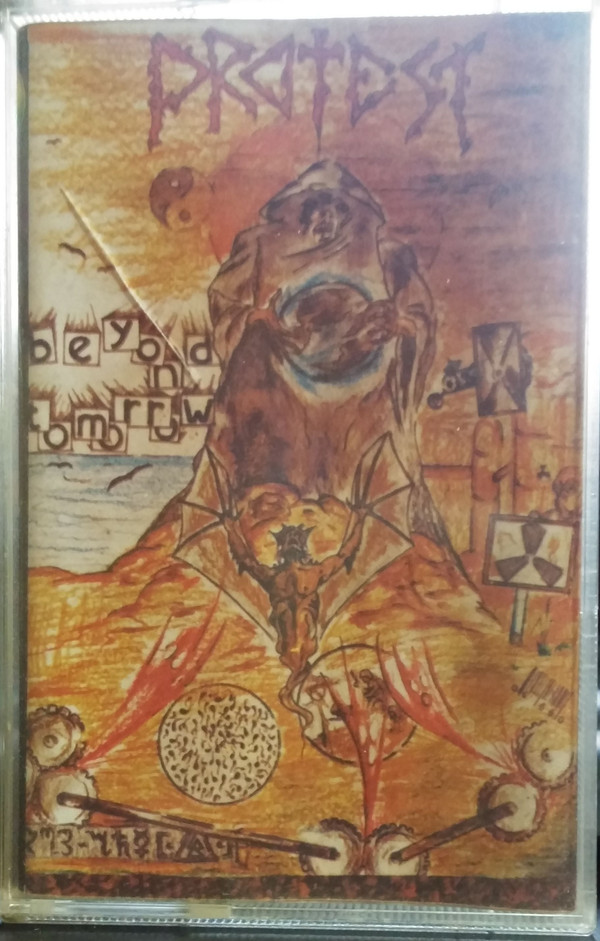
This is one of those “everything” albums. Strictly speaking there are enough death metal riffs to warrant its inclusion, but ultimately, this a kind of progressive heavy metal opera. Down and dirty thrash riffs take on a new lease of life as they are joined by bombastic synth lines in a manner obviously derived from Nocturnus. But the keyboard work is far more flowery and musical, the solos more traditionally harmonic than is typical for death metal. Tension accrues from a single idea lingered on for too long, with each instrument taking up a lead role to decorate the same moment, a more rockist technique not normally seen in death metal. But for all the gambles Protest took across this album, they landed one of the genre’s most adventurous statements, one that immediately undermines any contemporary claims that death metal was somehow stagnant and in need of an upgrade by this point. No one remembers material like this now. But anyone wishing to claim that the darlings of Decibel magazine are taking the genre to new places in the 2020s would do well to actually unpack some of the material coming out of countries like Romania just as Scott Burns was shutting up shop.
Ultimatum: Among Potential States (Romania, 1996)
Category: Further Reading
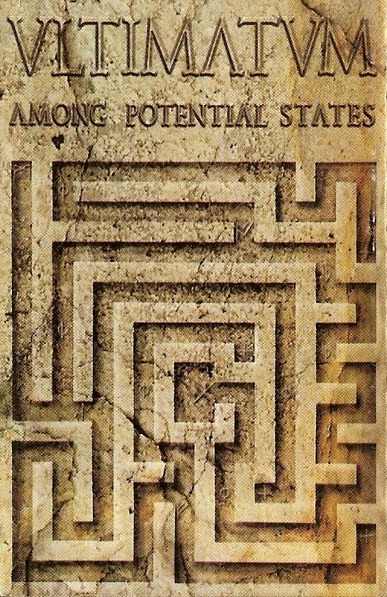
In some ways an updated version of Obliveon’s ‘From this Day Forward’, this is a slab of unorthodox prog thrash updating itself in a post death metal context. A little tighter and more focused than the Protest and lacking in the same audacity. This is a more constraining, claustrophobic experience. A constricted space that somehow manages to fly in multiple directions at once, as guitars take on a percussive and melodic role, leaving the drums to function almost as an atmospheric interlocutor alongside the intermittent keyboards. The austere cover art feels entirely appropriate in this context, as the music presents the listener with a gradually unfurling maze, requiring concentration and intellectual rigour to navigate.
Iniquity: Serenadium (Denmark, 1996)
Category: Further Reading
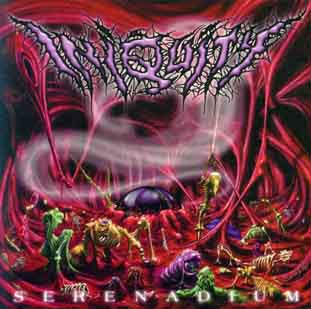
Iniquity’s debut is an interesting proposition in the technical/brutal sphere. Is there a way to articulate this style whilst slowing everything down and allowing the music to breathe? I’m glad to say the answer is yes, and it’s a notion I wish more contemporary bands would consider. This music still packs a punch. The muscular, hypnotically percussive riffing of Suffocation et al is alive and well. But in challenging themselves not to fill every bar with staccato scatter gunning, they create space for an interesting juxtaposition between amoral violence and gothic despair.
Adramelech: Psychostasia (Finland, 1996)
Category: Core Text
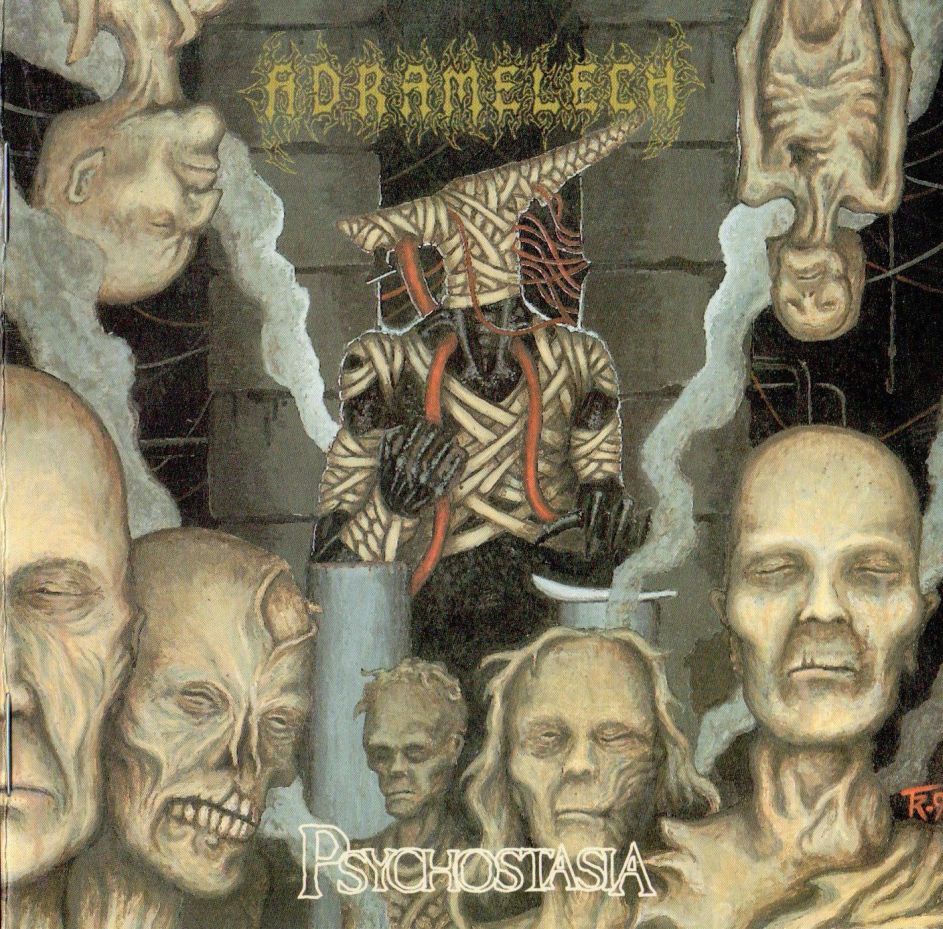
One way to read this is as a “normal” ‘Nespithe’, which still makes it a bloody weird slab of death metal. A late entry into the classical period of Finnish death metal, the totalising gloom of ‘Slumber of Sullen Eyes’ is present and correct. But the riffs rove over greater distances before resolving or collapsing, indeed, many are cut into chunks resulting in an experience akin to reading a series of unfinished sentences and trying to piece together the meaning. Glum and irredeemably melancholic in a way that only Finnish bands seemed capable of articulating, ‘Psychostasia’ has enjoyed something of a renaissance in recent years, no doubt catching strays from Demilich’s rise to cult status along with Demigod. The follow up, 1999’s ‘Pure Blood Doom’ sacrifices some of these unique qualities for a more straightforward rampage, but also comes highly recommended.
Kilcrops: Javhe Karma (Colombia, 1996)
Category: Further Reading

Like Neurosis, this is really more of a thrash throwback updated to survive in a death metal world. But Kilcrops’s approach is more technically minded, landing on an approximation of a progressive ‘Beneath the Remains’. As death metal moved beyond its centres of gravity in the US and Sweden, a wave of bands suddenly interjected with what can only be described as audacity, even if the media took little interest once the genre stagnated in its imperial core. The nuts and bolts of this album are very much rooted in late 80s thrash, but the level of elaboration and decoration going on is nothing short of joyful to listen to. Like reading a familiar passage of text rendered on an illuminated manuscript.
Obscenity: The 3rd Chapter (Germany, 1996)
Category: Useful Footnote
Third albums from European death metal bands at this time were a risky prospect, with swathes of bands either giving up on the genre or attempting some halfway house between a more commercial style with brutal riffing, let’s not forget that alt metal and eventually nu metal were gaining steam at this time. But Obscenity buck this trend somewhat, delivering what for all the world looks like a “normal” death metal album, an incredibly rare thing by 96. There are plenty of catchy riffs and neatly pocketed grooves, but they are stitched together into an album of inventively melodic brutality that one cannot help but applaud. Although rather dry compared to some of the entries in this list, Obscenity manage to refresh themselves enough times across this album to entertain and engage their listener base.
Intestine Baalism: An Anatomy of the Beast (Japan, 1997)
Category: Further Reading
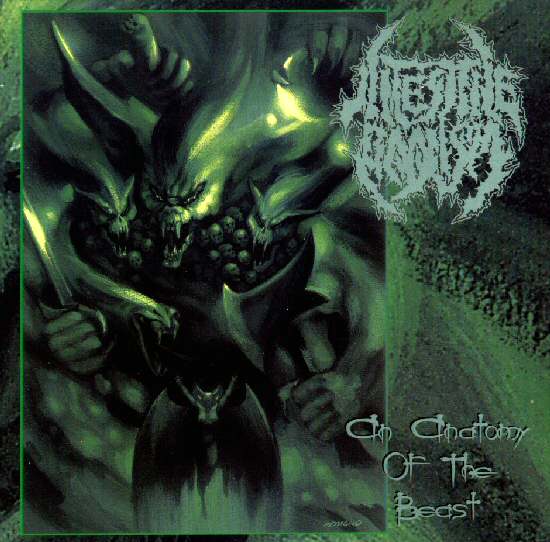
Another one that seems to have undergone a reappraisal lately. This is essentially the result of Swedish death metal being exported globally, getting picked up by some guys on the other side of the world. The result is a wonder of cross pollination, as a more dynamic rhythmic palette is put in service of death metal at once dazzlingly melodic and brutal. It’s an oddly emotive work. Stirring and mournful in equal measure. Guitar leads aren’t so much solos as they are fully composed pieces of music in their right, leading to some of the most joyfully creative leadwork this side of ‘Unquestionable Presence’.
Shub Niggurath: The Kinglike Celebration (Final Aeon on Earth) (Mexico, 1997)
Category: Core Text
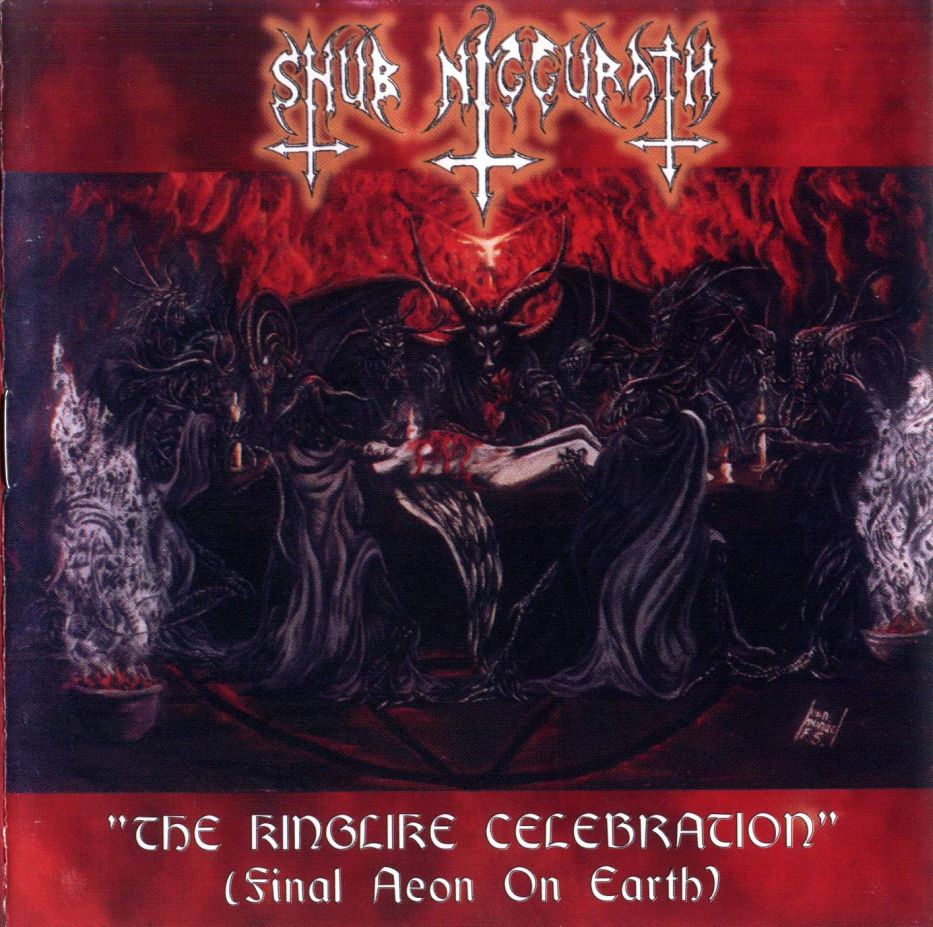
A different kind of blackened death metal to what you would find in Sweden. Shub Niggurath take the atmosphere of cloying, sweaty black metal like Mystifier or even Necromantia and apply it to a choppy, tangential form of death metal, resulting in a work both immersive yet physical. A trial of mind and body. The fact that the production can’t quite contain the amount of activity and motion going on in the music creates an interesting rippling effect, a kind of emergent pulse that sees the music build and fall in waves of intensity over and above the concrete phrasing of the instrumentation itself. A truly horrific experience that feels like it could only have come from Latin America.
Makrothumia: The Rit of Individuation (Romania, 1997)
Category: Further Reading

Members would go on to form Romania’s biggest black metal export Negura Bunget and eventually Dordeduh. Here we see them in a more death metal state of mind, but it’s one still informed by the mystical. Symphonic death metal offering a parallel but very distinct experience to Septic Flesh. Makrothumia are more overtly progressive, and may have even taken some cues directly from 70s prog in working together these dense tracts of ornate, flowery metal. One can’t help but think, with a more polished production and bigger label backing albums like this could have sparked a much earlier renaissance in death metal, or least called into question those prematurely announcing the genre’s death, even if we ignore the fact that scenes flowering in Romania were largely overlooked in death metal’s old heartlands.
Night in Gales: Towards the Twilight (Germany, 1997)
Category: Useful Footnote
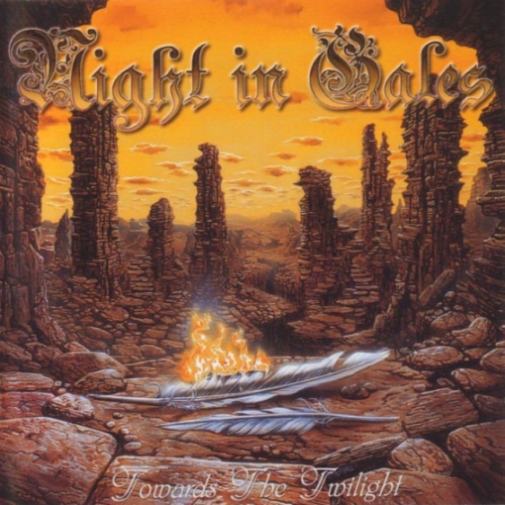
Death metal still had a popular face by the late 90s. One was of course the brutal/technical strain carried forward by bands like Deeds of Flesh at one end and Nile at the other. The other was the melodic, which took on a new lease of life into the 2000s. Night in Gales are an early example of the Dark Tranquillity/In Flames template being exported abroad. As a second draft one can do a lot worse than this debut. There are no surprises for anyone acquainted with the style. Iron Maiden-esque guitar harmonies, thrash riffs, flowery melodic turns and a touch of commercial groove. But none of this comes at the cost of imaginative songwriting, with plenty of substantive riffing to sink the teeth into.
Dies Irae: Gargoyles (Romania, 1998)
Category: Useful Footnote
You could argue with me and say this is a black metal album. And comparing it to Abigor or early Dawn I would take the point. It’s an early edge case, and probably not one the band concerned themselves with at the time. Released on Bestial, the same label as Makrothumia, Dies Irae offer us a more orthodox approach with flowery melodic death metal heavily informed by black metal, both vocally and in many of the riffs. But the choppy flow and surplus percussive decoration mean this can be enjoyed as death metal, one that takes its melodic duties more seriously than something like Night in Gales. This is melodic not in the sense that it integrates heavy metalisms into a death metal setting. Dies Irae actually take time painting decorative throughlines that determine the shape and form of the track, building into narrative sequences articulated holistically as opposed to a series of static, easily digestible licks.
Mentality: Teonanacatl (Slovakia, 1998)
Category: Further Reading
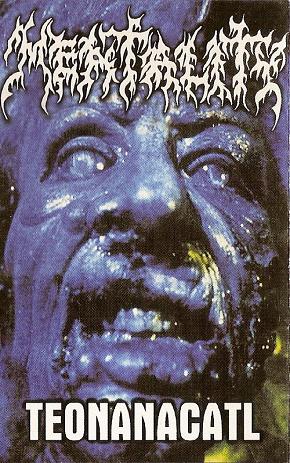
Another sharp rebuttal to anyone arguing that death metal had become formulaic by the late 90s. How to describe this album? Erm, sort of technical, brutal death metal cum grindcore but also a 90s rave album and sci-fi soundtrack. Given the number of novelty acts we are subjected to today, it’s refreshing to go back to material that played with styles more freely. There is no whimsy or expectation of plaudits from this album. Just a mad experiment gone wrong, one that the band were probably right to disband after releasing into the world, only for it be largely ignored. Leave the lightning in the bottle where you found it.
Rotting: Crushed (Canada, 1998)
Category: Useful Footnote
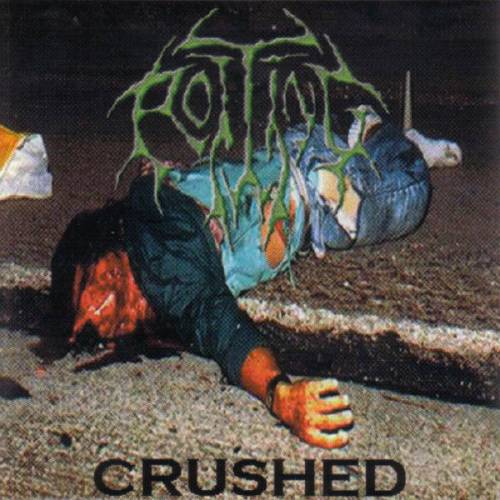
Another one to throw into the continuity category, Rotting are somewhere between the rising brutal death metal trend and Swedish death metal. It’s therefore surprising that this didn’t make more of an impact, as fans alienated by either stylistic pole of Rotting’s sound can find something to love here. As death metal floated off into the stratosphere albums like this serve as a humbling anchor, tying the genre firmly to its lineage as a physical and often simple form of music both spiritually and technically.
The Chasm: Deathcult for Eternity: The Triumph (Mexico, 1998)
Category: Core Text

The Chasm are the most underrated band in death metal. At this point they are eight albums in and not one of them is a dud. How many of their peers can claim these kind of numbers? Yes, they’ve received some acclaim over the years, but it’s definitely consummate with their kill rate. ‘Deathcult…’ is their third offering, and straight up has one of the best intros to a death metal album ever, a kind of bacchanalian after echo of ‘Hell Awaits’. Their style is hard to pin down, and is probably why they haven’t quite made it to the big leagues. Symphonic without the use of keyboards, moody yet dense, each album is a five course meal, and many easily hit the hour mark. Helmed by Daniel Corchado previously of Cenotaph (you might also remember him from such albums as ‘Diabolical Conquest’) and long time sticksman Antonio León, it’s a partnership capable of throwing out these elaborate death metal symphonies apparently without effort, each one warrants considerable unpacking. Characterised by a stratification of intensity, elongated melodies soar across the mix like jet streams in the sky, underpinned by loose thrash riffs and even some black metal adjacent moments. All bound together by this weighty, arcane atmosphere that feels ancient, biblical, not of this earth.
Necrophagist: Onset of Putrefaction (Germany, 1999)
Category: Further Reading
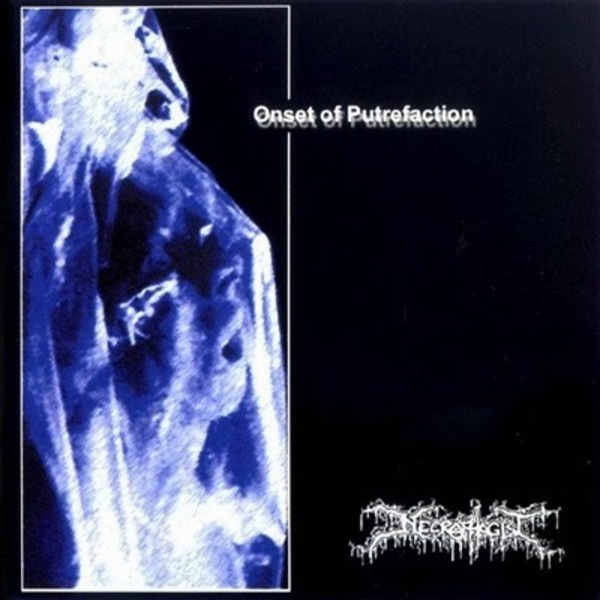
This is included more as an acknowledge than me having anything to say on it. Constant shredding, constant arpeggios, pinch harmonics, by reducing death metal down to a showcase of some of its more extreme techniques, both technically and sonically, it essentially proves that the so called arms race wasn’t over by the late 90s. It’s an album that probably needed to be made. But far from laying the matter to rest, it spawned near thousands of knock off acts and created a style that all but poisoned technical death metal for years to come, and is indirectly responsible for the hundreds of hours of fingers flying across fretboards pushed out on to YouTube every year.
Decapitated: Winds of Creation (Poland, 2000)
Category: Further Reading

Poland’s addition to one of the few subgenres that was flowering at the turn of the century, brutal/technical death metal had hit its pomp by this point. For all this album’s virtues, it’s probably the only one you need from Decapitated despite many rating its colder follow up. Like many in this style to draw in a wider following, it manages to dilute its three dimensional riffing and rhythmic ramblings with some distinctive melodies and the clear signage of expressive grooves. But they do this whilst sacrificing none of the savagery and physicalism one would hope for from brutal death metal.
Thorium: Ocean of Blasphemy (Denmark, 2000)
Category: Useful Footnote
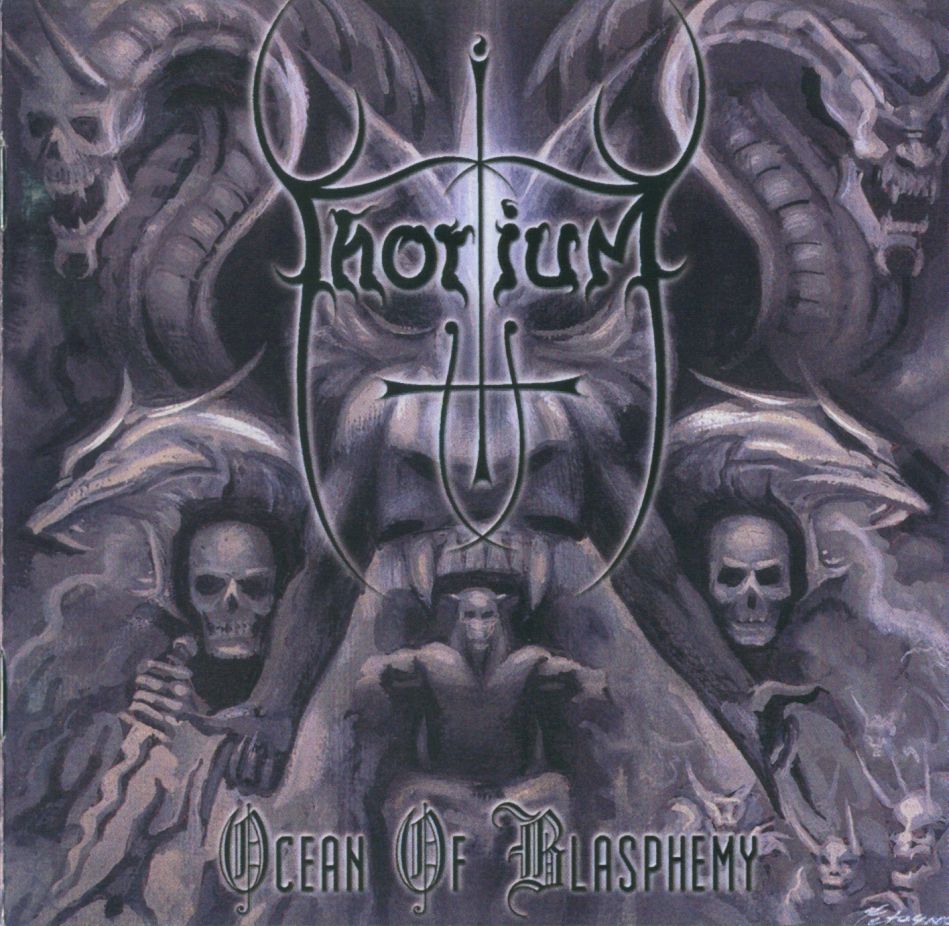
Although death metal by the 2010s became a bit of a love letter to the past, backward looking material was being conceived even as far back as 2000. Thorium’s debut is a solid effort, especially if one considers the legacy they had to follow. But ultimately, it’s a mix of thrash derived death metal, heavy metal flamboyance, and mostly Swedeath melodicism. A pastiche before such things were common place. It therefore exists in a category reserved for the relentlessly curious only, lacking any of the daring and flair of other works on this list.
Gorguts: From Wisdom to Hate (Canada, 2001)
Category: Core Text
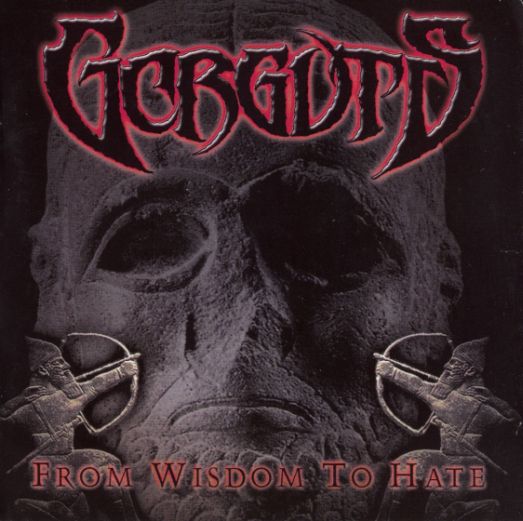
Because Gorguts are a special band, I extended the timeline whilst shortlisting to include the final album from their seminal original run. In many ways these guys completed death metal in 1998 with ‘Obscura’. There was no need for Luc Lemay and the gang to come back and elaborate. But come back he did. And herein lies the reason for me selecting the runt of the Gorguts litter, overlooked against its predecessor. ‘From Wisdom to Hate’ is slightly more accessible than ‘Obscura’, the runtime is trimmed down, the riffs, whilst still operating on this bizarre percussive dissonance, manage to connect back to their earlier identity as a more typical technical death metal band. It makes legible what, for first timers at least, is truly illegible about ‘Obscura’. For that reason anyone approaching their discography should probably do so in a 2, 1, 4, 3 kind of order to properly navigate the rabbit hole. This period of Gorguts is everything that was great about this era of death metal.
Death metal and the roads less travelled | Part I – The Awakening, 1986-1991
Death metal and the roads less travelled | Part II – Spiritually Uncontrolled Art, 1992
Death metal and the roads less travelled | Part III – Transcendence into the Peripheral, 1993-94


Really enjoyed this series, and of course everyone’s going to have a few releases they would have included but aren’t here, but there’s one omission I find really surprising: Blood from Germany. I guess in many ways they’re more of a grind band, but I highly expected O Agios Pethane or Gas Flames Bones to make an appearance.
LikeLike
This is outside of the scope of this series, but for all your praise of The Chasm, and also your consistent positive reception of Chilean extreme metal, I am shocked to see you have not penned a word about Inanna. If you have somehow never listened to Converging Ages, I implore you to rectify that!
LikeLike
Please forgive my separated commenting but I have just made a connection also worth your time: “Perpetual Mockery”, the debut of Malta’s Beheaded, released the same year as “Deathcult for Eternity”. An earlier species of what became a now-codified “brutal death metal”, almost in a similar vein to how you described “Necrophobic” earlier with regards to death metal. I have yet to hear such a graceful use of melody in the form since – including, sadly, the band’s later works, as they become subservient to the form and merely release very good examples of it. I am far less well-read than you (I should likely listen to Decapitated based on your commentary), but I would ask you to consider this piece in your leftfield narrative.
LikeLike
Very good list, I enjoyed this series. Nice to see Iniquity and Intestine Baalism made it.
My pick for an album to be added would be Anata – The Infernal Depths of Hatred (Sweden, 1998). Despite being a capital T technical death metal band, which I know Shelley has a lot of disdain for, I can’t see how a fan of Atheist or Morbid Angel wouldn’t enjoy this band. They’re certainly not the noodly type derived from Necrophagist, and they also stand out from their peers in their ability to include atmosphere into their sound. Great lyrics too.
The Chasm is a weird one for me because they *should* be everything I love in a metal band, yet every time I listen to them I always end up zoning out and not absorbing anything. I don’t know why it never clicks.
As for the bands I discovered thanks to these posts, my favourite so far is Shub-Niggurath. Already blasted that album several times now. Fucking awesome
LikeLike