Appetite whiplash
Appetites are strange things. Once an appetite returns it usually does so with interest. I lost my appetite for heavy guitar music last summer, when it returned it did so with whiplash inducing rapaciousness by late autumn, spurred on in part by what was actually a pretty solid year for metal. As spring beds in, frosty, wet, and erratic, I am still living in the long shadow of this whiplash, there apparently being no limits to the amount of metal my ears are willing to imbibe.
I get the impression that for a lot of music fans it’s about exploration, a journey. And whilst a journey is certainly one way to frame the metalhead’s attitude, nesting would be more appropriate. Once they find that style and make it part of their soul (in my case black metal), they set about obsessively feathering the nest, only venturing further afield once they are confident that of their bearings, and each time returning to homebase with new acquisitions and curiosities. That acquisitive nature is also key to understanding the metalhead here. Music must form a part of the personality, the self-image. This makes any sojourns further afield that bit more trepidatious. The metalhead may briefly become a tenant in someone else’s nest for a while, but will always flock back for the winter. This process has continued with renewed intensity in 2026 for me, outside of the usual review queue admin of course.
So we wander down to Romania to take a closer look at black metal outfit Negură Bunget, whose early twists and turns warrant closer scrutiny. A recent appetite to build some bridges with the separate but parallel universe of heavy metal leads us to the much praised but oft silent Eternal Champion. And lastly, another recline into ambient, this time a little closer to our usual remit with a pick from the cornucopia of delights that is Jim Kirkwood’s dungeon synth adjacent early catalogue.
Negură Bunget had a checkered history. Starting out as an early Dimmy Borgir-esque black metal project with their debut ‘Zîrnindu-să’, albeit with more complex arrangements than their Norwegian counterparts, they then shifted into a dreamier, looser interpretation of black metal, layering thick keyboards atop a fog of guitars and plodding, mid-paced rhythms. This defined their sound up to and including 2006’s ‘Om’, which was for all intents and purposes the crowning achievement of this incarnation. It was here that the original trio split, with Edmond Karban and Cristian Popescu parting ways with drummer Gabriel Mafa (Negru), going on to form Dordeduh which would take them in a more explicitly folk metal direction. Negru himself would continue with Negură Bunget under a new lineup, prompting accusations that he did so without permission from his former bandmates. Despite this, the newer iteration of Negură Bunget would also pursue a more literal form of folk metal, incorporating a range of additional instrumentation and a revolving door lineup before Negru’s untimely death in 2017.
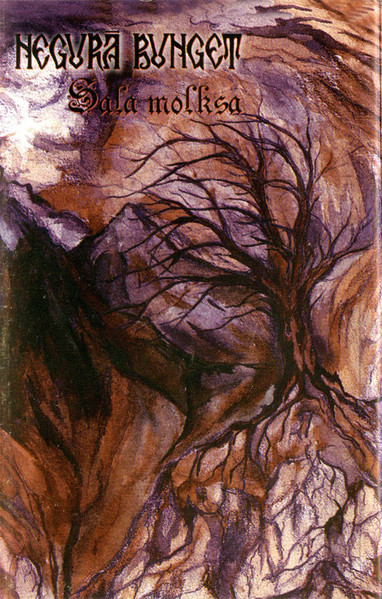
But it is a much earlier EP that concerns us here, 1998’s ‘Sala Molksa’. Hot off the heels of the more traditionally symphonic debut, this EP is the first – and I would contentiously argue best – example of what the original lineup of Negură Bunget would excel at, namely a form of atmospheric black metal still replete with dynamic rhythms, unusual melodies, and a degree of passion sometimes missing from their Ukrainian neighbours.
There is an inertia characteristic of this era of Negură Bunget, a handful of simple ideas accrue gravitas through excessive layering of guitars and keyboards along with a textural application of drums, specifically the crash cymbals that lend additional size to the guitar tone. Synth lines ascend in soaring crescendos, further dramatizing a simple idea with greater weight and significance. Drums draw more from traditional rock and metal from the 70s than anything typically black metal, offering a loose, informal swing alongside simple, persistent rhythms that further lend the music a viscous quality. Aggressive vocals bring passionate humanity to this otherwise ruthlessly ethereal experience.
Even as the music attempts to gain solidity – through the odd anachronistic folk lick or staccato riff – the mix and layering up of tracks seems to work against this endeavour. This gives the impression of perceiving all through a foggy haze, or at times clouds of rain, half formed shapes, movement, and vision struggling towards clarity in the translucent gloom. The overt pagan quality of the music is balanced by its visceral presentation. Even jaunty folk licks are caveated by the indifferent brutality of nature. A sharp rebuttal to much black metal that plays on this aesthetic territory, re-injecting the unknowable magic of these arcane elements with mystification. A sense that the past is just as haunting and emotively alien as the mountains and forests so integral to this style of metal.
Eternal Champion are the spark that lit my recent escapade into US power metal that was the topic of our latest podcast. The result of some random recommendation I received a few years ago and only just got around to looking into…and boy was it worth it. With a few notable exceptions, my interest in the broad spectrum of “trad” or heavy metal has been largely academic. I suspect this is common amongst fans embedded in extreme metal, and may be the reason why, despite it being literally more accessible, heavy metal struggles commercially outside of its European strongholds and a devoted online following.
Whatever the reason, Eternal Champion struck a chord and it’s time to interrogate why. Put simply, their approach is as accessible as they come, but the music is ripe with substance regardless, making them the perfect gateway into a style that can be alienating for a lot of listeners, even those well schooled in metal. Despite only putting out two albums in fifteen years, the attention they have garnered clearly indicates that they are scratching an ich for this classic heavy metal across the pond. Looking at their first album ‘The Armor of Ire’, right out of the gate their character is apparent. The understated performances immediately set them apart from similar contemporary attempts to recapture the magic of the 80s which often come across as over excited. There is power and muscle here, just as there is exhilaration and energy. But this is underscored by a folky intimacy expressed through the strong melodic character, the crisp, crooning vocals, and a rich, organic production.
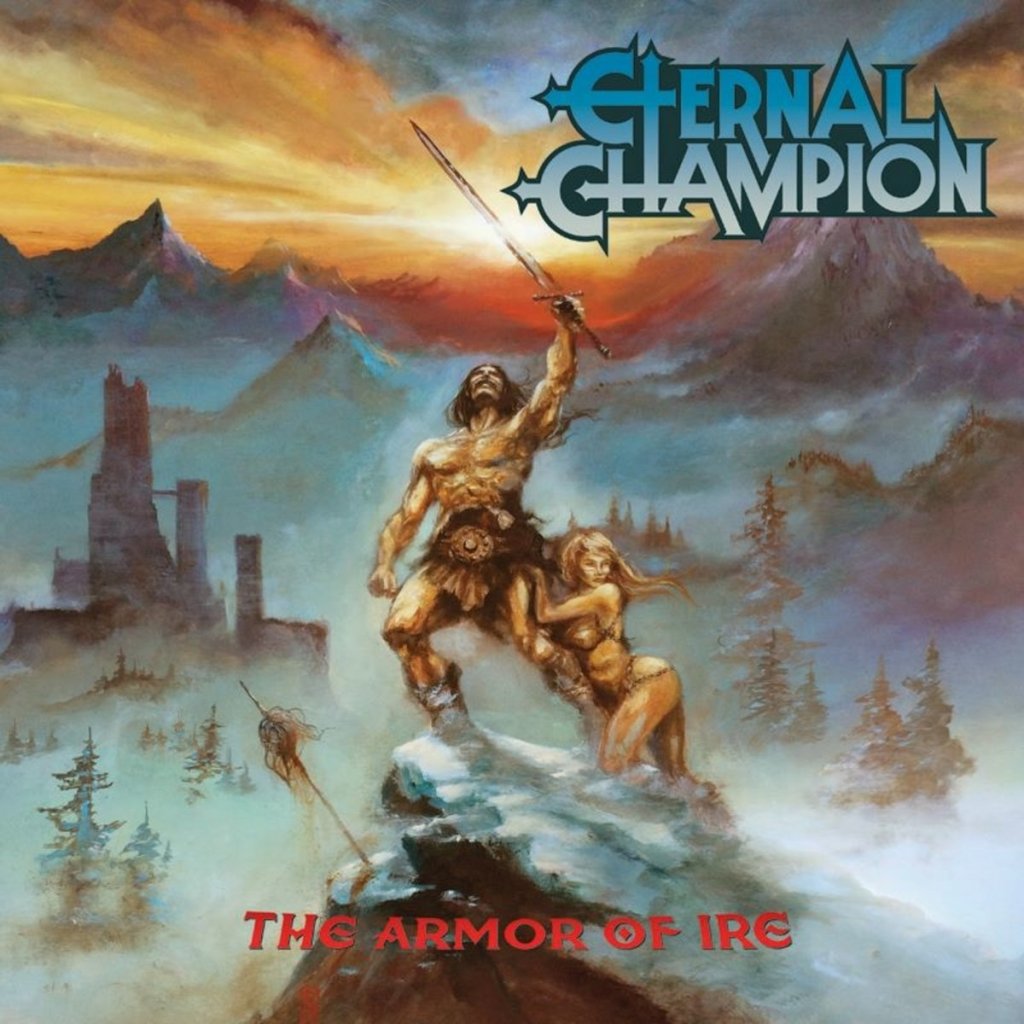
Every bit as anthemic as their peers in Visigoth or Smoulder, the tracks are nevertheless stripped back and breathable. It feels of the arcane and not merely a tributary toward it. The vocals take on a semi operatic semi lyrical posture, at once involved in events yet commenting on them from afar. But in a more literal sense, the melodies are kept relatively basic, ideas do not step on each other’s toes allowing them room to breathe. Occasionally this is taken to extremes, as on the track ‘Sing a Last Song Valdese’, which descends into a droning doom dirge of sustained chords, trilled guitar leads and chanting vocals, all of which lends the music an archaic, reverential quality replete with tension and release. In short the exact opposite approach taken by early Fates Warning and their acolytes, which remains at the more inaccessible end of the genre for newcomers.
Guitar lines are equally austere, invariably falling back to plodding, engaging chord sequences that gain life and dynamism through the judicious application of decorative accents that eventually coalesce into more substantive leads. There is a fine balance between the more cinematic aspirations of the riff sequences, undergirded by an assertive rhythm section, and a more human, lyrical drive expressed through the vocals and lead guitars. The resulting experience is totalising, a broad spectrum of events and landscapes to pursue. But all stuffed within a relatively tight package (the album is barely longer than half an hour with an interlude and outro). The lesson of this, and indeed its follow up ‘Ravening Iron’ is that it is entirely possible to be catchy and accessible without sacrificing substance and artistry along the way.
Approaching a discography as large and confusing as Jim Kirkwood’s can be a daunting task. But there is a striking consistency in quality and style across his early era to the extent that any starting point is ultimately arbitrary. ‘Master of Dragons’ is as good an introduction as any. There is an uncanny anachronism to Kirkwood’s approach. A solitary outlier of both ambient itself, and the dungeon synth scene he later became associated with, which at its outset was a mere appendage to black metal. But his artistry is deeply rooted in both the “kosmiche Musik” of Tangerine Dream and Klaus Schulze and the fantasy boom of the 80s across film, gaming, and literature.
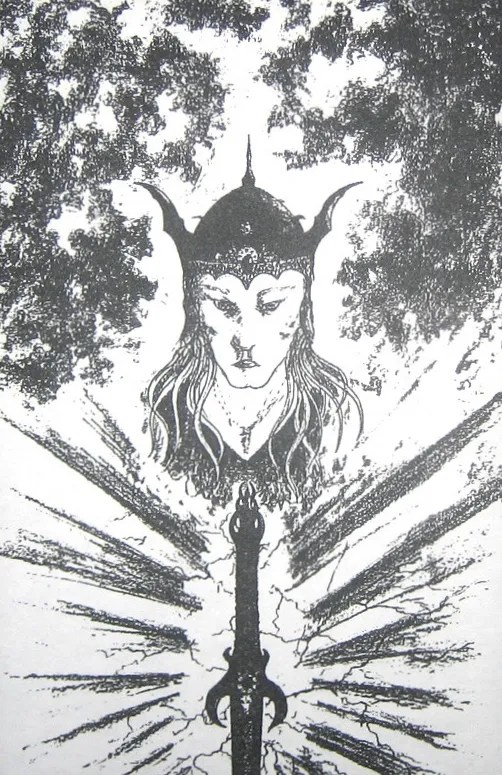
He draws on the sequenced, pulsing arpeggios of Tangerine Dream, spurred on by driving synth rhythms and the use of minimalist percussion. Symbols that the listener can’t help but interpret as inherently futurist in ethos. Yet the accompanying artwork and track names are drawn largely from Tolkien’s medievalist fantasy world. Equally, as the album progresses, it bleeds into a looser, droning iteration of ambient, with subtle choral lines complementing the synth work to lend all a sense of mysticism and wonder.
He is, no doubt, a master of melody as much as chord construction, which gives his work that unique charm. Part technical exercise owing to the degree of pragmaticism required to harness the tools of electronic music that were still relatively new outside of a professional studio setting in the early 90s. But beyond that, there is real musicality here that interacts with the synthetic elements to bring this oddly uncanny experience to bear. Obvious comparisons to video game music may be warranted, each album flows like a soundtrack accompaniment to some larger narrative. But having no interest in gaming (video or otherwise), I still take great enjoyment in these works as musical objects in their own right. More sophisticated in terms of composition and arrangement than the majority of dungeon synth that followed. This is a classic case of lifting elements from a much larger legacy (the Berlin school) and applying them in an unexpected setting, namely a love letter to Tolkienist fantasy.
The interaction of futurism and fantasy alongside the raw musical elements gives rise to a wealth of interpretations to unpack beyond simply experiencing the inherent qualities of these albums in undiluted form. Equally, the fact that the synth patches and overall production will sound unavoidably retro to modern ears adds a degree of nostalgia that further complicates the picture, another layer of complexity to the wealth of cultural signifiers we can’t help but read into this work.
But setting aside these rather academic concerns and any intimidation one may feel toward the sheer scale of Kirkwood’s body of work, one is left with the perfect end of day soundtrack. One complex enough to simply get lost in, but also not so intrusive that it will make for the perfect companion to late night reading.


Good shit, mate. Discovered Negura Bunget some months ago myself, have yet to delve into theor discography, however. And as for (broadly) USPM, two artists I really love are Enchanter, who have a duo of demos paired together under the name Defenders of the Realm, and the famously reclusive Canadian band Tales of Medusa. If there’s a line between epic heavy metal and (US?) power metal, it’s hazy and ever permeable.
LikeLike