Hagel: The Veil of Shadows
Out 6th November on Personal Records
Hagel recruit vocalist Iveth Herrera to their ranks, her harsh, mid-range rasp balancing the rather dramatic pivot into melodic doom metal made on this EP when compared to the warm, Southern European black metal approach of the previous album ‘Veneration of the Black Light’. The music adopts a loose, informal flow dictated by ponderous rhythms and a rich, folky tapestry woven throughout the riff templates. But atop this easy going demeanour is a regal melodic language determined by an elegantly sequenced narrative formality.
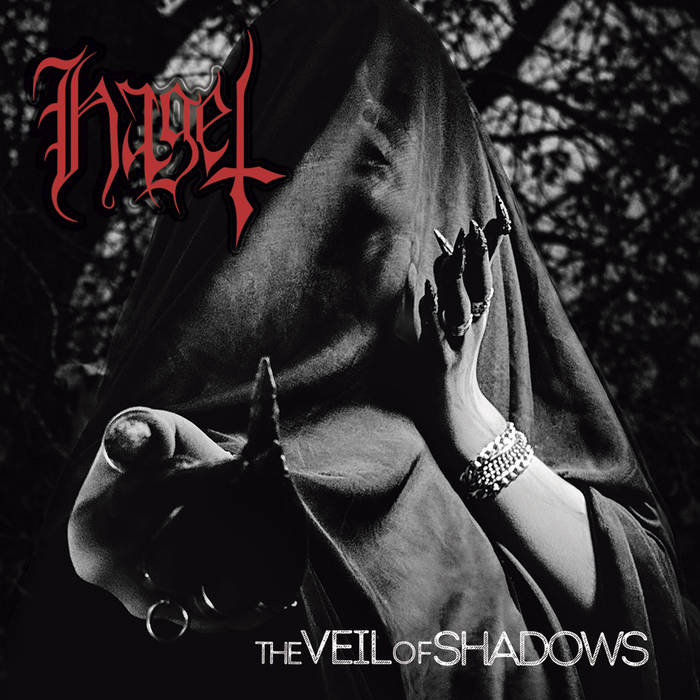
The production is warm and crisp, like a sojourn through leaf strewn pathways in autumn. The drums cut through with ease, furnished with a fairly standard rock tone suiting the open, swinging rhythms as they weave their way across the rise and fall of the riffs. The guitar tone is more befitting of melodic doom in the vein of My Dying Bride, enough body to flesh out the sustained drone of drab lead guitar lines, but sharp and contained to ensure that no clarity is lost, always bringing the focus back to these tonally traditional peaks and troughs. Herrera’s vocals are solid, measured, eschewing any laboured dramatic flair in order to anchor proceedings with a welcome consistency, matching the moment with the requisite dynamic range. Perhaps a more emotive vocalist would have been overkill alongside the lyrical, cathartic threads woven across the music itself. Frequent acoustic guitar accompaniment only serves to emphasise a truncated folkist intimacy sitting happily alongside the more orchestral ambitions of these pieces.
Whilst this material does show some continuity with ‘Veneration of the Black Light’, the previous effort stuck firmly within the black metal camp, clearly drawing on the warmer, heavy metal infused variant. Following the five year interlude and some shifts in the lineup there is a marked pivot in a new direction, one that draws more explicitly from older doom traditions. It strips the presentational elements back, allowing dramatic stakes to clarify under the tonal accruals across each track, the delivery itself kept somewhat deadpan as far as emotive range is concerned. But the move is a welcome one. What emerges is a restrained, mature, internally consistent world every bit as immersive as previous material from this artist, but one that benefits from its frugality, achieving a degree of accessibility over and above the admirable attention to detail worked into these intricate compositions.
Architect of Seth: Solitude Solaire
Out 6th November on I, Voidhanger
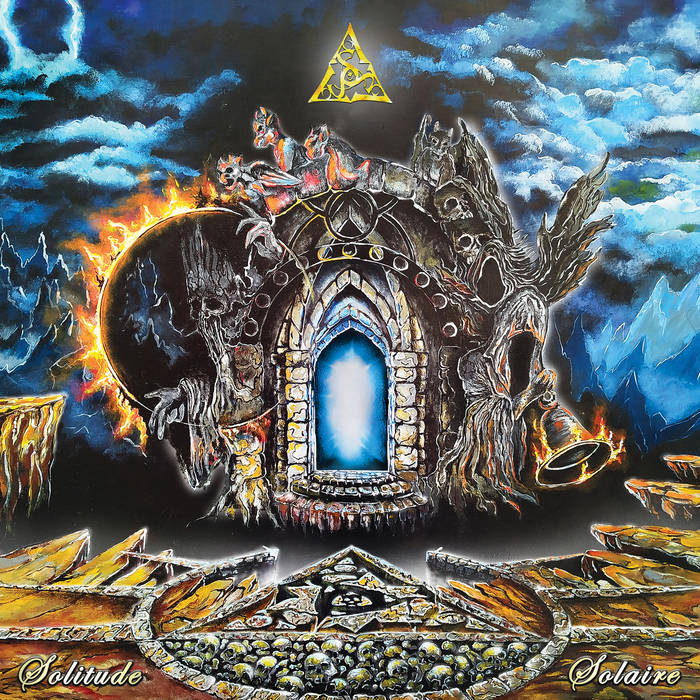
There’s a certain arrogance behind music this eclectic, an antiquarian without taste, decorating their chambers with all manner of artefacts from across the globe, with no theme, narrative or story to bind it all together save a love of acquisition itself. Thus Architect of Seth move through reams of meaninglessly choppy technical death metal, punctuated by symphonic black metal, thrash, djent accents and whatever else this solo outfit believes they can stuff into these rather gauche displays. But since there is nothing to connect these themes together, no clear purpose or motivation other than a lavish display of wealth, one is forced to conclude that this is the death metal equivalent of new money. Not in the literal sense (the artist’s career stretches back to the 2000s), but when compared to the rich, tapestried works of technical death metal at its best, there is no oversite of this collection other than the requirement to expand. No curation or forethought, and therefore nothing of meaning is conveyed to the listener besides yet more content, little more than a playlist on shuffle.
Polderhaat: Klaagliederen
Out 6th November on I, Voidhanger
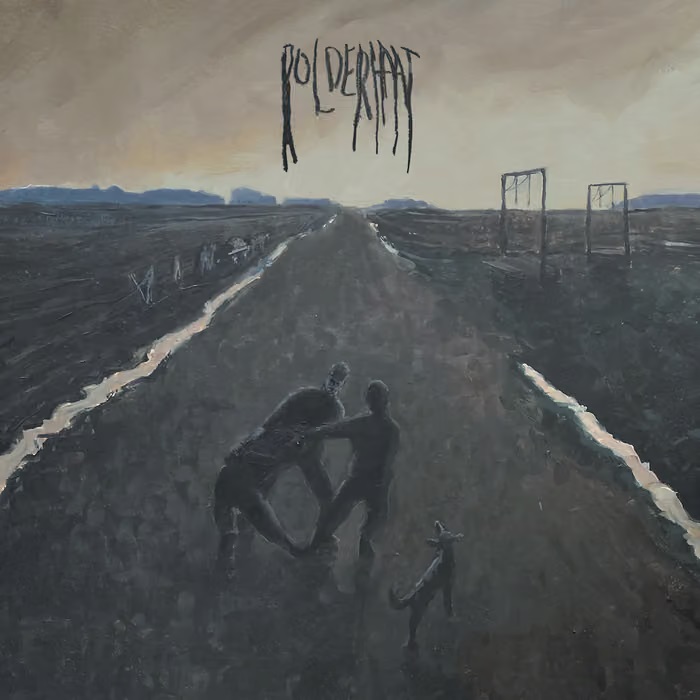
Frigid black metal delivers emotive ambient tracts within the confines of tightly composed music. Elements of folk and liturgical music expand the expressive palette whilst containing all within a minimalist throughline of sparse black metal. No element, be it musical or expressive, is permitted to veer too far from this central thread, thus allowing the music to interrogate the potential of these deviations without abandoning its central line of enquiry. Melodically this is relatively simple music, following a clear, linear, sequential pattern, with the central backbone of drums, rhythm guitar, and vocals remaining largely consistent throughout. But from this foundation Polderhaat permit themselves to decorate certain passages with detailed add-ons, from haunting chaunts, acoustic guitar lines, and richly realised symphonic layers, all falling under the remit of a central, rudimentary but sufficient idea that proceeds with all the will of inevitability. The result is a tight, self-contained expression of decidedly contemporary black metal, one that refreshes the form whilst drawing deeply from the well of the genre’s storied legacy.
Obscurité: Contemplation III
Out 13th November on Chapitre XIII
Bracing melodic black metal does little to dazzle beyond the candy coated lyrical guitar lines, but equally one could argue that a remarkable degree of restraint has been shown on this album when taken against stylistically equivalent releases. Tracks follow a clear sequential process, a main theme, a pull back to allow for a vocal passage, a modest piece of development usually by way of some harmonic evolution, only for a counter theme to emerge before pulling the whole thing together. Pleasing for its simplicity, familiarity, and at the very least adeptness with the form. The artist displays a clear ability to communicate within the remit of Swedish black metal. Even if they fail to find their own voice over and above their influences there are ideas here that flow in a logical order, communicating their own story to the listener who will come away secure in the knowledge that some information has been conveyed to them through sound. Ruthlessly modest virtues by any normal measure, but when digested in the context of the contemporary picture, Obscurité at least stand out for their ability to demonstrate these humble attributes.
Bonjour Tristesse: Disaster Triumphant
Out 16th November on AOP
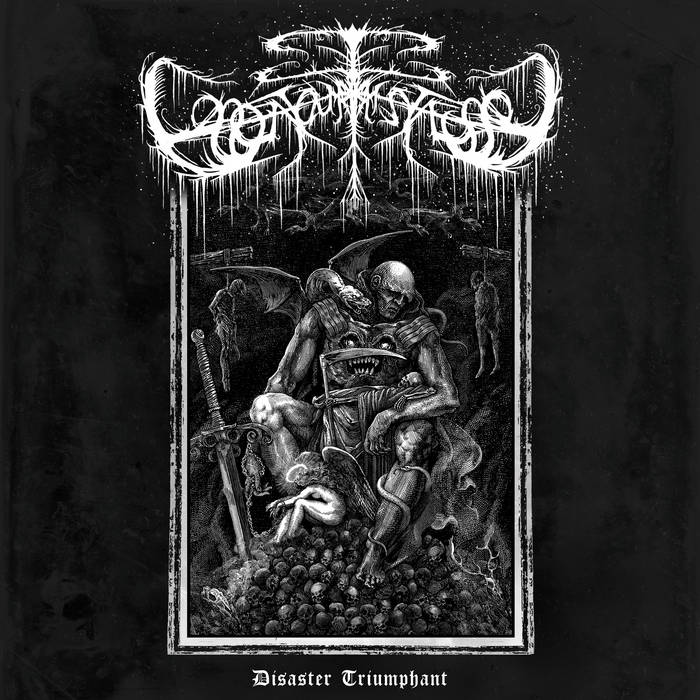
Glum indie stretched to breaking point by the attempt to inject gravitas into the music through the appropriation of some black metal techniques. Barely any variation in tempo or time signature, which sticks doggedly to 4/4, is made all the more tedious by the lack of any imagination in the chord progressions themselves. All peppered with the bare minimum of harmonic lead material that would go entirely unnoticed on a Coldplay album. The forced emotion of the vocals does nothing to enamour the listener to this already stale showcase, an obnoxious and thoroughly unearned sentimentalism lacking any artistic flair.
Golgothan Remains: Born from Darkness Absolute
Out 20th November on Dark Descent Records
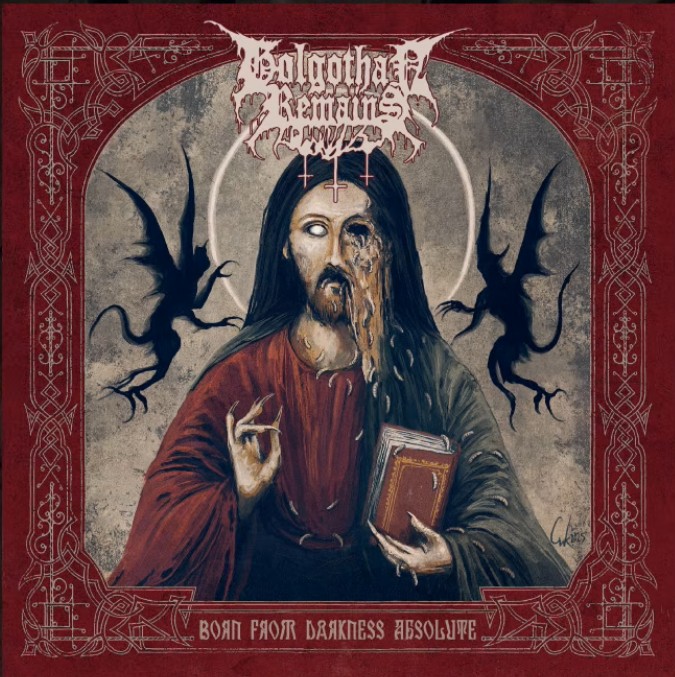
Cascading and bleak music draws in the style of black metal with the colour palette of histrionic death metal. Drums stick to a near constant barrage of rolling blast-beats, allowing the accents of the guitar lines to flesh out the rhythmic context. This gives riffs the dual function of filling in the tonal and thus emotive impetus of the music alongside the temporal contouring, situating us within each measure. Narrative development is modest but present, operating on a similar vector to Blood of Kingu in its micro intensity that gives rise to incremental evolutions at the macro level. Guttural vocals buttress the weighty atmospheric context, lending all an earthy menace in contrast to the sometimes loftily celestial guitars. Whilst the immediate appeal is clear and immersive, Golgothan Remains have little room to take this otherwise strong foundation beyond its context. Despite this limitation it’s one that, given the style, could well be understood as a virtue, this remains a highly expressive album, impressive for its ability to communicate a clear identity whilst remaining aesthetically indistinguishable from a good chunk of modern extreme metal. The mix, performance, and presentation are entirely commonplace, but how Golgothan Remains paint with this brush is highly distinct, and all the more satisfying to witness as a result.
Eyes of Agony: When they Return
Out 20th November on Awakening Records
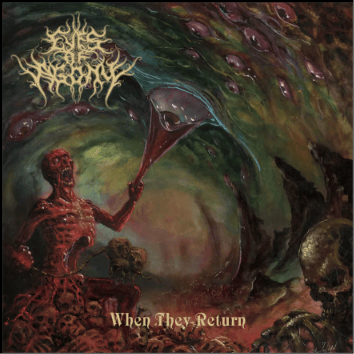
Despite the credentials of its members (Maleficarum amongst others) this one falls flat beneath its overwrought delivery and piped melodrama. Each track follows the same generic formula, pulsing between densely packed, overcooked Behomothist deathcore and open mid-paced segments seemingly deployed to allow the audience to catch up with the material through anthemic breaks designed to net a wider audience whilst they labour under the delusion that they are having a genuine experience. The music is not helped by the germ free production, whose triggered drums and overly compressed guitar tone allow no room for anything to happen beyond this tightly curated showcase of everything that was wrong with death metal from the 2000s onwards. Yes, OSDM’s authenticity wars were obnoxious and annoying, but that does not redeem what it was ultimately pushing back against, which is overcooked and unappealingly clinical displays of melodrama such as this unwanted callback.


Leave a Reply