Hænesy: Esentia
Out 25th September on Purity Through Fire
Five years ago this Hungarian outfit presented an interesting proposition with ‘Garabontzia’, a black metal album crafted almost entirely from clean, reverb drenched guitar lines, working their way through oddly cathartic melodic hooks and chord sequences rich in pathos. There was no denying its proximity to post metal, a prospect that will reliably drive me to disengage. But this felt like post metal done right, or at least black metal playing to the emotive strengths of post metal whilst undergirding it with some substantive artistic foundations. Namely tension, strife, intrigue, excitement, the possibility of something, anything, happening.
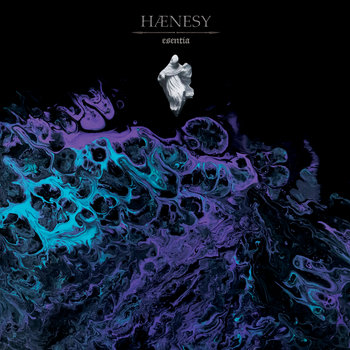
Five years is a long time to form new opinions and tastes. And although there has been a shift of the tectonic plates in this regard, it seems Hænesy have remained static. There’s no denying the aesthetic upgrade they’ve undergone in the interim, with a livelier production, broader timbral range, and maybe a more assertive swagger to their delivery. But ‘Esentia’ offers much the same thematic product as its predecessor, failing to move the dial in any particular direction. This in itself does not make it a total failure. Hænesy’s offer is still a unique one, and any elaboration on this approach is welcome, but aside from some cosmetic tweaks we find much the same entity as before, with any difference in its impact being more down to changes in the palette since ‘Garabontzia’ than anything within the music itself.
On the music itself, we find a slick, driving iteration of melodic black metal. But hardcoded beneath this is a blend of jangle pop, goth sensibilities, and that aforementioned post metal drive to open, comforting catharsis. It’s a potent brew, one that still functions as a living breathing entity thanks to Hænesy’s ability to string fluid musical sentences together, giving these tracks a thorough purpose, identity, and intent over and above the bells and whistles of their stylistic niche. The tracks move between delicate and intricately entwined melodic lines articulated through heavily chorused clean guitar tones, underpinned by a muscular distorted rhythm guitar taking up a role more akin to synth string lines filling out the mix. As these bleed into blasting tremolo runs the effect is more orchestral, as the contrast between these percussive and textural qualities is highlighted, and a chorus of melodic and rhythmic interchanges rises to the top. This creates a cyclical effect. The number of bars each instrument takes to work through a sequence varies, meaning different instruments drop in and out of phase at different points only to line up after a few measures. This presents a thoroughly distinct experience from the usual trebly unity we expect of frigid black metal.
Hænesy wander happily between black metal pacing and a more rockist approach, lining up plodding, domestic breakdowns to feed into euphoric explosions of noise, with drums working at half tempo atop rumbling double bass, a technique rife in modern extreme metal that usually provokes the ick, but owing to the amount of preparatory work that has gone into this material it feels congruous in context. A fine balance is struck between light and dark tones, one that continues through moments of intricate musical motion to sparser passages of ambience. A background dread lurks in the periphery at all times, injecting the music with thematic muscle even at its most light and catchy.
Although the advances on previous material are for the most part merely decorative, Hænesy have landed on a style that is unmistakably them, and this expansion pack offers welcome embellishments for us to sink the teeth into. There is a “damned if they do, damned if they don’t” clause lurking over this artist owing to their uniqueness. Veer too far off course and they risk losing their USP, but refusing to tweak the formula at all can look like resting on laurels. Hænesy have easily cleared the bar in terms of broadening the tantalising horizons of scoped out on ‘Garabontzia’, even if this amounts to little more than shifting the furniture.
Esoctrilihum: Annochiül Xar Sorthïlazur
Out 9th October on I, Voidhanger
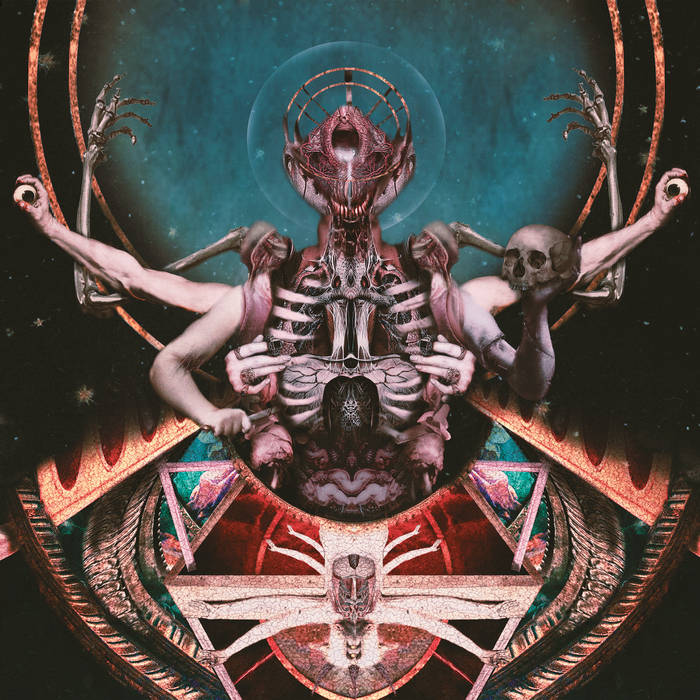
Another document dump from this excessively excessive French outfit. For the first four albums or so this orchestral, avant-garde treatment of modern extreme metal was certainly an intriguing prospect. We are now fifteen albums into a career that spans a mere decade, the majority easily exceeding an hour, and the approach is as extravagant as ever. A wash of angular riffing circling the intersection between the melodic and the dissonant, orchestral flourishes, cinematic presentation, a restrictive, overly compressed mix struggling to contain the sheer quantity of content that Asthâghul, sole member of this project, insists on stuffing into every bar. Melodically, this may be more traditional when taken against previous efforts, but that doesn’t stop Esoctrilihum from refusing to let the music breathe or allow tension to accrue at any point. Falsetto vocals are used throughout the album in a style that – probably unintentionally – calls to mind Fenriz’s efforts on the reworked ‘Goatlord’ demos. There is well over an hour of material here, and given the sheer density of ideas on offer, something is bound to stick. Individual refrains, riffs, transitions, taken in isolation some of them could be intriguing. But all is buried in an overwrought, Cirque du Soleil cacophony that hampers Esoctrilihum’s ability to communicate anything meaningful.
Otras: Na krídlach morovida
Out 15th October on Into Endless Chaos Records
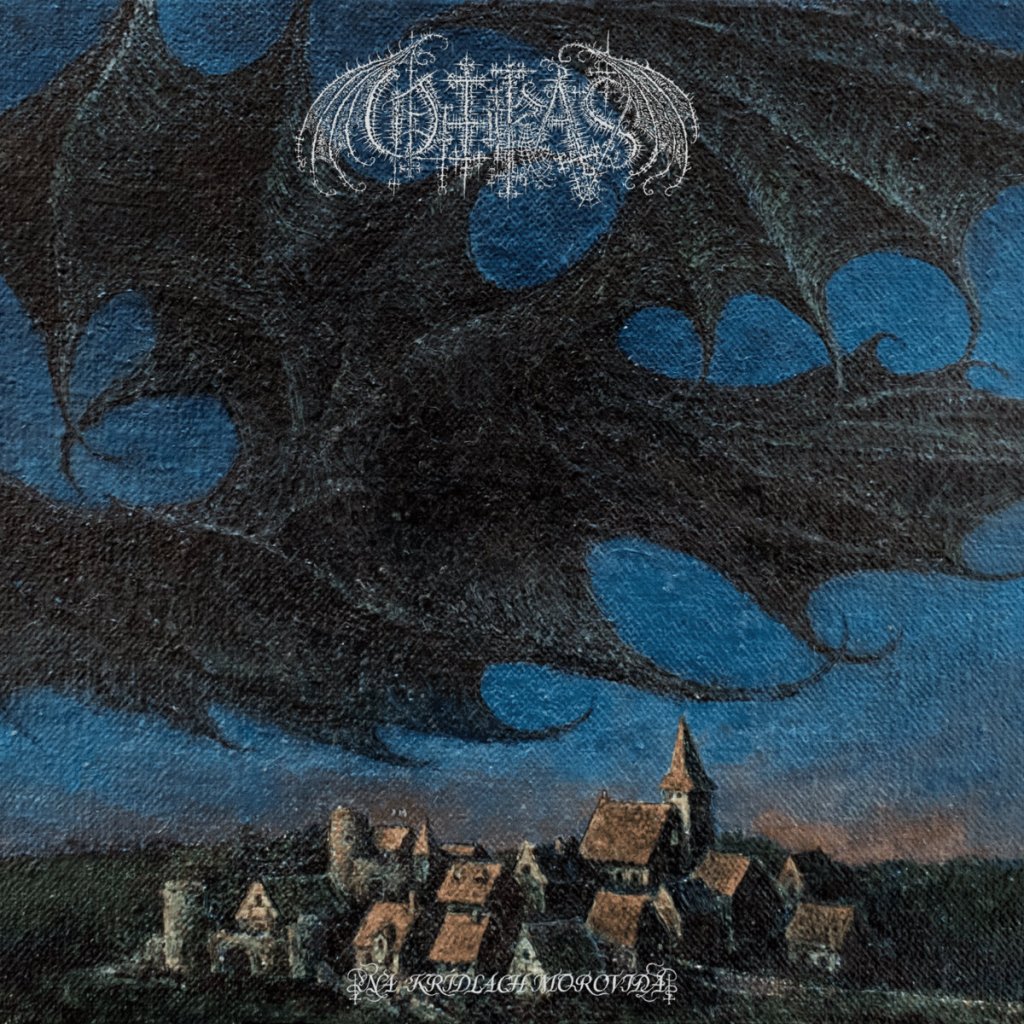
Despite the raw aesthetics, this is actually fairly upmarket black metal in terms of theatre and opulent composition. The music’s power shines through over and above the deliberately rusty sheen of the production, with the guitars remaining dominant despite the tinny tone. Unfurnished but tightly executed drum work sits beneath, delivering a barrage of linear but engaging switch ups between blast-beats and thrash/punk sections. Guitars are equally flirtatious with the legacy of early speed metal, which plays almost as vital a role as more classically Nordic black metal in forming this material. The building blocks may be run of the mill, generic even, but they are sequenced and performed in such a way as to give them a new lease of life. There is a confidence to Otras that many comparable acts seem to lack, a conviction in the delivery elevating what would otherwise be yet more run off from an already exhausted legacy.
Urarv: Nychta Psychis
Out 16th October on Darkness Shall Rise
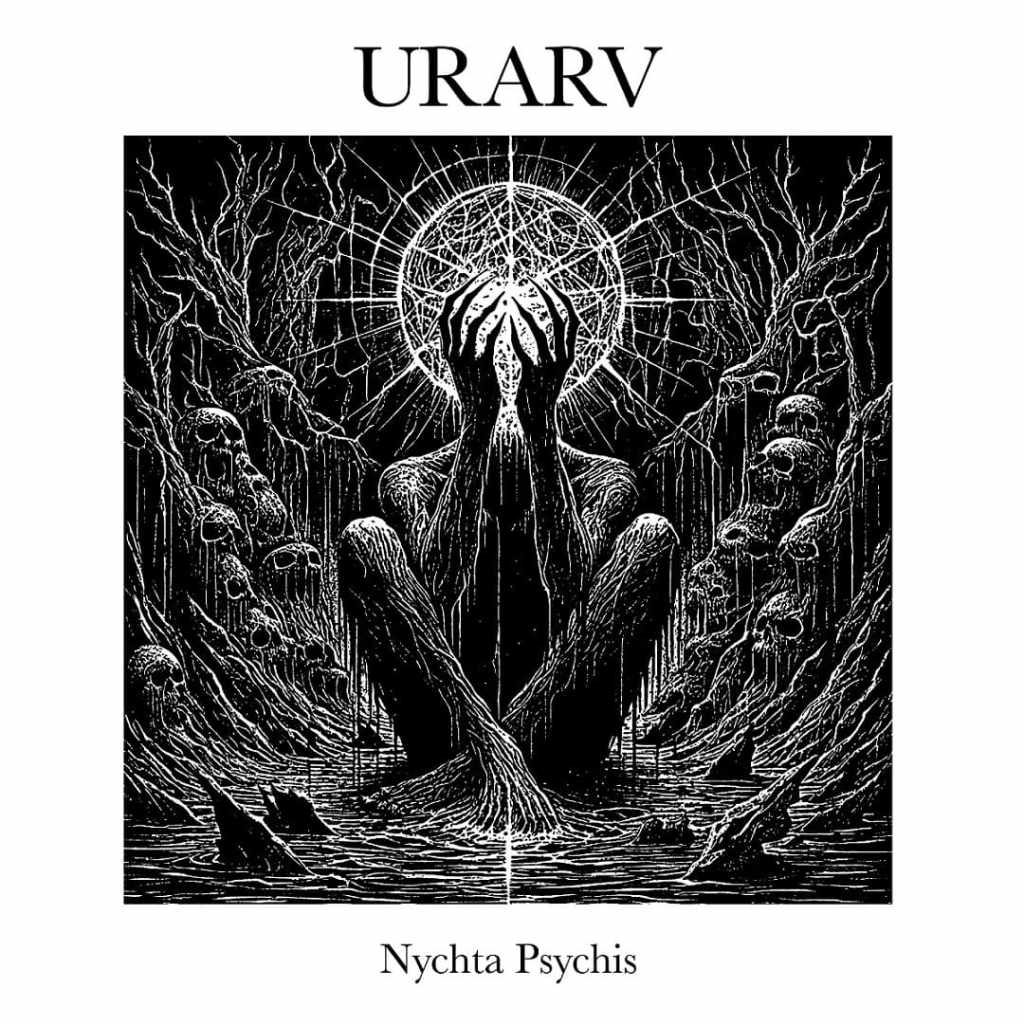
Featuring Aldrahn, a familiar voice in the Norwegian black metal oeuvre across Zyklon-B, Dødheimsgard, and Thorns, this album works eccentric, histrionic affectations into a relatively familiar package of Norwegian black metal, adjacent although not quite subsiding into black ‘n’ roll. But even the more flamboyant aspects of this album, the skittish vocal performance, the occasional surrealist riff, or the frequent genre alchemy, all feel oddly at home within this mix, as if we’ve been here before. Somewhere between the rockist flair of Tulus, the eclecticism of Dødheimsgard, the experimentation of Thorns, Manes, or Ved Buens Ende, later Mayhem, this music taps into a rich tradition of testing and pushing within Norwegian black metal, an alternative history that sits alongside the more well known tale of Immortal, Darkthrone, Burzum etc. In this sense this feels more like an early Genesis album told through the language of black metal, with a cast of characters voiced through a range of vocal styles and techniques. And much like prog rock, the compositions are structured episodically, moving through genres and methodologies with ease, but reliably switching back to the frigid tremolo riffing of the Nordic tradition. Fans accustomed to this ecosystem will therefore find much to appreciate in this brief, efficacious album.
Night Hag: Great Dismal Darkness
Out 16th October on Rotted Life
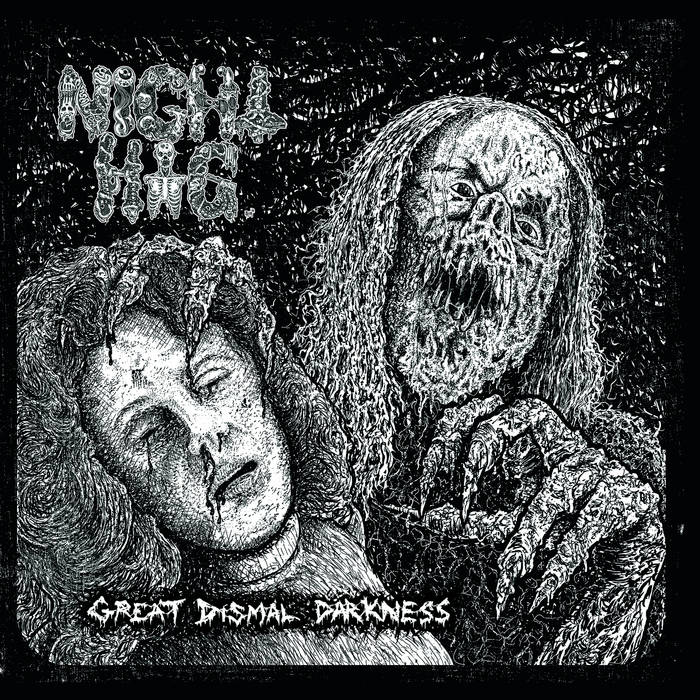
Refreshing death/doom in that, despite a pervasive drone, the momentum never drops entirely, meaning the links between riffs and passages retains a degree of coherence. Although it trades on an industry standard cavernous atmosphere, Night Hag come across more like a sludge band drawing heavily from the well of death metal, achieving this synthesis far more effectively than most. Melodies adopt the drab demeanour of doom, but retain a physical, strident purpose thanks to a confident rhythmic foundation that persists even in the music’s slowest moments. Even during the faster passages a coherence is retained, allowing the substance of the riffs themselves to carry their own weight without relying on speed or an excess of ideas. From this angle, ‘Great Dismal Darkness’ could look rather austere, but it’s this very frugality that marks it out from the pack. An economy of ideas means that nothing is wasted, there is little filler here, no lengthy passages of droning noise whilst we wait for the music to come into focus again. Through its very modesty this Night Hag release raises its head above the parapet.
URNA: The Great Jihad
Out 16th October on ATMF
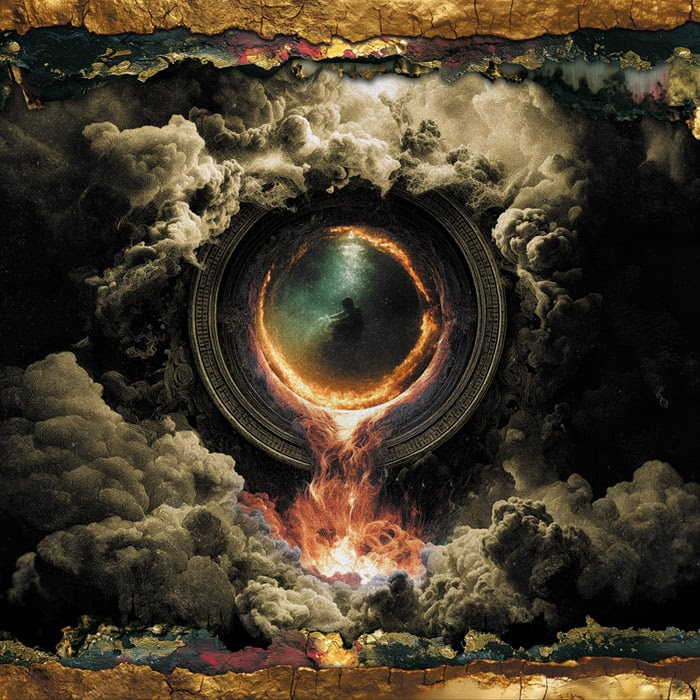
It’s somewhat ironic given the amount of activity here that one is left waiting for something to happen. Essentially a cacophony of meaningless dissonance moving from fast to slow, intercut with ambient interludes as if to contrive some contrast into the mixture given that none is forthcoming in the tonality or dynamics of the actual metallic material. There is motion at the molecular level, but the mix and excessive layering of tracks upon tracks seems to be actively working against us discerning any subtlety. The result, as with so much modern extreme metal, seems to be using a hammer to crack a nut. Talented musicians drunk at the wheel, piling in ideas with no regard for delivering a statement that makes sense. Heavy hands at the mixing desk only compound this issue, as even moments of relative stillness quickly begin accruing surplus textural layers that seem to defy any potential to create contrast. The result is a monotonous slog that is also impossible to simply switch off and “vibe out” to.
Blood and Sun: Aion’s Light
Out 16th October on Nordvis
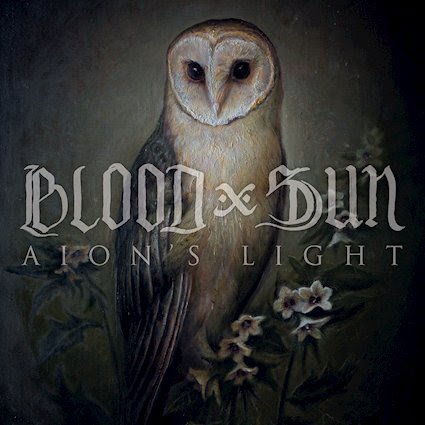
Uncanny brew of neofolk mixing elements of Rome, crooner vocal techniques, and rough American gothic references via Leonard Cohen and later Swans. These tracks are foregrounded by a simple acoustic guitar vocal setup, but buttressed by a host of rich orchestration that lends all a sense of dark grandeur. From a host of light percussion, choral backing, rich string tones, and pervasive keyboards working their way through the core of the mix. It manages to creep to the core of the anachronistic philosophy of neofolk, blending fraught modernism with traditional forms that feel timeliness. The simplicity of song, accessible, knowable, yet lyrical and graceful, is undergirded by a whole host of cultural touchstones, some frenetically contemporary, others drawing on deeper wells of history, combining elements of industrial with the naturalist ambitions of black metal, all contained within the modest frugality of campfire ballads. A tense and lively album that nevertheless blends a range of moods and styles in one eclectic sweep.


Leave a Reply