Chasms of Ash and Inequity
Out 9th March on Blackened Label Records
Metal Archives genres are an interesting thing. The site goes out of its way to stay as broad as possible. I generally agree with this policy. I may even go broader (there are only four metal genres and I will die on that hill). But one unintended consequence of this is that it diminishes the vibrancy and identity of subgenres that are broadly agreed upon within the scene (or what could more accurately be called styles). For this reason, in Metal Archives, a disproportionate number of bands are smuggled under the black/death metal or death/black metal crossover, with little regard for the enormous breadth of artists floating under these descriptors, often with striking inaccuracy.
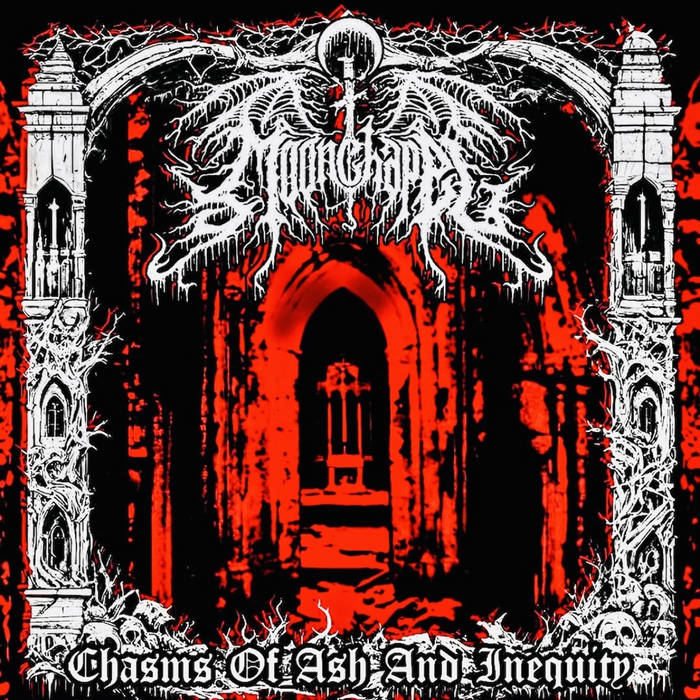
War metal is one such example. A violent, dark, primitive subgenre of black metal, its differences to “typical” black metal – if such a thing exists in 2025 – are largely aesthetic. But seeing as casual tiers of the underground so often mistake aesthetics for substance, submissions to Metal Archives are forever labelling war metal bands as black/death metal despite their connection to death metal being tenuous at best. Here we see a clear example of aesthetic indicators (or stylistic specifications) being mistaken for genre, due to the simple fact that Metal Archives won’t acknowledge war metal as a stylistic divergence of black metal, despite the fact that it will acknowledge this equivalence in something like folk metal, which I’d argue is also a separate stylistic module that could be applied to the primary source material of heavy metal, black metal etc. I don’t mean to level any accusations at Metal Archives. Its role is not to litigate metal genres but provide an invaluable archiving resource for metal. But the unintended outcome of this has been war metal’s unwarranted tethering to death metal in the fandom.
Why quibble so forcibly on this point? Largely to illustrate the many ways that Moonchapel seem to understand – consciously or intuitively – how to communicate in a genre’s bespoke expressive language substantively. This is in stark contrast to the majority war metal bands, or “death/black metal” bands who seem unable to communicate in the language of genre proper, instead leaning on rented stylistic flourishes as a stand in for identity. It’s serendipitous that Moonchapel’s debut was released around the same time as the new Teitanblood. This Spanish entity has gradually become the populist’s choice when it comes to war metal, the new album grabbing headlines in all the expected places. Teitanblood’s menagerie of random affectations are not bound by any recognisable stylistic loyalty – nor indeed does it indicate any desire to communicate any coherent intention to the listener – and so are carelessly dubbed black/death metal by the casual tier of the underground who see little need to examine riff minutiae if they can identify a clear aesthetic intent.
Moonchapel, by contrast, narrate a clear and engaging current of surrealist darkness through the bowels of this debut offering, binding the marked aesthetic colouring around a solidified expression of haunting black metal. The ferocity of Blasphemy and Profonatica is offset by the uncanny atmospheres of Beherit or Black Funeral, matching the raw physicality of the former impulse with the meditative reclusion of the latter.
Tracks are simple and linear in delivery. Riffs flowing in clear logical sequences. Drums are defined by a monotonous, industrial consistency, upgrading the music into a muscular, active experience. The immediacy of this id only compensated by the cerebral deviations introduced partway through each track, as single guitar lines soar above the cacophony to deliver an ever opening sophistication of classically evil yet no less intimidating melodic intent. Something that I’ve only seen replicated in Demoncy.
Moonchapel explode the formula of war metal by deconstructing their own momentum and remaining fixed in place with near monomaniacal perseverance, something perhaps best illustrated by the slow collapse that closes off the album on ‘Unfurled and Glowing in White-hot Horror’. Any compositional aspiration attempting to rise above the barbaric rhythm sequences devolve into plaintive cries of high pitched simplicity, crushed in place by the chasmic bluntness of the rhythm guitar. Guttural vocals distorted to the point where they could barely be recognised as vocals complete the picture, adding their entropic intention to the mix as the music’s solidity slowly unwinds.
Genre and style are merely incidental. Critics fret over their detail because they are an important shorthand when discussing music, any loss of precision risks being misunderstood. Hence why their meaning and history is rigorously and regularly defended. Policing their misapplication is not mere idle pedantry. Styles, words, genres, these things bubble up from the underground to the casualised tier, their meaning and significance being distorted and mistranslated in the process. Until artists themselves inculcate these inaccuracies, and begin mistaking aesthetic intent for genre allegiance, and crafting a compositional language around a set of talking points they believe will play well with a certain crowd, a shortcut to a readymade audience.
Moonchapel is a reminder that it is not the genres that are flawed, but our application of them. It is black metal in the tradition of the Finnish or early North American style. In this sense it builds worlds within this rather modest remit. It sets clear boundaries on its own aesthetic and stylistic intention. From this place of clear limitation grows a cornucopia of artistic currency. Dark passages, ritual intoxication, studied meditation, and striking barbarism.
 Hate Meditations
I am absolutely humbled that you took the time to listen and write a review of this magnitude. Thank you so much for your support! KS
LikeLiked by 1 person