Sprung has spring
There’re flowers everywhere. Something my son, who recently learnt how to say flower, repeatedly reminds me of every time we pass a dandelion, which is many. Rain still pelts the soil with sporadic and utilitarian urgency. But the pauses between showers are now defined by glorious stretches of sunshine, its inroads into dusk evermore persistent and long lasting. Heat remains erratic, coming and going as it pleases. But the listening rotation has well and truly pivoted with the seasons regardless. I intend to consolidate the recent resurgence of classical in the mix into something more than a fluke, hence the appearance of our boy Elgar and his vaunted Cello Concerto. Summoning are usually found at the point of any seasonal flux. The ever reliable comfort blanket stewarding me through moments of atmospheric distress. Lastly, I use Kostnatění’s 2023 offering ‘Úpal’ as a barometer of my ability to pick winners during AOTY season. The verdict on my own taste will shock you.
Elgar is a curiosity for a number of reasons. One of the few quintessentially English composers of the late Romantic/early modern era to enter the classical canon despite his music owing more to the continental style of Schumann or Brahms. A shining icon of high Victorian and Edwardian culture despite his Catholicism. His Cello Concerto in E Minor reflects these many incongruities. First performed in 1919, the triumph and pomp of his earlier First Symphony and Violin Concerto are set aside. Inappropriate for a public still digesting the horrors that Europe had just inflicted on itself in the Great War.
Despite the mournful threnodies weaving their way through the entire piece, it was considered dated at the time. A throwback to an age of innocence. Wagner, Bruckner, and Mahler had brought the collapsing tonality of late Romanticism to a close, World War created new material conditions demanding new forms of expression to truly capture. The flowing, melodic lamentations of Elgar’s cello, despite their great beauty and passion, were forced aside by the jagged rhythmic dissonance of Stravinsky, the atonality of Schoenberg, or the ambient impressionism of Debussy.

The piece resonates with a modern audience however. I’d speculate that as war shifted from memory to history, the sorrow of death on such an untold scale was imbued with a sense of spectacle once removed from the reality of such things. The traditional, tonal flow of Elgar’s piece is a more fitting representation of collective pain from the perspective of a generation unaccustomed to the raw immediacy of mass tragedy. War was an illogical reality the late Edwardians were unable to metabolise. Hence the arts lashing out at the idea of art itself, each form seeing its norms, techniques, and traditions violently dissected as a descent into nihilism or hedonism took root by the 1920s.
But it’s Elgar’s ponderous, modest, yet unambiguously dark Cello Concerto that has stood the test of time in the popular imagination. The passion of the opening solo lamentation, the solitary soldier regarding the field of battle once the guns have faded. The orchestra making incremental inroads with each reiteration of the main refrain, before a conclusive crescendo, as a nation, a continent joins the soldier in his reflections. The second movement’s tentative, conversational style a more studied, perhaps hopeful reflection. The cello working through playful modulations anchored to a simple central theme. The orchestra occasionally interjecting, attempting to inject triumphant overtures into the narrative throughline, only to be silenced into a hesitant, qualified contentment.
From a contemporary perspective we could regard the third movement as a form of melodic ambience, as waves of gentle sonic energy wash over the listener guided by the clear lyricism of the cello lines. More accurately it’s a ballad taking stock of events. The unfiltered pain of the first movement is replaced by a more considered, sober grief, perhaps acknowledging the obligation to dust off and rebuild.
The final movement pays lip service to the traditional symphonic form by bringing the many themes of the previous movements together. But it does so in a convoluted, almost schizophrenic way. The many tempo changes, dynamic shifts, and key changes evincing confusion, mood swings, indecision. Oscillating wildly between euphoria, violence, and depression. It recapitulates themes from the previous movement until the final, opening theme of the piece is once again restated. The journey concluding. These shifts are also notable by virtue of the fact that there is no pause between movements. Elgar clearly intended this to flow as one, continuous meditation on post war grief. Utilising the cello’s richer tone compared to the violin, yet still taking advantage of the subtlety and grace of the instrument’s delicacy. It remains an interesting throwback to late Romanticism at a time when such unapologetically tonal music was fast falling out of favour, and a new era of serialism, chromaticism, and eventually minimalism would continue the dissection of these older forms.
There’s no better time than the waking hours to crack open Summoning. 1999 was a watershed year in many ways for these guys. Silenius had just kicked off his martial ambient project Kreuzweg Ost, Protector’s Die Verbannten Kinder Evas was gaining momentum with its third album, and much of the darkwave refined on this side project was about to find its way onto Summoning’s fourth, ‘Stronghold’, an album that saw this duo shift gear with a massive refit. New drum machine, new keyboards, guest vocals from Tania Borsky, and a dramatic retreat from the robotic cycles of the previous two efforts into a more organic, conventional beast of folk oriented ambient metal.
‘Minus Morgul’ and ‘Dol Guldor’ succeeded in crafting a vast, sprawling world for the listener to get lost in, introducing simple refrains and elegant counterpoint as returning characters to decorate the tremendous landscaping of the muddy guitars and heartbeat-of-the-world snare drum. But they remained somewhat weighed down by cheapness. The quintessential example of overcoming one’s limitations in spite of all good sense.
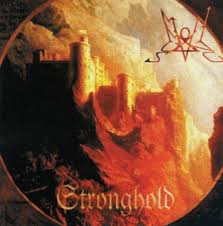
The ‘Nightshade Forest’ EP released in 1997 bookends this era perfectly. Considered a high watermark of their career, it perfected the lo-fi Tolkien metal of the previous two albums. Smoothing off the rougher edges and presenting a more confident, ethereal, and altogether fully realised vision of pure fantasy through a medium that was still ostensibly indebted to a black metal vocabulary. It was the first time they transcended their means of production, paving the way for the multifaceted beast we find on ‘Stronghold’.
I’d always assumed that this was their longest album. But it’s actually a few minutes shorter than personal favourite ‘Dol Guldor’, which stands at a towering hour and eight minutes. Having listened to ‘Dol Guldor’ more times than you, and always craving more by the close, it’s a testament to that album’s endless ability to captivate that I never realised how offensively long it is. But this also speaks to a bloat at the heart of ‘Stronghold’.
Despite retaining many essential Summoning hallmarks, the deviations they attempt to implant into a completed biological entity, whilst understandable, are perhaps where this album goes astray. Both the technological upgrade and advances in melodic language beautifully litter the album like wild flowers. With countless refrains, juxtapositions, flowing string lines, and greater rhythmic motion elevating the immediate experience of the material. But for all this objective progress, it pigeonholes them as songwriters, instead of the experimental sonic architects we found on earlier material. They attempt to retain the signature expansive landscapes, and elevate them with lyricism, notable key changes behaving like a shift from verse to chorus, a laboured narrative to-and-fro in stark contrast to the implied abstractions of ‘Dol Guldor’. All the opulence, lavish symphonics, richer guitar tone, dynamic drum patterns, and greater vocal range cannot cloak the fact that this world feels somewhat limited, flattened off, overworked. The listener is penned into a journey that will brook no ambiguity.
Despite these heavy handed criticisms, ‘Stronghold’ remains a towering achievement of late 90s black metal. As with all their material it transcends the genre, connecting it to ambient, darkwave, neoclassical, folk, and high fantasy with a sober joy few (perhaps none) have matched. For all its faults, one cannot help but get captivated by the raw ambition on display. Equally, it should be noted that this was far from the death knell of Summoning as a creatively viable lifeform. If anything, ‘Stronghold’ has remained anomalous, with subsequent works integrating its designs with more subtlety and success. ‘Let Mortal Heroes Sing Your Fame’ emphasised the songwriting dimensions of the duo’s personality. Leaning into jaunty rhythms, childlike whimsy, and narrative bombast with shameless ease. The delivery of the material a hair away from being irredeemably kitsch.
Equally, 2006’s ‘Oath Bound’ integrated the expansive technical aspects of ‘Stronghold’ into an austere, grand, regal offering of ambient black metal intoxicating the listener with wanderlust. This second high watermark of their career solidified them as not only one of the most unique outcrops of third wave black metal, but one of its most consistent. There is a continuity to their work, an idea that is “Summoning” present even in the outlying debut. But this clear artistic signature is constantly refreshed across multiple eras, styles, and identities.
Q1 is well out of the way. Some are already eyeing up their AOTY lists. The ritual culling of the year’s music only offset by the many voices criticising the very idea of AOTY lists. I’ve long harboured suspicions toward the anti-elitist crowds. They often appear to be more enamoured with the idea of hierarchies than the rest of us. Compiling best-of lists, top albums of the month, tier lists, best of the decade, best of the nation, best of the genre. The charts’ relevance may be long dead, but its obsession with hierarchy lives on in the micro internet cultures that have replaced it.
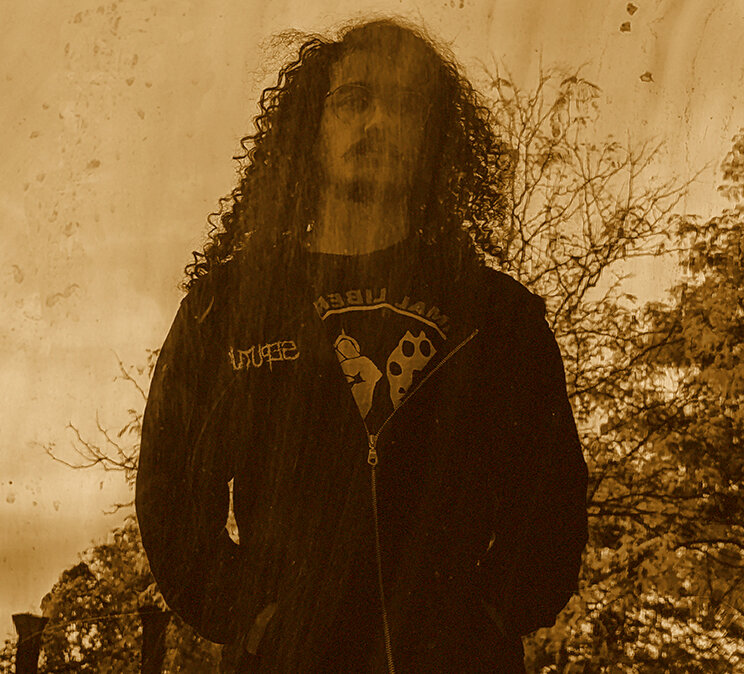
I’ve been around the block on the value of AOTY lists a few times by now. I’ve concluded that they’re a useful annual ritual, even if a lot of material featured on these lists is consigned to the dustbin of history. But when I am struggling for something to listen to, they are a useful resource. Did the albums I picked hold up? Do I revisit many of them? What exactly did I find so appealing about them at the time? One such example is Kostnatění, a wildcard choice by any metric.
A common issue I encounter with contemporary metal, regardless of genre, is the fact that it tends to do one thing really well. One idea, vibe, concept, or technique is explored to the full. Sometimes it’s done well enough that it holds the attention. In the overwhelming majority of cases, once an artist has stated their intention, there’s very little in the way of elaboration to justify forty minutes worth of material. The music is overstudied. Too obsessed with form and how to subvert to convey anything to the listener. It is less than the sum of its parts.
Kostnatění stand out in this regard for their ability to balance a clear aesthetic intention rooted in modern avant-garde metal whilst unpacking an array of conflicting material and moods, filtered through a nomadic attitude to style. This latter point sees Turkish folk music integrated into the guitar technique, idiosyncratically altering the pacing and strumming methods whilst retaining a recognisably extreme metal ethos.
‘Úpal’ digests elements of noise rock and dissonant black metal into this brew, churning out a distinctive concoction intended to transpose black metal functionality into music specifically preoccupied with heat. Not desert or wilderness necessarily, but heat as a psychological and physical experience, the warping effects this has on one’s mentality. The abstract qualities at work behind Kostnatění’s tonal armoury play into the sense of disorientation, illusion, unreliable narration. A bipolar, anomic push and pull accentuated by non-linear rhythms, painfully tugging at the music without any discernible consistency.
Despite the highly bespoke aesthetic package, Kostnatění bypass the tunnel vision of contemporary extreme metal by taking the time to flesh out their own unique sound world. Within this environment almost anything is possible, but it remains a claustrophobic bubble, requiring degrees of concentration and attention to truly insert oneself into this space. Moments of stasis are fraught with tension and not granted lightly.
I’m loath to admit that sometimes I’m wrong. But most of the time my instincts prove correct. Back in 2023 I called this as a candidate for AOTY. Looking back over the list I was still being coy about whether to even present a top forty, so I grouped albums into batches of ten and ranked them according to four tiers in an effort to placate AOTY sceptics whilst still allowing myself to partake in the annual ritual. This album made the top ranking. Looking back a couple of years after its release I’m glad to report that my instincts were indeed correct. ‘Úpal’ is a rare grower, and certainly justifies the habit of rooting round a previous best-of list for new perspectives on the landscape of metal’s recent present.
 Hate Meditations
Leave a comment