B-tier black metal and the break of autumn
Your tastes are not your own. Your moods are orchestrated by nefarious digital platforms. Everyone knows this now. ‘Inception’ may have been right that the mind can always spot an idea implanted by a foreign agent. That we would somehow care, or not act on this idea regardless? It got that bit wrong. We all know the influence algorithmic weather systems have on the music, film, or TV we consume, we’re all a chance doom scroll away from experiencing inception. But instead of selling our dad’s company, we fire up the streaming weapon of choice and enter that fugue state required for a session of deep content absorption.
In light of this, it’s comforting to be reminded that a process as un-digital and fundamental as the changing seasons still has untold power over my cravings. The overwhelming urge to listen to nothing but garden-variety black metal at the first sign of a falling leaf reminds me that I am a profoundly simple creature, driven by a primitivist lizard brain far beyond the reach of anything so complex as a recommendation algorithm. In the wasteland of binaries that is my decision making process, this brittle, nebulous artefact of computing is far too weak and convoluted to stand up to the might of something as primal as summer giving way to autumn.
Over the years, I’ve gone from being merely able to metabolise the special misery of English autumn to actively cherishing it. Against the backdrop of pumpkin spiced latte mating season, the grey skeys, crescendo of downpours, and low sun illuminating the colourful cornucopia decorating life’s temporary cessation, all engenders in me a craving for the most basic, route-one, meat ‘n’ two veg black metal available. The kind of thing one can only really find in that bizarre late 90s no man’s land loosely referred to as the third wave. Sure, it’s easy to dismiss this era as nothing more than overly zealous Burzum/Darkthrone fandom, resulting in entire catalogues predicated on the formula established on ‘Transylvanian Hunger’ and ‘Hvis Lyset Tar Oss’, albums by now creaking under the weight this legacy.
But turn-of-the-century third wave, for all its derivative, bloated, Norwegian burlesque, retained two important features lacking in black metal since the 2010s: amateurism, and a total lack of shame. For anyone that just likes the raw, unfiltered sound of black metal, the exact Platonic form people call to mind when they think of black metal (never mind that we should really prefix this as Nordic black metal), these recordings ooze a comforting ambience, like the smell of home. An ambience only enhanced by the duff takes, bizarre compositional choices, random blips of noise, odd vocal patterns, and heroically bad lyrics.
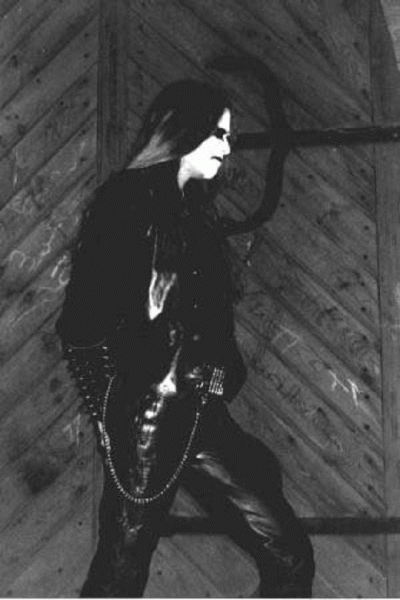
Judas Iscariot, imitator of Norway, first of his name, perfecter of albums where nothing happens besides mid-paced blast-beats, tremolo strumming, and lacklustre vocals opining on helpless worms and some knacker’s frozen tracks. This really is patient zero for unadulteratedly average black metal. They’re the reason black metal fandom is forever subject to bizarre double standards on open mindedness by the better angels of music commentary. Why we’re not permitted to just like the way black metal sounds, why we must be “purists” or “elitists” for doing so. And sure, there is an excess of demo tapes out there with badly photocopied covers and an unhealthy enthusiasm for winter. But just because, pound for pound, this is what the majority of black metal became after the late 90s, it doesn’t follow that this is what most fans actually listen to on the regular. For every Judas Iscariot there was a Thorns. I’d wager naught but the most depraved individual has purchased and inculcated Satanic Warmaster’s entire discography. Nor, I believe, do many people gorge themselves on Judas Iscariot’s flurry of activity in the late 90s (five albums and two EPs in the space of three years no less) quite so readily as I just did this morning. It’s invigorating sure, but so is a line of speed.
That aside, on returning to the source material for all b-tier black metal, the primary text that is a Judas Iscariot album, it’s remarkable how fucking fresh it sounds. For all my love of metal’s broad and many aisled church, black metal has always been my bunker, the little hole I dwell in when I need to recover muscle mass and absorb nutrients. Unlike poorly crafted death metal, I can listen to the sound of black metal in the vein of Judas Iscariot almost continuously because of the…sound…I like it. But Judas Iscariot, being the original imitation, still has things going for it that one could – if they were so inclined – make an intellectual case for, elements that extend beyond a direct appeal to the cancerous libidinal craving for basic black metal that eats away at my dwindling hours on this planet.
Judas Iscariot bulges with riffs from the average to the serviceable, but Akhenaten is still capable of at least one profoundly compelling melodic narrative per album. Giving him an edge over most of today’s competition. Just listen to a track like ‘Before the Circle of Darkness’ to get a sense of what I’m talking about. The execution may be hanging by a thread, but one can’t deny the power of such material. That’s before we come to the token folky guitar-sans-drums numbers that always appear toward the end of each release, ‘I Filled with Woes the Passing Wind’ being the paragon (a blunt USA rebuttal to Russia’s Forest maybe). The remaining content is stimulating enough to fall into that liminal category of “irritating”, and from there stubbornly refuses to deviate, intrigue or reward the listener for their efforts. One could read this as an active and needlessly violent first stab at ambient black metal. Indeed, many in the USBM scene have cited Judas Iscariot’s importance for that very reason. A missing link between Burzum and the wave of USBM that followed, anticipated by the likes of I Shalt Become, who offered not one, but two JI covers on their 2006 reissue of ‘Wanderings’.
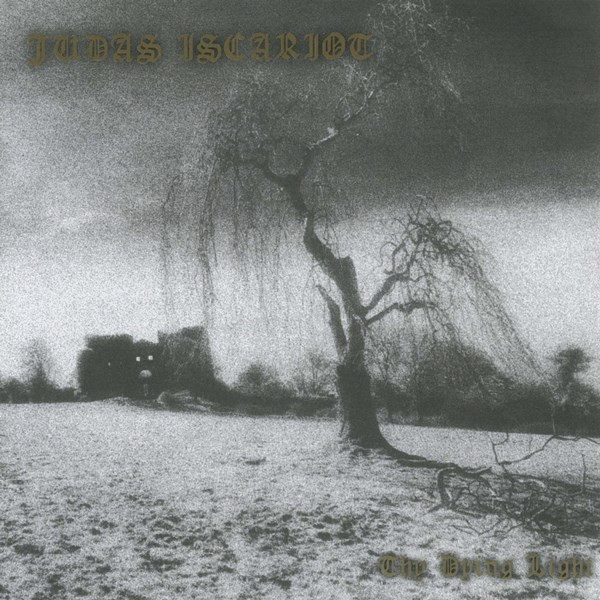
And then there’s the aforementioned amateurism. Here Judas Iscariot dominate the competition. His Norwegian progenitors don’t even come close, being, for the most part, accomplished musicians consciously opting for simple forms and dodgy recording techniques. By contrast, there is absolutely nothing curated about Judas Iscariot. Akhenaten was a one take guy and it fucking shows. His albums average more tempo changes than ‘Nespithe’. Drums fall in and out of the pocket at random, guitars desperately try and correct, reliably sliding around in panic for the correct fret at each transition, as if Akhenaten wrote and learnt his own material minutes before hitting record (I believe this part is literally true).
This is black metal as a document of unrepeatable rituals. A moment in time decorated by naught but one man’s demented passion. If you’re still with me this far into the article, I hope you’ll take this next statement the way it’s intended: Judas Iscariot is from the heart. It’s perhaps fitting that his swansong ‘To Embrace the Corpses Bleeding’ is the outlying piece of data here. The choice to recruit sticksman for hire Cryptic Winter immediately reigned in the tempo changes, tightened up the songwriting, elevated the melodies, forced Akhenaten to compose…something, and paradoxically ended up being his least engaging release by far.
Neill Jameson may be the peripheral elder patron of what’s left of US hipster black metal today, but at the turn of the century he was something an overzealous disciple-cum-correspondent of Akhenaten. No stranger to hyperbole, he famously laments his first two albums now. The result of youth, an overactive imagination, a brand of urbanist nihilism unique to the US, and that core ingredient we keep returning to: amateurism.
Aside from speed and rage blocking out any melody from ever seeing sunlight, the key ingredient setting Krieg apart from its peers is locale. They are a quintessentially American product, both in presentation and thought. This goes beyond the lengthy samples (American Psycho featuring prominently) littering his early work. The aggression, violence, and disorder of this music is not merely combative, it’s downright obnoxious. It’s the black metal equivalent of late 90s edgy Gen X humour, a provocation without a cause. Something borne out by just how disordered and seemingly meaningless these albums are.
Ironically it’s ‘The Church’, the EP falling betwixt first and second album that sees Jameson at his most focused. Ironic, because the EP is also a fucking mess of Ildjarn proportions which, like his Norwegian elder, alienates even the black metal faithful due to it having the “wrong” kind of bad production. One has to rewire their brain into to making it think it’s listening to noise or performance art in order to imbibe this material.
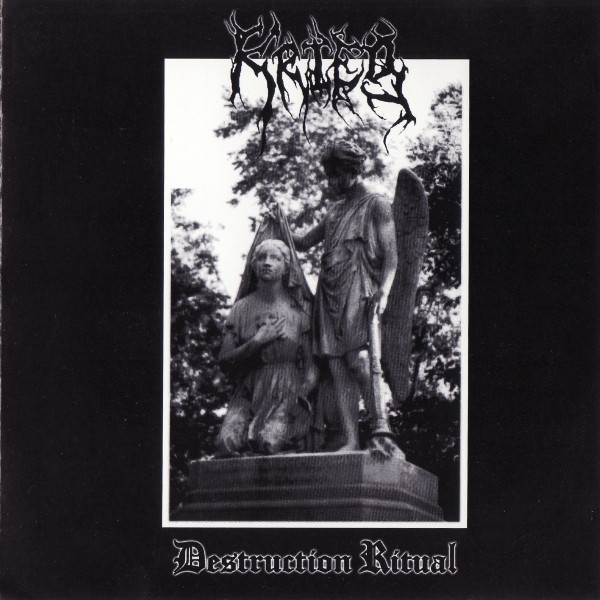
And then we have ‘Destruction Ritual’ itself. An album that Jameson would later confess some affection for, but again, only on experimental or avant-gardist terms. Having just partaken in the requisite quantity of black coffee, I’d go so far as to say that this is Krieg’s best. Marrying a love of grindcore, a deeply personal and at times clumsily expressed anomie, and a recognisable melodic signature peeking through the cracks. It’s a melting pot of all the best parts of Krieg, before Jameson felt any shame in what he was inflicting on the world.
Unlike its predecessor, which, despite its charm, flows like a random sample generator punctuated by hyperbolic ejaculations as visceral as they are aimless, the sophomore (to indulge in the yanks’ lingo) functions as a cohesive unit. The blind passion is not lost as a result. Further, in contrast to the ‘The Black House’ that followed a hop, skip, and several split EPs later, it is a world where things can happen. There is possibility within the dodgy takes, random interjections of feedback, and the nakedness of the vocal cuts on ‘Destruction Ritual’.
Krieg consolidated its slicker, controlled, intentional self by the time 2010’s ‘The Isolationist’ met its public. An album as layered as it is laborious. Whilst it builds on the urbanist Americana nihilism, presenting it from more dignified, Byronic angles, replete with recognisable musical patterns (something we sophisticates refer to as “themes”), one can’t help but lament the subtext weaving its way between the transition from ‘Destruction Ritual’ to ‘The Isolationist’, namely the process of aging. Of becoming an apologist for one’s youth. For trying to retain the things that made youth special yet with the advancement of years realising that they cannot be jettisoned fast enough.
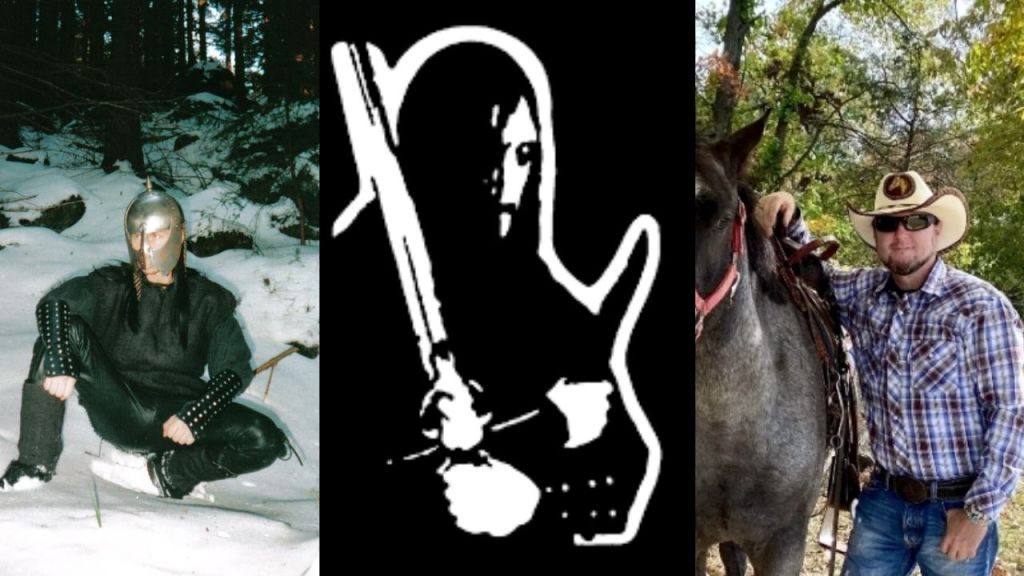
The most interesting thing about Nargaroth is not the polarising discourse surrounding this enigmatic project, but just how enjoyably average the music behind the furore actually is. I wouldn’t normally plot someone’s career through the medium of promo shots, but it says something that Nargaroth started life posing as a Germanic rebuttal to Rob Darken, evolved into a parody of becorpsepainted militarism, and ended/continued as an authentic redneck. This is an artist whose sole reason for existing, for the longest time, appeared to be pure provocation, but their material output was always serviceable if dull black metal (up until 2009 when things took a turn for the surprisingly ambitious). So why all the fuss?
Obviously, it was that one blip, which is – deservedly or not – what Nargaroth continues to be remembered for: ‘Black Metal ist Krieg (A Dedication Monument)’. An hour long hate letter to the scene. The foundational text that established early black metal memelore. Before there was LOLcats, there was ‘Black Metal ist Kireg’. A blip both tonally and musically, because the rest of Nargaroth’s output at the turn of the century is remarkable for its quiet dignity. Sure, dodgy sample choices abound, provocative song titles (‘Love is Always Over with Ejaculation’ anyone?), weird extended church organ interludes seemingly left in because someone forgot to fade out the looped sample and decided that it reiterated their hatred for the audience to leave it droning on far beyond any reasonable artistic license would allow.
But again, as an abstraction, I enjoy the sound of black metal on a pre-intellectual level. It’s just how I’m wired. Maybe it’s because I’m part deep-sea starfish, I don’t know. That aside, believe me when I say that there is much to recommend the disjointed early output of Nargaroth. A more personable reinterpretation of Graveland, a needlessly thorough dissection of Darkthrone, incongruous hints of pre-Satyricon black ‘n’ roll that feel almost accidental were it not for the fact that Wagner insists on repeating every idea undulating from his deranged psyche for seven straight minutes.

The common thread running between Nargaroth’s dignified works – the debut ‘Herbstleyd’, the needlessly combative ‘Prosatanica Shooting Angels’ – and the late stage pomp of ‘Semper Fidelis’ along with ‘Black Metal ist Krieg’ (aside from excessive length), is the profound love Wagner clearly has for black metal. It makes me suspect that we’re not so different, he and I. Deeply, hopelessly, unhealthily infatuated by black metal. Not any particular album, band, scene, or riff, just the cacophonous abstraction that is black metal. And we both seem equally unable to convey this love in any meaningful way. We’re both sloppy musicians, ill adapted to communicating with the dignity and patience required to go toe for toe with silverbacks of the genre whose works we worship.
If Judas Iscariot satisfies your urgent craving for concentrated black metal, Nargaroth is black metal fanfiction. An invigorating, unnecessary, and ultimately humbling experience. The scene experiencing itself with predictably disastrous consequences. Even at their most dull and irredeemable, Nargaroth presents us with many questions, like “are you really going repeat that bit again?”, “did that song just end?”, and “what is the minimum, legal requirement for something to be called a riff?”.
In 2009 Nargaroth put out ‘Jahreszeiten’, a black metal reimagining of Vivaldi’s ‘Four Seasons’, his career has never looked or sounded the same since. The creation myth of black metal’s internet humour has since been at pains to say and do something with this music beyond forcing it to stare listlessly at its own reflection. His efforts go further than most, and as a result are of mixed quality. But one can’t help but come away with a lingering respect, and a desire to dive yet deeper into the carnival bizarre that was black metal between 1999 to 2010.
Autumn’s just getting started. As is, I’m sure, my degenerate lust for unpasteurised black metal delivered directly into the bloodstream.
 Hate Meditations
Re: Krieg, when discussing their early works, you never seem to cover Sono Lo Scherno. IMO, it’s Jameson’s best work; recorded in 1998 between the first two albums but not released until many years later, it’s Krieg’s most ambient album, with a lot of the overt hardcore influences of the other early Krieg albums filtered out leaving just a guitar drone bolstered by utterly deranged drumming. In many ways, it feels like the album The Black House should have been, less immediately confrontational than the other early Krieg albums but no more professional, a desperately spastic desolate ambient mood piece.
LikeLiked by 1 person
“I like these diaries, keep them up,” is as much of a (sincere, encouraging) preamble I can muster before:
“Your tastes are not your own. Your moods are orchestrated by nefarious digital platforms.” Speak for yourself! You can opt out of the algorithmic ecosystem anytime you’d like. I’ve a growing concern for the increasing frequency in which you mention this. It’s clear you show disdain for it, from assessments of culture and art at large all the way down to your person, but I’m suspicious that your intent is to absolve yourself of any responsibilities that come from the diagnosis, by insisting this is some inevitable fact of life you and I cannot contend with. It’s the dominating form of media consumption, sure, but does that mean it has to be yours? This blog, whether you’ve noticed it or not, carries shades of the ethos your “Nordic black metal” heroes wielded when championing your favorite art form. You are unafraid to challenge every norm as much as in practice as in word, except, seemingly, this one. Why stop here?
I’m not saying you’ll save the world by going to a record store. Our pedantic Marxist brains are far too calcified for that delusion. But there’s a chance you might save yourself. I believe there’s something measurable, be it lost or gained, in the mediums with which art is delivered to us. I wish it weren’t this way, frankly, but I can’t confidently conclude anything else after seeing the devastating effects algorithms have had on music, art, and the world, and myself, and I don’t think you can either. Rather than attempting to make peace with it, you can try to live to your own standards. You would be proving nothing to anybody except yourself. It may or may not change anything for you; you can’t know until you try. Start small. Throw a CD in the changer. I know you own them!
LikeLiked by 1 person
“Speak for yourself! You can opt out of the algorithmic ecosystem anytime you’d like.”
How exactly would someone do that? Even for someone like me who has never once used Spotify, who gets most of their recommendations from either IRL friends or seeing bands live, the same pollution has occurred somewhere upstream in almost every case. To even find out basic information about a show (what club it’s at, what time the doors open, etc.) one must usually trawl Facebook, and the promoter almost certainly chose what bands are playing via some form of social media presence, so even if I find out about Insurrexion by seeing them live and being blown away by their set, the algorithm influenced my choice at multiple levels — my knowledge of the dates, location, and times of Metal Threat fest, and the promoter’s decision to present that particular band to me. Likewise, if I find out about a new-to-me band from a friend, unless it’s a band they knew about from the old days that I had just missed (as happens from time to time), at some level, they found it through the algorithm, whether directly or through indirect means as described above. One doesn’t have to directly connect themselves to the sewer pipe to be affected by it; the downstream knock-on effects are unavoidable, even if by fraction.
LikeLike
You’re right to point out that the mainstream influence of algorithms pervasively work their way downstream, even if one should avoid the direct channels, the “sewer pipe” as you well call it. I confess I omitted this for the sake of rhetoric in my initial post, though I’d always intended to engage in discussion on the topic with whatever replies may be. So thank you.
Holistically speaking, you cannot opt of of the algorithm ecosystem anytime you’d like. It is indeed inevitable. One can, however, alter their direct relationship to it, dramatically and totally. The initial requirement would be a complete disconnect from the aforementioned direct channels, any place where the algorithm has clear, observable influence. I would identify these as streaming services and social media. This was my first step. I have also gone as far as not using a smartphone anymore, but I’m unsure where exactly this fits in the argument’s narrative (if at all). From here, one has to find alternatives. I am able to find all information about shows around me through each club’s website, for example, or even through flyers and word-of-mouth (I acknowledge my relative fortune in living in a metropolitan city for this purpose). Should, God help us, all the information for the show be only available through Facebook or Instagram, I am usually able to access the pages for just long enough to retrieve it before Meta throws up the account login restriction guards.
In this sense, my direct interaction with the algorithm technology is as close to nil as I can reasonably make it. Yes, it undoubtedly influenced the steps it took outside in order to land at my feet. But I picked it up of my own accord. I could continue to search for every way possible to avoid algorithms, but I find peace in treating technology as a force of nature, its destructive march something out of my control, loathe it as I may. I can no sooner stop the algorithm from affecting which band plays in my city than I can stop the weather from canceling an outdoor festival. All I can do is attend, listen, and conclude what I will about the art.
As I mentioned earlier, this is not about affecting the tides. One’s consumption habits cannot a revolution make. However, this is also not simply about doing things that make you feel good. I believe there is a material difference in the ways we interact with art, specifically how much algorithms devalue them and ourselves. I am an optimist, and believe this will not last forever, far from it. But it’s absolutely our present moment, and during which, I encourage all to think critically, while also reminding them of their autonomy in the situation.
LikeLike
First of all thanks for reading and for commenting thoughtfully.
To clarify, the statement you picked out was rhetorical hyperbole for the sake of contrasting the powerful simplicity of the changing seasons to the brittle Spotify playlist (a joke in other words). I discover new music cos I’m on the mailing list for a number of labels, I do also follow bands/labels on social media via the HM pages. I use Tidal (where i curate several of my own playlists) & Bandcamp for releases I need to catch up on. This is just a necessary facet of running this site. My use of these tools involves actively searching for specific things i already know about, not whatever these platforms are trying to push on me through recommendations.
When I’m not listening to music for this site I do indeed throw on a CD or cassette, of which I own many (including 5 by Judas Iscariot and 7 by Krieg mind). Generally i buy the albums I give a glowing review for here. Or else I take recommendations from friends and followers who generally have good taste, but again, this may be once removed from the algorithm, who knows.
But digital purity is not something I advocate for, in theory (and in different hands) these platforms can provide a net benefit, but not in their current guise, and not in the way that metal fandom has blindly embraced them.
My recent pieces concerning social media and streaming are broader abstractions, based on my concerns about the effects this having on the scene at large. Any “we” i refer to is the royal we, intended to provoke/challenge anyone embroiled in this infrastructure, and maybe shed some light on why parts of the fanbase are experiencing a general ennui. The time I spend online in this environment I guess you could call research.
Don’t mistake it for a confessional on my own listening habits. I don’t think I’m “above” it all by any means, but my listening rotation “out of hours” is dictated more offline than most i imagine.
LikeLike
It’s good to see some retrospective appreciation for this unfairly overlooked and somewhat benighted epoch in black metal. It really irritates me when 2000s black metal is written off as a dark age of bedroom-bound dorks that serves as little more than an embarrassing interstitial period between The Classics and the genre being rescued by Liturgy and Lamp of Murmur.
Maybe I’m a little bit biased, as a 90s baby whose journey into black metal began in the late 2000s. But I’m firmly convinced that some of black metal’s finest moments can be found in that decade. Endless Dismal Moan? Dark Tribe? Lugubrum? IC Rex? Circle of Ouroborus? The Axis of Perdition? Beherit’s “Engram”? Silencer’s “Death – Pierce Me” and the DSBM classics? As far as I’m concerned, it isn’t even a matter of opinion, but just unequivocally true that the 2000s were a great time to be a black metal enjoyer.
And, personally, I wouldn’t even say that Judas Iscariot is average or B-tier at all. I get what you mean by that, in that JI is very much archetypal of the no-frills, Norwegian-derived template that any black metal listener would recognize as basically its “default sound.” But despite the lack of stylistic adventurism, the organic character that it exudes is for me charming and captivating enough to cement Judas Iscariot as a top-shelf pick.
LikeLike