Or why you can’t just enjoy things
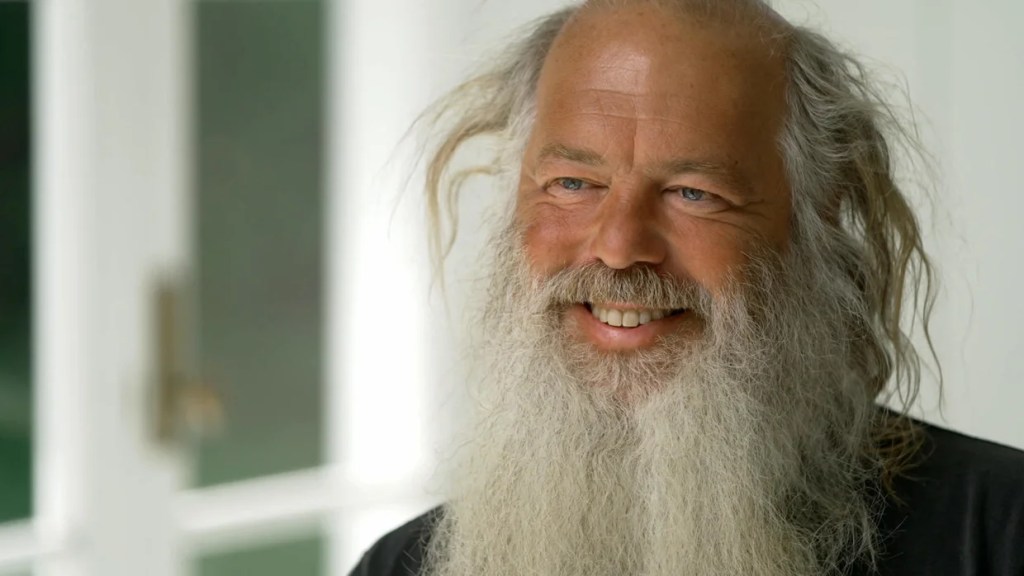
There’s a saying among my people. It goes “I have no technical ability, and I know nothing about music, but I know what I like and what I don’t like, and I’m decisive about what I like and don’t like”. It was handed down to me by my forefathers. No one knows its true source. But many believe it was first uttered by Rick Rubin on 60 Minutes. Rick Rubin is one of the most renowned record producers ever. He has the ear of some of the bestselling artists in the world, who trust his powers of discernment often more than their own. First there was the word and the word was taste. But over time the word has been corrupted. Its simple elegance has been poisoned with vanity. As Adam Neely pointed out in a recent video essay, the word of Rubin has been perverted by generative AI platforms like Suno. They promise to remove all strife from the realisation of our desires. They do this by appealing to our vanity. “You already have perfect taste” they tell us, their technology will simply allow us to realise it.
Streaming has long been grasping to fulfil this promise. For years Spotify has sold us on the idea that our taste is unique, a kind of digital shadow we imprint onto their app, which in turn crafts profiles for us, rich in stats, adjectives, moods, and recommendations. But imperfections remained. The streaming profile still relied on inefficient externalities like someone else, usually referred to as musicians. These people may be talented, but they were never designed to respond to the exact configuration of your desires and no one else’s. Enter AI, which can, in a matter of prompts, make your taste flesh.
We can’t all be artists, but we all like to believe we have good taste. The perversion of the word promotes taste to a skill in itself at the expense of any other skill, rendering us little more than isolated, compliant consumption nodes. Now we can all be Rick Rubin, gurus of our own taste matrix, it’s in our reach, we just need to be bold enough to grasp it. It’s a narrative that treats the very idea of becoming a skilled craftsperson as nothing more than elitism. The hypemen of generative AI view the time, patience, and resources required to become good at an artform with uncompromising hostility. And make no mistake, they would happily see the erasure of communities, cultures, and traditions that form around art along with it. They would dynamite the very social bedrock of humanity if it meant selling another monthly subscription.
It’s worth asking then, why are we so flattered by an appeal to our taste? And more importantly, what goes into forming this so called taste? In its current form, taste is a relatively new concept. For millennia people didn’t have taste. Not really. Their relationship to art and culture was predetermined by time and place, anything that happened to be floating around the atmosphere of their community, usually at the behest of whatever organised religion held sway at the time, or handed down through folk traditions. The dark arts of developing, let alone expressing taste, required resources. Taste was an elite pursuit. But even here it was intimately entwined with pragmatism. 17th Century peasants smoked short tobacco pipes they could hold between their teeth, freeing their hands up for the days’ labours. As a response, lords began favouring longer and longer pipes that needed to be held, signalling that they were wealthy enough to have no need for hands free smoking. Saxons favoured pottery consisting of clay and cows’ dung because this allowed the pot to expand and contract during the cooking process without cracking. This also gave it a dull brown colour in stark contrast to earlier Samian ware, its crisp, uniform orange hew only possible under the efficient ministrations of Roman industrialism. Necessity engenders beauty.
In Medieval Europe, objects that were considered beautiful in and of themselves were still understood in Augustinian terms. This had nothing to do with an individual’s preferences. Beauty was inextricably linked to the idea of goodness and truth, two concepts that were definitely not up for discussion in Medieval Europe. One could only grasp these notions with the help of God through divine illumination. Recognising beauty, or in the modern parlance, having good taste, required being as closely aligned to God as possible. In an age still determined by ruthless pragmatism, the overwhelming majority of people had little time for aligning with God, and so for anyone outside a religious elite, aesthetics fell off the agenda.
It wasn’t until the Enlightenment that taste takes on an individualist dimension. Although it goes without saying the lads certainly couldn’t agree on what this meant. For Rousseau practicing good taste was about curtailing frivolous living and forging community with others. His understanding of taste may have been rooted in the social, but even the implication that taste is somehow a conscious choice on the part of the individual would have been unthinkable a few centuries earlier. For Hume, taste is about perception, an innate ability we are all born with, but one that can nevertheless be refined. Like software developers able to pick out minor errors in dense lines of code, perceiving beauty took years of practice to discern its presence in objects. For Kant, taste is a subjective judgement. But he was very clear that it was indeed a judgement, lest it succumb to the tyranny of mere “personal preference”. Good taste is in the mind of the beholder, but under the close supervision of a priori, universally applicable principles we can only acquire knowledge of through regular practice.
Through some chimerical hybrid of these ideas, the practice of good taste took root in 18th Century aristocracies. All the while the fruits of colonial empire and technological progress vastly expanded the possibilities to express good taste. Kitchenware, cuisine, fashion, living spaces, all fell under its remit. But it was still a highly social concept. One had to exist in the world, live in communities, and have experiences in order to refine it. Taste was a sophisticated network of symbols and cues, signs and signals legible to others, non-verbally revealing some piece of information about a person’s status, background, profession, or intellectual calibre. The pool of just who could practice good taste was also expanding. The emergence of the bourgeoisie forced the old aristocracies to move the goal posts, casting the tastes of this “new money” as vulgar, unsophisticated, gauche. New aesthetic hierarchies were imposed to replace the receding authority of religiously ordained divine beauty. Art was apportioned off into high, middle, and low brow subdivisions. The goalposts shifting depending on the whims of the dominant tastemakers of the day. One day austerity is highbrow, before sliding down the pole to lowbrow frugality, as opulence once again finds favour within the upper echelons. In the 20th Century, mass consumer culture arrived. Our choice of everyday objects was no longer limited by whatever raw materials were available to hand. Suddenly the luxury of displaying one’s individuality escaped its elite compound, allowing everyone to organise their entire life around consumption preferences that communicated something about the self to the world.
But now something strange is happening. Taste is no longer just a way of signalling certain aspects of your identity to others, it is identity itself. Taste, once the painstaking process of divining the will of God, or the ability to perceive beauty honed over a lifetime, becomes little more than repeating the “why can’t we just enjoy things?” mantra. Even 20th Century mass consumer culture kept the worst excesses of taste in check by requiring a social dimension. Public spaces, collective experiences, communities, regional customs, all tempered the process of entropy toward this purer form of individualism, toward us all becoming Pac-men, gorging our own, solitary path through heaps of content and calling it an expression of our authentic selves. Vestiges of taste’s true meaning remain. We still use it to project ourselves, to curate how we wish to be seen by others. Although now most of this activity takes place in digital form, our own unique avatar, defined by a series of choices that leave a trail across streaming apps and subscription services, likes and follows, curated and arranged into a personal brand sprawling its way across the internet. But taste is also becoming how we orientate ourselves to the world. It has become sacrosanct. To have our taste questioned or cast into doubt shatters us to our very core.
We like to believe our taste is unique to us, but without a rich churn of inputs taste atrophies. This fetishisation ignores the fact that good taste requires friction and conflict to hone. Not just going out into the world to discover new things, but chewing them over with peers, throwing ideas around and learning from specialists in various artforms. But the whole matrix of experience that should go into forming our preferences is being ejected in favour of an all subsuming fetish, decoupled from any context. There’s no one at the wheel. Taste is now the self. What are we if not a set of preferences expressed? The customer is always right, right down to the art and entertainment we can now create and consume in a single, perfectly closed circuit. Why outsource something as fundamental as “my truth” to others? Musicians, actors, artists, writers, all outdated appendages inserting unwanted friction between you and the realisation of your desires.
One symptom of the fetishisation of taste I’ve been tracking for some years now is an increasing hostility to the art of criticism. The latest episode came earlier this year when successful YouTube music guy Antony Fantano once again found himself in the spotlight. The source of the furore was some comments he made on a Hasley album a few years back that I have no interest in. As opportunistic Substackers got to work, the ire slowly shifted from the specific comments on Hasley to the purpose of music criticism itself. As if the made-on-YouTube Fantano invented the very concept of scoring albums out of ten with some wry comments. I rarely pass up the chance to take umbrage with Fantano’s takes that barely paddle beyond the shallows. But let’s not throw the baby out with the bathwater. It’s tempting to argue that streaming technology all but rendered criticism obsolete, allowing us all to form an opinion on *the content* untroubled by these droll opinion filterers with their unwanted takes. Tempting, but misguided. The art of reviewing stuff is about so much more than dry consumer advice or mean spirited hitpieces. Criticism, when done well, is the frontline of culture understanding itself, a good review will provide context, it’s the first step in a long digestion process, to be a good critic is to hone that Humean ability to perceive beauty (or lack thereof) in particular artforms. To the AI taste fetishist this is all highly seditious. Why do we need context when we can just enjoy things? And this, ultimately, is the snake oil. I have, at various points, been able to create music that pleases me. But for me this involves interacting with a piano. An instrument that has gone through centuries of development, adjustments, and evolution, thousands of people have had a hand in my user experience before I even hit a note. The network of technologists and artists that went into forming an upright piano interacts with an individual able to produce music from this artefact. Removing this delicate history from the process of creation in the name of convenience leaves us with little more than a husk.
Although hyperbolically stated, Rubin was also reaching for a Humean understanding of aesthetic taste. He may not have any particular skill or ability when it comes to creating art (or so he claims). But he does have a highly attuned aesthetic perception and the track record to prove it. The promise of tech gurus like Suno CEO Mikey Shulman, to serve up our taste free of skill, craft, community, or any meaningful context to speak of, this has nothing to do with refining a perception, or, per Kant, uncovering an a priori judgement within us. Nor will it allow us to become little Rubins. It is nothing more than the fetishisation of undigested desire in order to make us more efficient vectors for consumption. And by treating taste as a protected characteristic we are simply preparing the ground.


One of your best written pieces.
LikeLiked by 1 person
Crucially, one doesn’t choose their own taste, so it’s already dubious to base self-worth on it. Whoever fakes “good taste” for social capital lies to themself first and foremost. Besides, being supposedly discerning of quality or even genuinely understanding the culture and scene behind the art is useless without the ability to express it. I’m not talking about you, Shelly, but I’ve interacted in person with metal veterans who struggle to connect their thoughts from sentence to sentence, so all their knowledge and understanding might as well not exist (I certainly wonder what they’re trying to say sometimes).
But back on fetishising taste, most mediocre people you know probably have nothing going on in their life, so they decide to be proud of the way they passively drifted to their current position.
LikeLiked by 1 person