High Speed Death: Damned Genesis
Out 7th March on La Caverna Records (originally released in 1991)
This restored and remastered version of a previously lost demo reveals an Italian outfit working at the peripheries of thrash’s transition into death metal. I am unable to find out if this material was written prior to 1991. As it stands, when compared to equivalent projects – Massacra, Master, Sepultura – High Speed Death reach back to classically heavy metal calling cards whilst groping forwards into the complex, jagged, ambiguous world of germinal death metal.
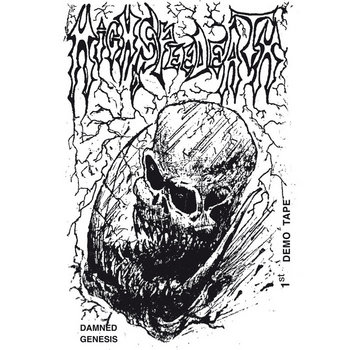
For extended periods this could justifiably be compared to ‘Morbid Visions’, but High Speed Death tend to compliment the feeling of submergence brought on by the drab, tritone decorated atonality with surprisingly conventional melodic gradients. Tracks like ‘Land of no Return’ reveals a heavy metal band keen to overcome the limitations of the demo quality production, ambitiously striking out into the kind of world building one would expect of a Cirith Ungol album via driving, purposeful lead material consciously interacting with the prominent bass. But such moments are bookended by proudly violent, primitive hardcore riffs and the Calvera-esque vocal delivery.
Equally, chunks of bracing speed metal are frequently deployed as an opening salvo, revealing a deceptively complex panorama of intentional material. Riffs are surprisingly elongated, each sequence taking up more bars than is typical for this era of borderline thrash. Equally, High Speed Death are adept at forming chains of simple ideas as a means of building tension, a link phrase anticipating a burst of speed or abrasive lead guitar segments that seem to veer from wild abandon to deliberate melodic opulence, as if to keep the listener guessing as to whether this artist truly has mastery over their material.
And that’s the ultimate tension and intrigue sitting beneath what is prima facie just another lost demo of primitive proto extreme metal. For all the rough musicianship, one dimensional demo tape quality, and proto death metal riffing, when one studies the broader picture one finds a strikingly ambitious work, moving through a number of stylistic shifts, a broad emotive range and some surprisingly daring compositional choices for a band that never made it past the demo phase.
Crepescule: Hybrid Cancer
Out 7th March on La Caverna Records (originally released in 1992)
Formed by members of High Speed Death, this more explicitly death metal venture folds the older DNA of primitive speed metal and staccato thrash punches into a more fluid, dynamic offering of coherent, early atmospheric death metal. At times it would not be unwarranted to liken this to a more basic version of Suffocation, one bookended by a patient, doom ethos most obviously expressed in the amount of real estate taken up by the traditional melodic flow of the guitar solos alongside some welcome keyboard lines, but also via the incremental transition of theme from one riff to the next in gradualist builds of developmental material.

Sound quality wise we’re still talking demo quality here. But the clarity is such that one can still study its minutiae even if any distinct character is lacking. Everything flows toward the mid-range, hardly surprising given this is where the bulk of the riffs tend to settle, but this also means that guitar leads and eerie synth lines are coated in a muddy, ghostly quality that – whether by accident or design – lends the music an uncanny, gothic quality.
This demo does a good job of integrating the stylistic breadth of the High Speed Death material into a more coherent whole, digesting its influences to the extent that a distinct identity can now be discerned. One that stretches between staccato death metal punches, drab doom grandeur, and ambiguous currents of thematic material that keep the listener engaged through their undulating unpredictability.
Crepescule manage to echo the jarring schizophrenic flow of death metal whilst integrating its intellectual obsession with horror. One could almost call the former its physical effects and the latter the conceptual colour scheme decorating this raw material. Crepescule remain intriguing for being able to capture the range of death metal’s intent on this brief and dynamically limited demo release.
Sectarium: God’s Wrath
Out 7th March on La Caverna Records (originally released in 1993)
Restored demo from this obscure Cuban entity. Drab gothic doom is buttressed with basic but agreeable slabs of death metal, resulting in music that is both primitive yet oddly regal in stature. Hellhammer appears to be the most formative influence. Basic speed thrills almost dragging the music up tempo, fighting against its own sense of inertia. These moments of clunky chaos provide a welcome juxtaposition with the overall flow of the music, which seems happiest operating at funereal tempos allowing depressive, basic melodies of drab, downbeat melancholy the space to truly unfurl.
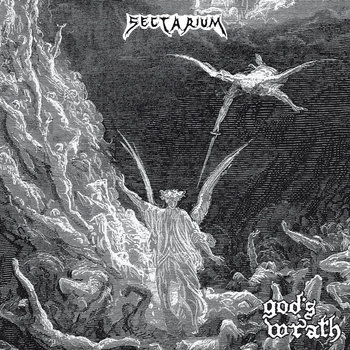
The limitations of the recording means that for extended passages – much like Hellhammer’s material – we have little more than a single guitar line working its way through droning chord sequences pleasing in their overreach. Guitar leads do occasionally jump out, resting more on the borders of classic rock and heavy metal for their intentionality and bluesy phrasing. Whilst not totally lacking a melodic signature, they serve more as accents than anything that could be said to develop the thematic material at any stage. Guttural vocals complete the picture by providing an atmospheric undercurrent through their sense of melodrama, one aided by a healthy dose of reverb.
Sarcafago can be heard in the faltering, chaotic impetus toward speed exercised on many of these pieces. As if doom metal is actively suppressing the kinetic will out of the music, insisting on stylistic dominance. Its an interplay that injects a metadrama behind the explicit thematic development of the material itself. As with much demo material from the early 90s, it’s this overreach that allows it to stand the test of time. The components are basic, the playing sloppy, the recording primitive. But one can map the intentions onto the modest material we are presented with, discern a larger world taking shape behind the actual substance before us.
 Hate Meditations
Leave a comment