Realms of Chaos: Torment of Belligerence
Out 14th February, self-released
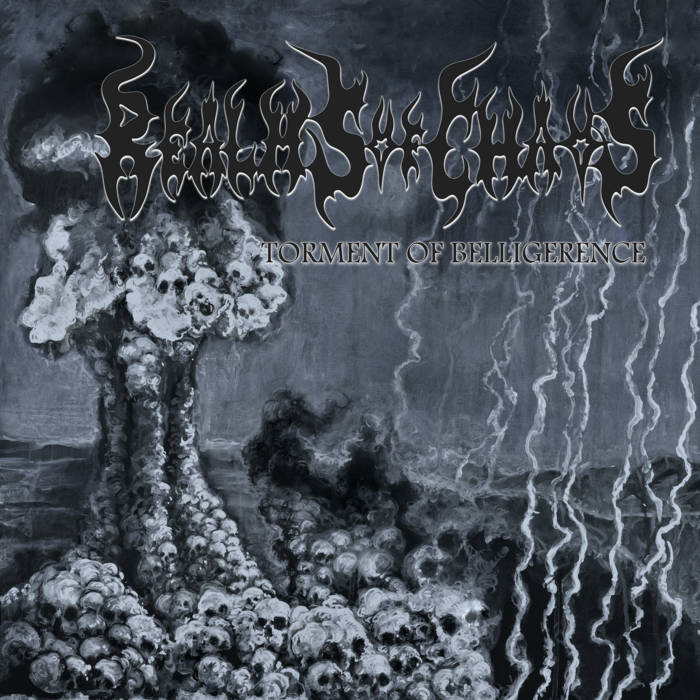
Precision timed, energetic death metal takes its cues from an earlier strain of brutal death metal that suppressed the hardcore influence in favour of linear, mechanistic bursts of intricately aggressive thrash. Late 90s Morbid Angel, Hate Eternal, and elements of Immolation of the same era stand as the most obvious influences, here repurposed into a more literal statement of violence. There is none of the multi-dimensional interplay or complex machinations of modern technical death metal. But to some extent this works in the music’s favour. It presents as a rather simplistic iteration of blunt, muscular momentum, but through sleight of hand it smuggles in well placed accents, melodic flair, and a cornucopia of intriguing link riffs that commentate on the central thread, either disturbing the flow or emphasising it to great effect. Solid, gruff vocals work in quick bursts of staccato phrases as opposed to sustained notes, further exaggerating the choppy, pneumatic drill like pacing of the music.
Atavistic Passage: Demonstration Three
Out 24th February, self-released
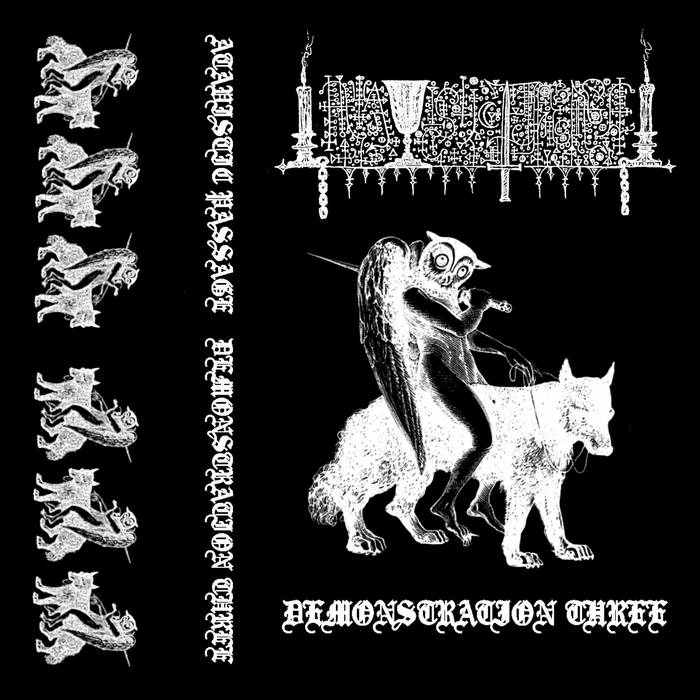
True to its title, this literal demonstration sees Atavistic Passage move away from black metal to a more freeform, textural experiment in dark ambience, supplemented by a jauntier dungeon synth exercise toward the middle of the EP. At its most abstract it acts like musical archaeology, as benedictine echoes are suppressed beneath the modernist noise of static and random metallic percussion invocative of industrialism. But the music also swings to a far more literal but no less artful study in simple medieval synth refrains, bright and carefree, as if to contrast with the more melancholic meditation on the incongruity of music and architectural heritage as it abuts against the march of history. The proto music of dungeon synth is somehow elevated in this setting, being asked to convey more than simple wish fulfilment fantasy, the contrasting half formed melodies struggling to emerge above a brume of static and industrial percussion tells its own anachronistic story. All emergent properties arising from a rudimentary and informal collection of sonic investigations.
Absent Ritual: The Cryptic Descent: A Compilation of Madness
Out 6th March on Eternal Death
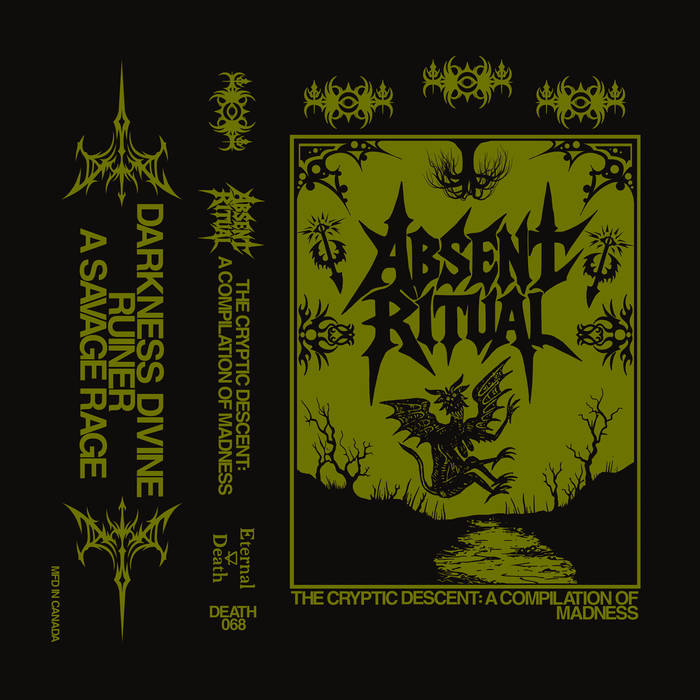
Jagged, strained, ghoulish black metal advances with a ponderous gait somewhere between the classic Nordic style and the labyrinthine darkness of a Negative Plane. A classic Hammer Horror aesthetic informs what is otherwise relatively triumphalist black metal, proudly melodic and at times furnished with a euphoric brightness via some well placed albeit decidedly rockist guitar solos. But underlying this is a claustrophobic ritualism that grounds the music in sombre darkness, thus undergirding any latent heroism with a degree of sobriety. For a short EP, Absent Ritual present a mixed bag of more commercial elements juxtaposed with a clear desire to appear experimental. Although the results are a little disjointed and hard to process in places, the result is an undeniably more interesting listen than any garden variety regurgitation of the same ideas delivered in mildly different configurations.
The Mon: Songs of Embrace
Out 6th March on Supernatural Cat
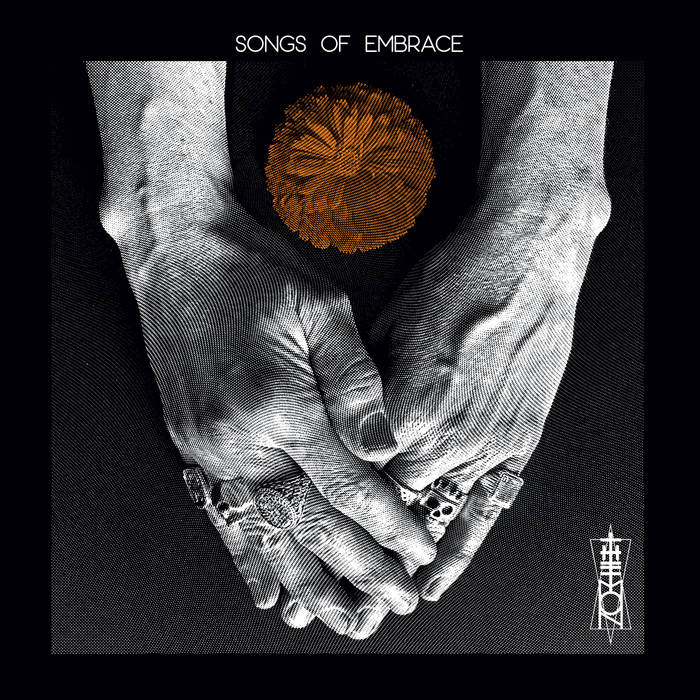
Side project of Urlo, best known as the bassist and vocalist of Ufomammut, offers a combination of ambient drone and solo bass pieces drawing from the psychedelic doom tradition. The intention, and indeed the result, is a subtle exercise in contrasting textures. As the album opens with a more aggressive buzz of electronic noise, it presents as hostile, akin to alarms and other noises specifically designed to be unpleasant. But as the album progressive, we get a more meditative and indeed more welcoming patchwork of instrumental sequences akin to early Tangerine Dream or Ash Ra Tempel. This push and pull between tentative fragility and the more openly combative distortion of the noise genre proper continues throughout the album, as if successively trying to lull us into moments of quiet reflection only to reawaken a sense of alertness in the face of threat. In this sense its appeal is far more abstract than even the relatively expansive vision of Ufomammut, as raw musical rudiments in the minimalist tradition are tasked with articulating statements on shifting moods and themes, unshackled from the dictates of percussion or indeed any rhythmic pulse to speak of.
Erbeet Azhak: Only the Vile Will Remain
Out 7th March on Amor Fati
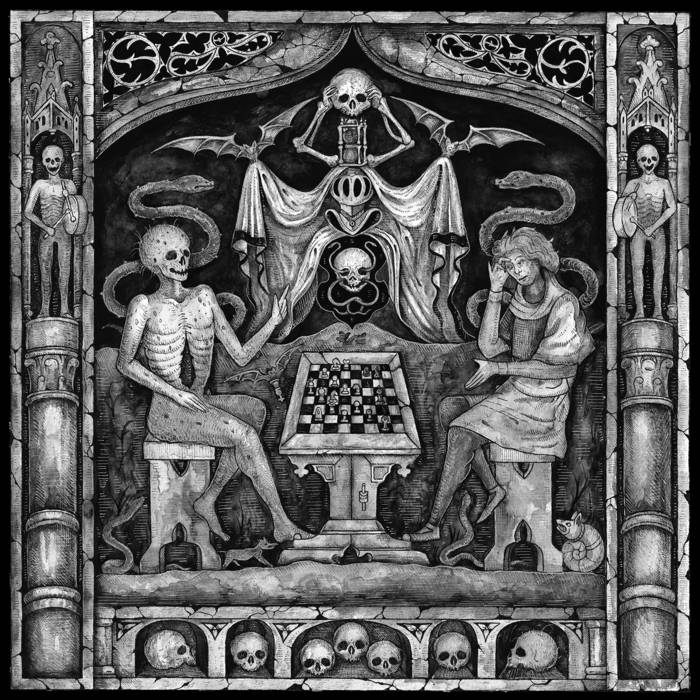
Somewhere between dissonant black metal and the gauche histrionics of later Mayhem comes this rather overwrought display of modernist black metal. Erbeet Azhak take the wall of sound approach, allowing droning chord progressions and tight but linear drums patterns to accrue into waves of sonic information. Fluid lead guitars are then given license to emerge atop each crest. Whilst this does give us some information by which to navigate these pieces, generally the final result comes across as a homogenous, indistinguishable mulch. The problem, as with most black metal attempting to go beyond the genre’s limited configurations, is the fact that this artist appears entirely focused on aesthetics and presentation. The result is a fully furnished experience of one particular tone and mood throughout. Anyone looking for a degree of dynamism or even some discernible identity or intention behind the raw materials propping up this edifice will be left wanting.
Bras D’Honneur: Hate Speech
Out 13th March on Primitive Reaction
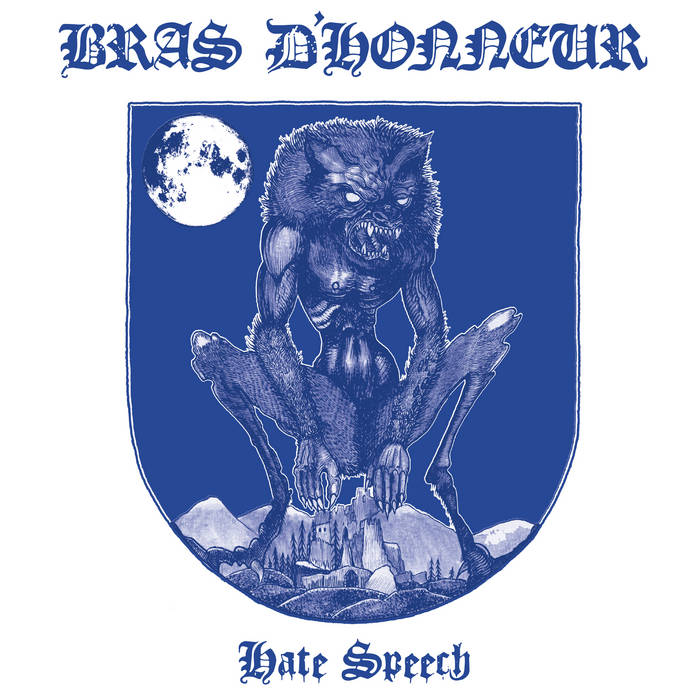
The latest project from the dynamic duo behind Drudkh and Precambrian, this sees Saenko and Petrov flex their grindcore muscles, offering a blunt axe of Blasphemy derived assaults. Distinguishable from their other work insofar as any melodic impulse is even more repressed beneath the oppressive impulse toward simplicity and minimalism, which allows aggression and violence to reign undistracted across this material. But the music tends to flow in a very similar way to their more traditional black metal projects. The swelling ambience, and strong interaction between the tone of the guitar and how each transition or new riff is introduced leverages these textures to greatest effect is something that distinguishes all of Saenko’s projects to date. Tracks consist of two or three simple ideas, articulated with a refreshing degree of conviction and intensity, gaining greater currency through the sheer relentlessness of the repetition. Simple shifts in pitch often suffice to add motion and dynamics to the music, but whilst they are hardly generous with developmental material, when it arrives it shifts the entire orientation of the piece, raising the stakes and adding a degree of tension that is sometimes lacking in more garden variety war metal.
 Hate Meditations
Bras D’Honneur have some simple ideas with a “refreshing degree of conviction and intensity”, alright. For the next album cover I’d suggest the werewolf on the military emblem hold up a large wooden sign, Looney Tunes style, that says: “Hey Mr. Marxist Metal Reviewer, we can’t wait to use all that fancy NATO weaponry on folks like you when Operation Gladio 2.0 kicks off. Seriously, we know your adress and … STOP HEADBANGING FOR A SECOND AND LISTEN TO WHAT WE’RE SAYING GODDAMN!!”
LikeLike