Voodus: Emanating Sparks
Out 28th February on Shadow Records/Regain Records
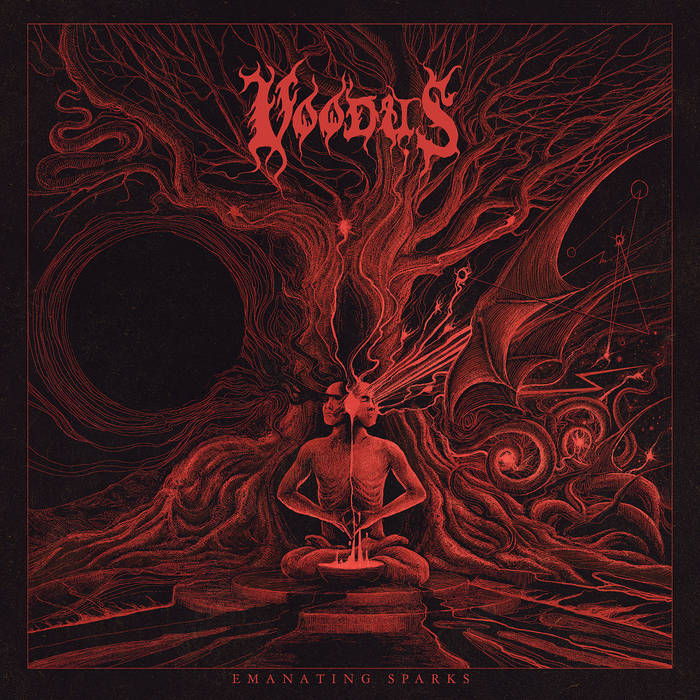
Modestly melodic Swedish black metal that ups the game as far as their own standards are concerned. The overall packaging is still thoroughly domesticated, renting a generous helping of ideas from ‘The Somberlain’ whilst flattening off its longform ambition in favour of crowd pleasing speed thrills, anthemic heavy metalisms, and just enough darker aspects to provoke intrigue. The production, although deep and polished, retains a grain of roughness, allowing the sugar coated sheen to hide behind a layer of grit. But despite the immediate impression of mediocrity, Voodus are more adept than most in the contemporary climate when it comes to developing their material in clean, logical sequences. Riffs convey a clear sense of identity and intention, the music flows with a captivating sense of energy, and each choice – even if aesthetically bland – makes sense in context. From this perspective, we could characterise Voodus as masters of the average. It’s a mid-tier take on extreme metal that nevertheless remains engaging, staving off further criticism by virtue of at least organising what little assets it has with an internal consistency.
Throne: That Who Sat Upon Him, was Death
Out 21st March on Redefining Darkness Records
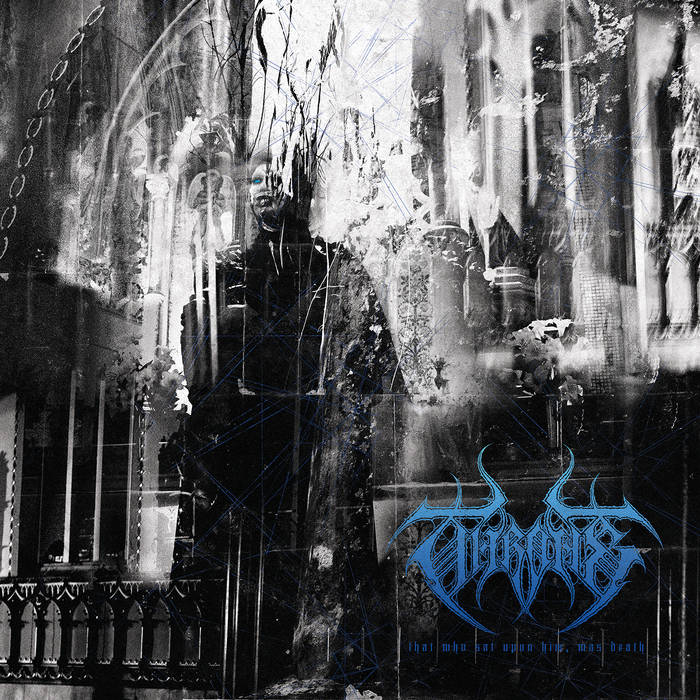
Attempts to rework off-the-shelf melodic black metal riffing – or death metal depending on your perspective, think Necrophobic or Dissection – with the rhythmic confidence of brutal death metal. Whilst not the most imaginative way to reinject melody and character into the latter, in this endeavour it is not entirely unsuccessful. Riffs that would be at home on ‘Slaughter of the Soul’ find a rebuttal through mild dissonance or the disruptive bipolar artillery of Suffocation. Where Throne excel is in injecting a clear development across their stylistic palette. Where this falls down is precisely that stylistic palette. Being in a sense too broad, they become beholden to it, meaning that the articulation of a clearer intention across the album is lost for the sake of hitting as many genre calling cards as they can muster on the borders of their uncanny clutch of extreme metal influences. A voice is there, fighting to reach the surface. But it remains too smothered by fan service to be anything other than incidental to the dominant theme of needless eclecticism.
Osgraef: Reveries of the Arcane Eye
Out 21st March on Amor Fati

Although aligning with Teitanblood and Archgoat in the promo blurb, this perhaps owes more to something like Belial who, in the most trivial sense, perfected the whole “what if black metal but with a death metal aesthetic” thing. But maybe less banally, Osgraef achieve that rare thing in a modern band trading on this same territory in that they combine the veneer of overwhelming chaos with a melancholic lyricism. Whilst the balancing act is hard to achieve, it remains striking within this particular branch of black metal for combining sheer power with a lingering sense of tragedy. Primal riffs can get by with only minimal structural coherence, as long as they link up in logical sequences. Atop this restrictive framework must be placed simple harmonic material that obeys the muscular flow beneath whilst fleshing out a dash of colour. Too much and it would fall into empty sentimentalism. Osgraef manage to stay their hand, forcing an uncomfortable open-endedness to the resolution of each passage. The listener is left feeling oddly pensive despite the blatant saturation of combative noise they have just endured. A rare hit in a genre that so often comes up wanting.
Teitanblood: From the Visceral Abyss
Out 28th March on NoEvDia
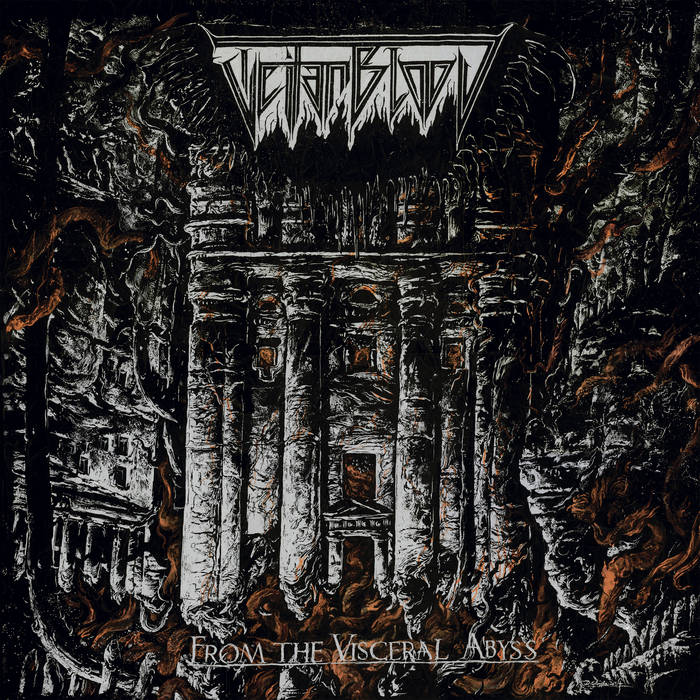
The status of this band within the underground is not hard to understand. War metal’s limited but unmistakable calling cards made its exploitation by anyone looking for a shortcut to novelty all but inevitable by the early 2010s. When chaos and extremity become ends in themselves, the door for caricature opens. Teitanblood happily walked through, offering parodies of Blasphemy, early Beherit, and VON on their first few releases that a novelty hungry audience were happy to jump on. Since spectacle was the goal and only lasting result, there was very little left to say about them for commentators attempting to frame the substance instead of spraying their reviews with fatuous hyperbole. Here we see much the same entity attempting to exercise a modicum of restraint. The format remains decidedly “Opeth”, lengthy tracks consisting of unrelated vignettes stitched together to create the illusion of size and majesty. But across a number of these individual episodes Teitanblood at least make a show of writing some riffs. I’d speculate that this is down to the addition of new members, who knows. The substance of said riffs is passable enough despite lacking finesse. But the overall picture remains as confused as ever. The fireworks and riot of noise will receive the usual plaudits from the same clueless dilettantes that handwaved Blood Incantation’s latest efforts. Both albums that could have been designed by Homer Simpson attempting to shove all the biggest, most attention grabbing aspects of different unrelated styles together for all the grace they bring to their chosen artforms.
Svar: In the Land Called Night
Out 28th March on Nocturna
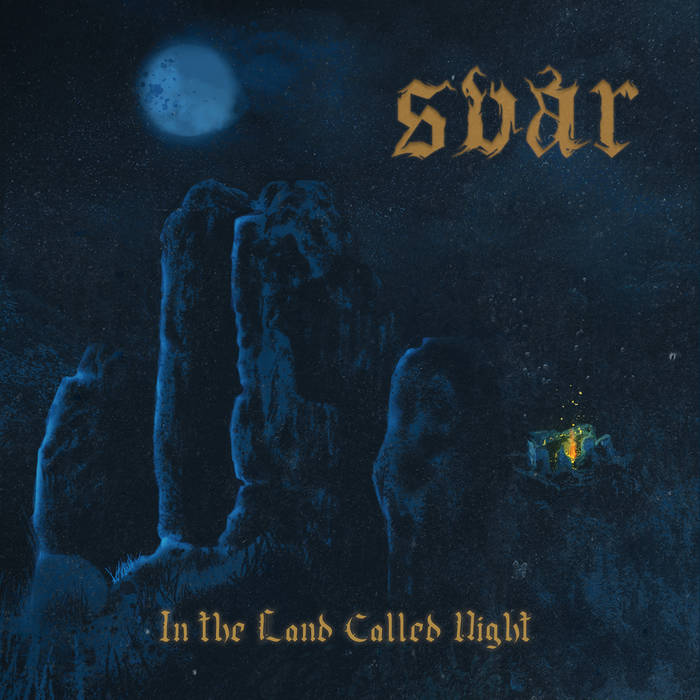
Bears comparison to Ultra Silvum for its reimaging of darkly melodic black metal as a playful interplay between a simple two chord shift, trading on the contrast of pitch to layer up complexity as ornamental material gradually compounds on itself until the piece is forced to move into a new sequence of events that open out the landscape of possibility. In this sense, although it remains an ancestor of Swedish black metal with all the archaic gothic traditionalism this entails, it drags this style into a modernist setting through its greater comfortable relationship with ambiguity and “modern” musical conceptions of play and whimsy. In this sense, classic metal and even elements of 70s album rock function as background influences, adding a degree of oddly emotive flair behind the trickster pose of the music at its most immediate. In this regard, the album also eschews the open, echoey production of more typical melodic black metal in favour of a close, tight space, fixing the listener in place and thus restricting their view to only the material that’s immediately before them. Whilst on a personal level I find this aesthetic hallmark less appealing, I can appreciate the attempt to toy and develop a form beyond what mere expectation demands.
Urn: Demon Steel
Out 28th March on Osmose Productions
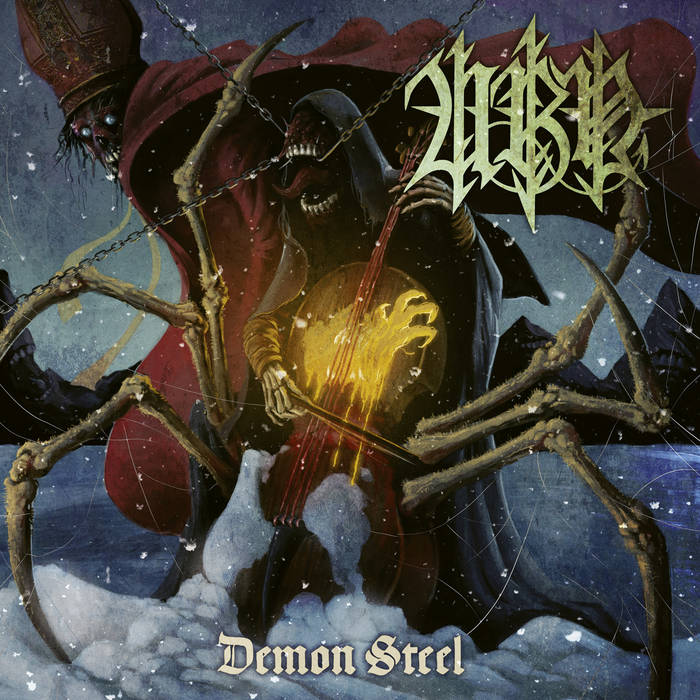
Revamps the speed metal of Sodom circa ‘Persecution Mania’ with a modern symphonic black metal flair, along with the requisite skirmishes into classic heavy/power metal territory for the sake of showcasing the extensive lead guitar material. As an explicitly retroist affair, the experience of ‘Demon Steel’ is more convincing than most. Where it excels, beyond replicating blackened heavy metal content with a readymade audience, is the ability to create subliminal tension in an arena that is essentially crowd pleasing. Plenty of riffs take up space, delaying resolution for longer than typical for what is effectively commercialised speed metal. The vocals feel restrained, spreading the conclusion of stanzas beyond the field of comfort. Simple and subtle tricks that go a long way to undergirding an album of popcorn metal with a degree of nuance, warranting of this album more than a little cursory listen.
 Hate Meditations
Leave a comment