Scheusal: Urwahn
Out 3rd March on Purity Through Fire

Supplements the playfully abrasive punk of Ildjarn with a tragedian melodic signature. In this sense there is an oddly modernist swagger to the presentation, a mechanical order speaking more of concrete and machinery than organicism. This is something only emphasised by the predictable precision of the simple drum patterns, foregrounding industrial consistency despite their energy. A very human despair creeps between the cracks owing to the simple yet lyrical poise underpinning many of the riffs. Vocals attempt to inject urgency and high drama, but due to their consistency and aggression would be equally at home on industrial adjacent iterations of black metal as they are on what is otherwise a bouncy, medievalist take on the form. In this sense ‘Urwahn’ weaves an interesting path between competing interpretations of raw black metal despite its explicit austerity.
Mortuaire: Monde Vide
Out 7th March on World Eater

Muscular doom oriented death metal (although not enough to go further with that assessment) that seems aware of the impact of modernist metal (sludge, post metal etc.) on the permutations of the genre in the 21st Century, although not entirely beholden to these events. Accents and bracketed phrases pay lip service to the expectations of a metal audience more in love with the idea of death metal than the form itself. But underlying this is an intimate and creative understanding of Incantation adjacent death metal, one equally liable to reference the wonderful rudimentary tangents of early Asphyx as they comment on the futility of the overarching project of the composition. Themes are stated with heavy handed emphasis, but by the second track ‘Pyramide d’Or’ one gains a confidence in Mortuaire that loose ends will either be tied together or exploded in unexpected developmental material or conclusive finales that justify the labouring of the preceding points of emphasis leading up to the fact. Traditional harmonic material and pleasingly brief guitar leads complete the picture, bringing a sense of wonder and high drama to this project of landscaping, the impact of which is felt all the more thanks to their being used sparingly. A solid articulation of what death metal in 2025 should probably sound like, aware of both the past and contradictory currents continuing to rack the genre to date, without falling into the pitfall of over emphasising either competing impulse.
Death Pulsation: Demo
Out 7th March on Caligari Records
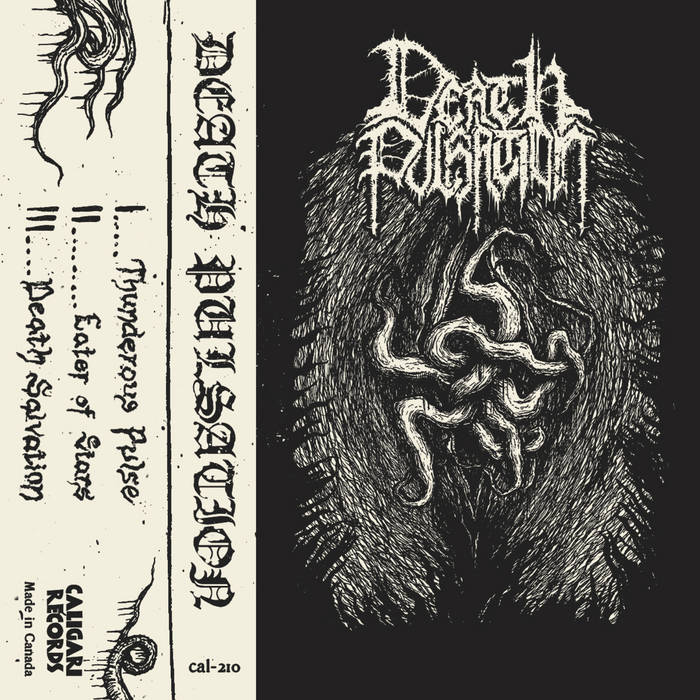
Superfluous reassertion of the Angelcorpse model of shaving off any development Morbid Angel made in their early career for the sake of retaining the unbridled ferocity pulsating through an album like ‘Altars of Madness’. Riffs are crafted from basic micro chunks of chromatic material, meeting their development through simple shifts to higher pitches as a way to achieve both contrast and intensity in lieu of a tempo change. The latter of which, when it arrives, signals key moments of transition, as the track evolves into a more chaotic, bipolar version of itself through the lens of half time breakdowns allowing at least some space for thematic development. But ultimately, the music’s calling in life is entropy, as each chaotic element, initially bottled into tightly constricted cubes, suddenly unfurls into competing polarities of high and low end, jagged and meaningless guitar leads as the picture grows increasingly dense. Competent but brief, this demo adds little to the form but promises an artist able and willing to engage with its norms even if new interpretations are not yet forthcoming.
Wÿntër Ärvń: Sous l’Orage Noir – L’Astre et la Chute
Out 7th March on Antiq
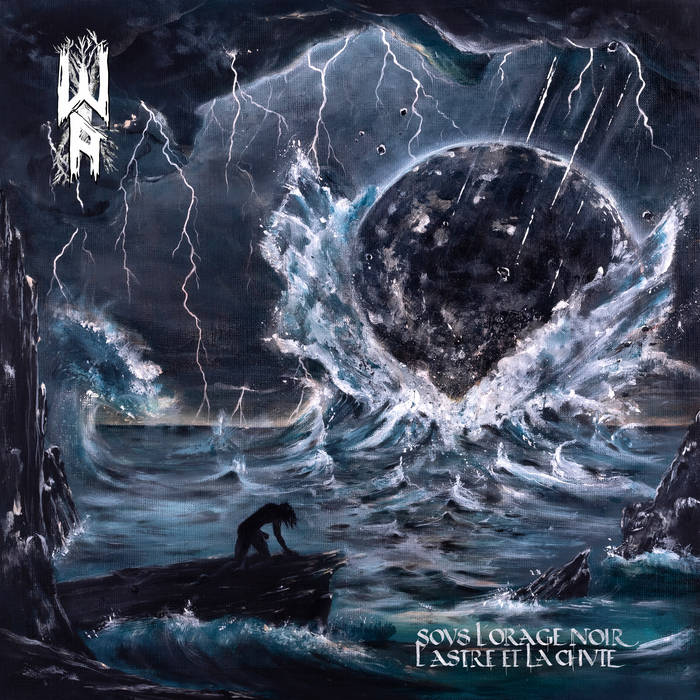
Although the acoustic guitar remains the backbone of the Wÿntër Ärvń formula, this album makes a point of bringing a wider assemblage of instrumentation to the fore, from greater use of strings, to bagpipes, percussion, and woodwind. The pattern remains largely instrumental, with only some unwelcome black metal vocalisations occasionally invading an otherwise wordless space (why do neofolk artists keep doing this?). The melodies themselves remain modestly lyrical, pivoting on very simple pop-folk lines that in turn find their enrichment through accompanying harmonies. This creates the foundation for additional instrumentation to work to their timbral strengths, initially providing decoration to the main theme before gradually elevating the piece to an ensemble effort of competing yet complementary projects unfurling within the same space. In this way songs development with a clear narrative intent, working very much like songs in the true, folkist sense of the word despite the largely sparse vocalisation throughout. It’s in this regard that Wÿntër Ärvń continue to mark themselves out, eschewing the fanfare and lavish academic studies of larger neofolk acts without allowing these pieces to rest on their minimalist laurels of simple acoustic arpeggios.
Soerd: Keldrikojast
Out 7th March on Signal Rex

From Bathory via early Immortal, some Eastern European momentum, and a melodramatic vocal punch that retains a degree of mystical dignity, Soerd are attempting to cover a lot of ground on this debut. A general mood of frayed urgency is retained throughout, almost willing the listener to regard the music and allow a sense of heroic urgency supplemented by tragedy to imbue their mindset. But at the pragmatic level, Soerd have work to do in order to convince us that each piece is a coherent unit. Integrating dramatic transitions and unexpected handbrake turns are a useful tool in the compositional arsenal, but here they are deployed as the only means to transition a track from one phase to the next. Stitching together ideas is perhaps the hardest element of rudimentary composition, one reason why it comes up to so often in critical analysis. But here it is worth pointing out due to Soerd’s efficacious use of early Norwegian calling cards with a degree of Baltic modernism and a restrained emotive edge all their own, something expressed not just through the vocals but the occasional unique melodic refrain that brings a new perspective to otherwise highly familiar material. There is enough here to spend time with this album, but the task of ironing out their clunkier edges remains to be undertaken.
Whipstriker: Cry of Extinction
Out 7th March on Hells Headbangers

Essentially what Venom would sound like if Cronos was gifted with a more finessed backing band. This brand of speed metal, reaching back to early German thrash as much as Venom themselves always comes across as 70s metal wearing 80s metal clothing. The latent punk elements come from the original wave of punk in 1976-77 as opposed to the updated hardcore variants to emerge just a few years later and the long shadow they cast over early extreme metal. Equally the sense of melody has not yet shaken off NWOBHM euphoria, with lead guitar material reaching for the heroic and hopeful in stark contrast to the fretboard murder of Hellhammer et al. Vestiges of a mid-80s vintage are traceable, but are for the most part buried in a classicist flourish attempting to compensate through its violent delivery, speed, and chasmic atmosphere more than anything substantive in the music itself. Whether Whipstriker’s intention has always been to redo the early 80s but better, or produce a carbon of this era is by the by. They slot neatly into metal of this vintage and add nothing new to the form that should be worthy of anyone’s time, at least anyone not interested in rerun culture.
 Hate Meditations
Leave a comment