‘Голос сталі’ (‘The Voice of Steel’) is one of the best metal albums released this side of 2000. One facet of its genius lies in its ability to work with and combine styles of metal I generally regard as vulgar, populist, or otherwise unserious into profoundly epic statements, sonic panoramas rarely seen in contemporary metal (although the album is fifteen years old by this point). A concoction of black metal, folk, progressive rock, and heavy metal comes together for an outrageously unrepeatable moment.
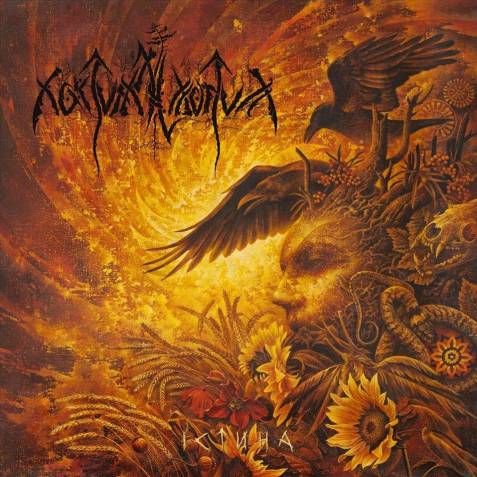
It works for all the reasons its successor ‘Істина’ (‘Verity’) fails. By the early 2000s, a vague milieu of semi commercially successful extreme metal was coalescing around black metal’s popularisation of history and myth as conceptual inspirations. Viking metal is undoubtably the clearest articulation of this, and is in many ways emblematic of the loose definitions surrounding this movement (sometimes referred to as Wacken metal). Elements of black, thrash, death, folk, and heavy metal combined in an endless pageantry of historical caricatures, and fragments of Northern European history recombined into easily digestible pop metal formats both sonic and material. Concurrent to this was a professionalisation of metal cosplay. Where corpse paint first appeared as mere dramatic affectation, a way to supress the self as a means of enhancing performance, band fatigues developed image into the realm of cosplay, expensive garments, props, and assorted bespoke apparel crafted by specialist retailers. A categorially different thing to the sloppy corpse paint of Sarcofago or even the Viking swimsuit modelling of Quorthon.
‘Verity’ brings together all these elements – both musically and aesthetically – into a bloated dirge of an album. Despite being only five minutes longer than its predecessor, the experience extends achingly into time, with each new laboured passage opening up another barrage of unrelated content in need of unpacking. What made ‘The Voice of Steel’ so unique was the focus on a rigid structure to each piece, with each adornment (folk licks, synth lines, progressive rock tangents, and jaunty rhythmic shuffles) being placed in context specific to its strength, elevating or enhancing a passage as opposed to completely arresting its momentum. All elements work in a finely balanced monument to the art of arrangement as much as composition. The considerable runtime breezes past as a result.
‘Verity’ dispenses with this fine craft. It’s as if the dams have been breached, allowing different cultural streams to mix and merge with little regard for how they could fit together. Themes, pacing, intent, all are lost beneath an endless conveyor belt of content. One loses their place within the piece, with each fresh deviation only amplifying the near total disorientation.
If ‘The Voice of Steel’ was a detailed and multifaceted epic narrative, ‘Verity’ is like waves crashing against a coastal wall. There is a discernible pulse and variety to each new build of energy. But the topography is so degraded, subject to so many variables that it becomes little more than ambient mulch.
Creepmime essentially picked up where Paradise Lost left off on ‘Gothic’. Their debut ‘Shadows’ boasts a similar drab groove, juxtaposition of boisterous guitar wankery alongside deadpan doom riffs, and driving rhythms constantly interrupted by sluggish, funereal marches of rainy inevitability. It’s akin to a sequence of frantic spates of productivity punctuated by chronic relapses into an inactive depressive malaise. The pulse of this music mimics the swings in mien one is liable to experience in the winter months of Northern Europe.

What Creepmime bring over and above their West Yorkshire peers is that sense of grandeur that only continental European death metal seemed willing and able to articulate at the time. The time in question being both the pinnacle of death metal as a creative force and the starting gun of its long, laboured decline from 1993 onwards. English death metal not wholly indebted to punk (i.e. not Bolt Thrower or Pintado era Napalm Death) always suffered from a kitsch undertone, a national pastime underpinning English humour and satire, but near fatal for a freeform exploration of high death metal in the neo-romantic sense of the word.
Creepmime’s Dutch angle [sic] on ‘Shadows’ resolves this contradiction in ways both subtle and profound. The music is not without humour. Indeed, their use of jaunty rhythmic groove to prop up achingly depressive riffs is at times almost absurdist. But it is their melodic persistence that marks this album out, wresting the at times needlessly lavish lead deviations of a Greg Mackintosh into a more focused place. Whilst the contours of the melodic currents may be levelled out, they extend their temporal ambition through the interchange of basic licks that function like genetic memes, cropping up time and again throughout each piece, taking on new meaning and significance in each new context. The result is a surrealist journey in the literal sense of smashing the domestically familiar against a totality of alienating forms.
The bluntness of the rhythm section serves its purpose well in almost parodying the vaulting ambition of the lead material, as the music splits itself apart and reforms in ever more mutated patterns. Creepmime had not yet extended into the progressive entity found on the follow up ‘Chiaroscuro’, which essentially realises the vision that prog era Death were never capable of articulating. For this reason, ‘Shadows’ remains an idiosyncratic iteration of dark, goth infused Northern European death metal along with the likes of ‘North from Here’, ‘An Evil Shade of Grey’, or indeed ‘The Ending Quest’.
Chilean thrash par excellence that combines elements of early Kreator with a progressive underbelly kept in check by a strict adherence to a need to eke out logical structures beneath the genre’s inherent will to destruction. A linear, driving rhythmic offering keeps this in line with the classic iteration of the genre at the height of its powers in the mid-80s.
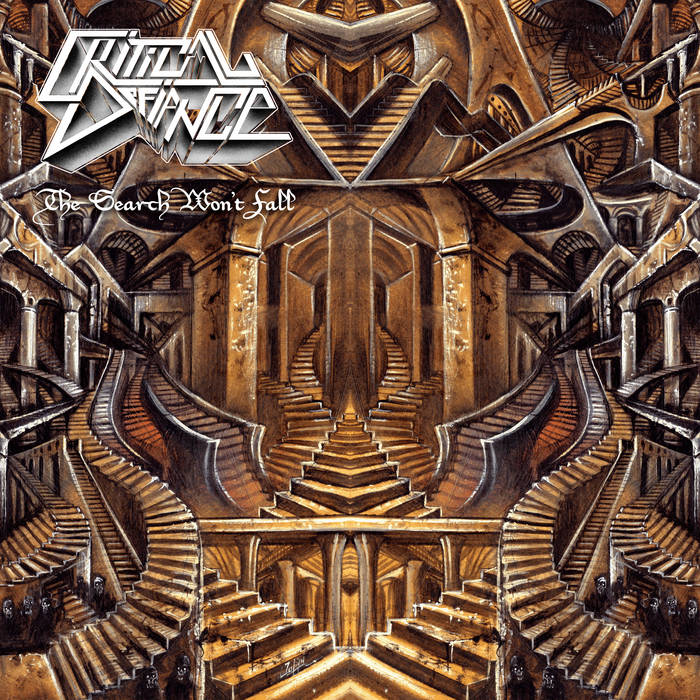
Thrash in its most mature state is arguably death metal. For that reason the genre has always retained a near terminal retro poise, exploited by an entire ecosystem of party thrash redundancies leveraging metal tropes for cultural and social media capital. Chilean thrash – and indeed much thrash outside of the anxiety inducing Anglosphere – retains the capability to sound strikingly modernist. An unfiltered, fearless articulation of the genre’s strengths as the realisation of heavy metal’s adventurous spirit through the injection of atonal punk energy, freeing it from the strictures of cadence or traditional melodic arcs.
But it retains a throughline of logical, repeated themes posing as proto verse/choruses, defined as clear milestones within each song, but surrounded by a plethora of supplementary information culminating in a densely complex narrative prospect. Critical Defiance are masters of balance in this regard. Leveraging classic speed metal riffing, progressive tangents, a hint of proto death, and choppy, percussive punches lifted from hardcore and crossover. This is marshalled together into a pleasing array of metallic detritus cut up from the last forty years of music history and repackaged in uniquely contemporary forms. The familiar made unfamiliar, the gauche made sophisticated, the simple made complex, and the old renovated in authentically new iterations.
 Hate Meditations
I too have often thought what could be the root cause of such a dramatic difference in quality between Golos Stali and Istuna even though the basic elements are pretty much the same. My best answer so far is that keyboard player and multi-instrumentalist Saturious was no longer with the band since 2014, and judging by the band’s output before and after that date, it was probably him the individual that deserves the credit for keeping cheesiness and entropy to the exact amount needed on Golos Stali and also on previous efforts.
LikeLike