Devotion: Astral Catacombs
Out 22nd April on Memento Mori

This Spanish death metal curiosity returns for a much welcome revamp on their third offering ‘Astral Catacombs’. Despite the aesthetically tech-death cover art, Devotion walk the line between chasmic death/doom and the muscular, mid-paced earthed death metal of early Morgoth or Bolt Thrower. But Devotion are of note chiefly because they refuse to be beholden to their influences, despite satisfying the stylistic cravings native to this branch of death metal. Simple two or three chord link passages of slow, chugging, low-end rhythm guitar usher us into more elongated melodic material hinting at an almost drab lyricism, working in a proto call-and-response contouring with the guttural vocals. Understated but creative lead guitar work brings layers of welcome harmony, adding a dash of colour to an otherwise atonal world. Despite the slow, almost ponderous approach to rhythm, the drums manage to slice the music into jagged, choppy intersections that add a much needed sense of disorientation to what can at times be quite linear compositions. But this latter is a feature and not a bug of death metal slow both in spirit and ontology. Meaning that Devotion take great pains to drape an imperious gloom over these pieces, embroiling them in an almost oppressive despondency. But this is underpinned by a substantive, well defined compositional core uniting to elevate ‘Astral Catacombs’ above the usual conveyor belt of empty gestures that is chasmic death metal in its current state.
Culto Licántropo: Culto Licántropo Eterno
Out 25th April on Sacrilegio Records
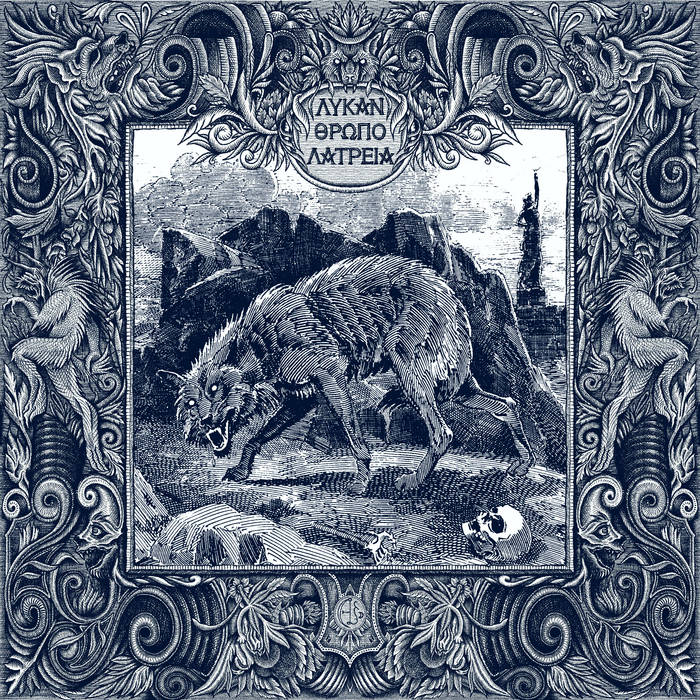
Solo project of Cóndor’s Antonio Espinosa Holguín. Weaves a fascinating tapestry of suggestive raw black metal by enhancing the underlying riff package, leveraging what feels like elements of doom and death metal to elevate the melodic topography of this notoriously stale subgenre. This being a short two track EP, the project is left incomplete, but the lingering feeling that we are witnessing the germinal of something important is unavoidable. Whilst many passages are formed around the familiar mid-paced blast and tinny, tremolo riffing, they are defined by a sophisticated lyricism that, in a different setting, would almost be catchy. But this technique serves merely as a framing device rather than a crutch. The meat of these pieces pivots on what can only be described as experimental – in the literal sense of the word – lo-fi metal. There are hints of the baroque underpinning found in Cóndor, but where that project is imbued with a cathartic brightness, Culto Licántropo Eterno maintain a focus on weaving together glum lamentations from the raw materials of the black metal genre. This is constructed not so much from an exchange of riffs, but by using melodies as memetic forms, a virus that transmits from one measure to the next, slowly evolving and developing as the piece progresses. The rhythm, whilst deliberately faltering, is kept linear and incidental in order to foreground these tentative tonal evolutions. Rarely do artists manage to work in the aesthetic territory of black metal whilst hiring out toolkits from other genres. Perhaps this is because Culto Licántropo are somewhat going beyond metal here via a marked alchemy between folk, medievalism, and contemporary experimental electronica.
Cave: Cave III
Out 25th April on Centipede Abyss
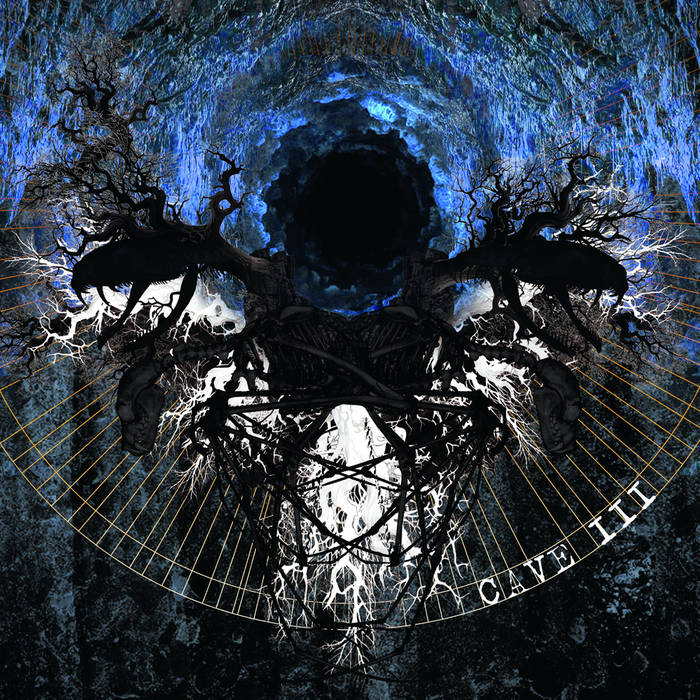
Surrealist death/doom from the violently prolific Jared Moran. The doom metal portion of the flavour profile really comes from explicitly avant-gardist breakdowns of dissonant noise rock. The rhythmic underpinning being tangential, tentative, lacking the regularity of the slow drive to inevitability that defines the majority of doom metal proper. Such conscious disorder is echoed in the riff matrix, which centres on waves of fanatical dissonance lacking a coherent tonal centre, delivered in drones at both the high and low end, as if desperately trying to bring themselves into cogency through sheer will. Such acute anomie is offset by mid-paced runs of minimalist grind. It would probably be too charitable to liken it to death metal, so deliberately minimalist and anti-form is the presentation. Simple single or two chord exchanges serve as welcome respite from the shapeless, angular wails of guitar noise framing each piece. Occasionally riffs that would be at home on a Suffocation or Morbid Angel track seek to emerge from the cacophony, distant echoes of older forms, decaying beyond memory into myth. Guttural vocals complete the picture, seemingly delivered at random, revelling in the opportunity to bring disorder into sharper relief.
Beholder: Dualisme
Out 26th April on Avantgarde Music

Serviceable chimerical black metal slotting into the current craze for dense, riff driven stylings delivered under a banner of neoclassical imagery. Light dissonance meets fragments of threnodic melodies borrowed from gothic doom, spliced together with the logic of death metal. But like much of this style, for all the ability, passion, content, and apparent effort, it leaves one feeling cold. This is because Beholder commit the all too common sin of mistaking a surplus of ideas for sophistication. As a result no thought is given to how each piece comes together. The title track is a case in point here. Having worked through some so-so passages of bracingly fast, vaguely dissonant black metal, it collapses into a laboured doom finale, driven by a simple yet effective riff, creative drum fills, and a gradual build of swirling lead guitar. But this passage feels completely unearned. It certainly works as an isolated sequence. Indeed, it’s better thought out than most in this regard. But nothing ties it back to the preceding material. And so it goes. Familiar faces crop up across the course of ‘Dualisme’. From Nordic black metal to Celtic Frost to medievalist licks. But the dearth of central dictates, a thematic message borne out in the organisation of these tropes is absent, leaving naught but a bucket of tangentially related content beholden only to the most qualified of organisation.
Mons Veneris: Ascent into Draconian Abyss
Out 1st May on Signal Rex
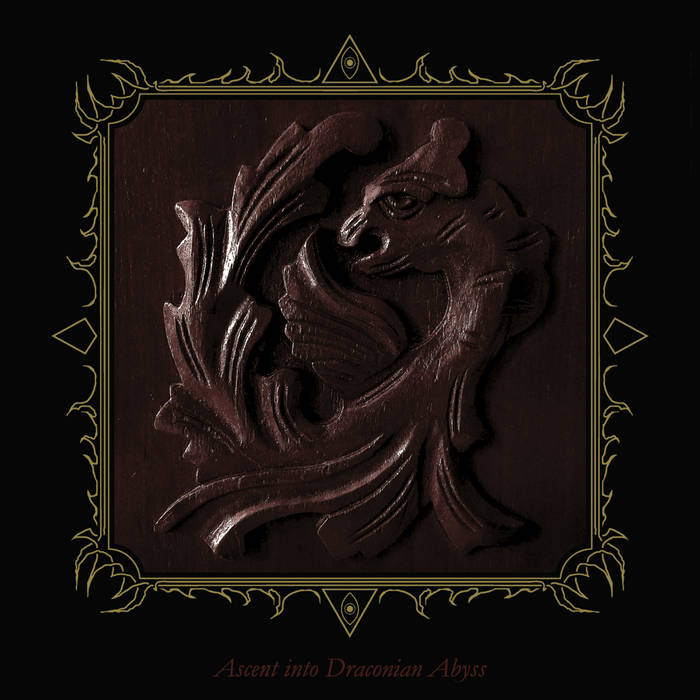
‘Ascent into Draconian Abyss’ finds this Portuguese black metal content mill on surprisingly restrained form. The raw black metal framing is intact, as are the overt references to Les Légions Noires. But – unlike their previous full length offering – there is a clear attempt to shepherd these inherently entropic raw materials into a place of order, allowing space for reflection of sorts. The presentation is still abrasive as ever, with an overbearing, buzzing guitar tone (in that it literally sounds like a bunch of wasps), immediate drums, and very little in the way of atmospheric framing. But the riffs, despite their drab aggression, circle around descending melodies with one foot in violent punk and the other in spiritual despair. The poorly tuned guitars inject the otherwise mournful grace of the melodies with an air of the pathetic. This is enhanced by the frequent deployment of intentionally(?) flat clean chanting, enhancing the integration of spite and lamentation. But there is still a sense in which Mons Veneris are shorter on ideas than all this frontloaded affectation would have us believe. About two thirds of the way through the titular twenty minute opener they run out of black metal riffs, instead resorting to chord progressions with an off kilter quirk that would be at home on 90s post grunge, bringing about a moment of grim lucidity that all the poor tuning, trebly guitar, and melodramatic vocalisations can’t disguise. The music switches from stupidly audacious in the finest black metal tradition to unequivocally silly without warning. I would love to say it’s worth it, as Mons Veneris do deliver some truly leftfield riffs that bring the material to life. But such moments are a little too scant to make the excavation project pay off for the listener.
Ossilegium: The Gods Below
Out 3rd May on Personal Records

Fast, bracing, proudly melodic and decidedly militaristic, the debut album from Ossilegium is an example of exemplary execution that lacks flair. Despite this album drawing on the proud traditions of Dissection, Sacramentum, or Necrophobic, certain riffs jump out for the fact that they seem to be playing for time (or at one extreme could belong on Abbath era Immortal). That being said – and considering this is not an easy style to master – Ossilegium put the work in to bring their material to life, injecting strong melodic currents to juxtapose against simple blasts of two chord riffing. One can follow the thread of each piece as it works itself toward a logical resolution, one motivated by both intensity and contrast. Fragile leads play a small but important role in unravelling the energy of the opening riffs, ensuring that power is transferred from one movement to the next in both convincing and novel motions. In that sense, the only real shortcoming of ‘The Gods Below’ is the logical element. Each riff works as a self contained unit, and links effectively with the next. But one can’t help but “think along” with Ossilegium, knowing which riff to place where, which contrast will work best, when to cut to a mid-paced section, when to drive forward into a blast-beat, when to deliver soaring lead material, aggression here, emotive release there. All works well on paper, and indeed often jumps off the page for its sheer elegance, but all feel placed for their utility over their creative novelty. As one reaches the dual lead attack of ‘The Winds of Astaroth’, one is both cheering the music on for delivering riffs and melodies worthy of the name (a sad rarity in the wider ecosystem), but also left with a lingering sense that we are witnessing a colour-by-numbers. The resulting picture makes aesthetic sense and is certainly pleasing on the eye, but falls short of the real thing.
 Hate Meditations
Leave a comment