After a long silence, underground label La Caverna Records returns with a triple hit of demos from the early Colombian extreme metal scene.
Liturgia: Sanctum Regnum/In Perpetuum
Out 7th February on La Caverna Records (originally released between 1992 & 1994)
Columbian death/doom emerges from the meeting point of barbaric purpose and funereal despondency. Basic atonal riff shapes oscillate between stirring marches of energetic momentum and depressive chasms opening before the listener with each descending chord pattern. Essentially taking the Hellhammer formula and decreasing the tempo considerably, Liturgia treat frugality as a creative opportunity, as the most basic progressions are worked through to a place first of high drama, then of resolution.
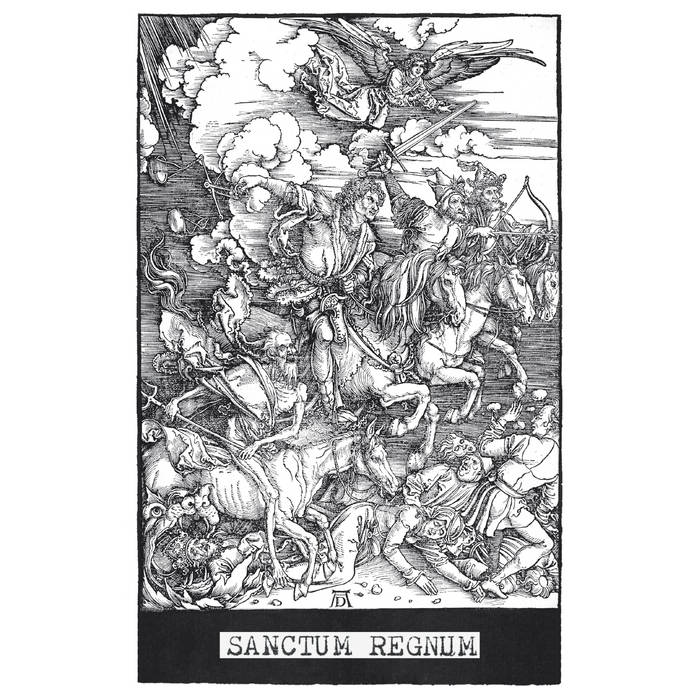
The production, as one might expect, is of demo quality. One can hear the reverb of the practice room behind the drum track as they lurch through simple, plodding rhythms punctuated by moments of utter chaos. Simple fills add a fragment of diversity to the picture, as slow tom rolls and clattering cymbals fill the hole left by dynamics that a richer mix might have captured. The guitar tone, despite its sharp distorted edges, is capable of carrying the oppressive weight implied by the droning doom segments. The lack of any ornate effects – something the recording would not have been able to accommodate in any case – allows us a full, undistracted view of fledging extreme metal at its most primal. Vocals offer a bite of aggression, working through gruff barks of desperate import, broken up by the occasional wail of high drama or manipulated, demonic undulation.
Despite the importance of atonality within these pieces, a comparison could be drawn with early Varathron for the mixing of primitive Celtic Frost divergences – via early Samael – with an aspirational, almost regal sense of its own significance. This is epic in the truest sense. Not a lavish application of strings, orchestral ephemera, or painfully drawn out runtimes. The longform intent behind these compositions is clear, as themes – basic as they are – are gradually unpacked and reworked through a series of stop start segments that link logically into the next. A finale, usually characterised by near total loss of control, brings these elements to a shocking conclusion, before the music is brought back from the brink to a place of control and poise, recapitulating the original idea, now viewed by the listener in a new light following the journey taken through the dark corridors of each piece.
Ataraxia: In Pulverem Reverteris
Out 8th February on La Caverna Records (originally released in 1992)
Raw death metal communicates the contours of archaic melody around breaches of feral madness. The illogical, stop/start chromaticism of early Beherit is echoed on this demo, along with guitar solos that evolve from near random note clusters to a facsimile of intent. Ataraxia are not so much using contrast as a simple framing device as they are demonstrating an intentionality behind the most nihilistically violent moments by bookending them with formalised tonal refrains borrowed from medieval music.
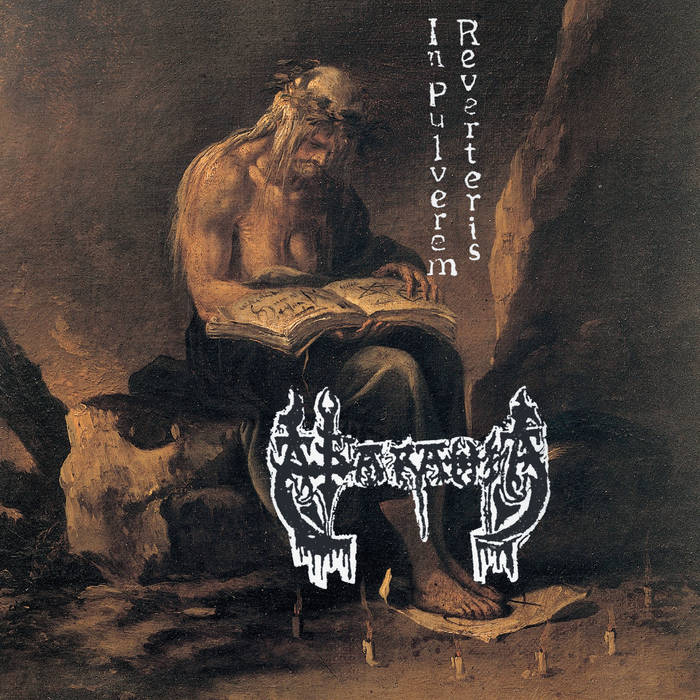
Production is worth remarking on only insofar as – whether intentionally or not – it enhances the appearance of these musicians’ near total loss of control over proceedings. The demo quality of the recording is not completely beholden to the logic of the lo-fi capture. There is enough solidity and clarity to give voice to the more refined moments scattered liberally across these pieces. But make no mistake, the overall impression is as raw and backwards as they come as far as early death metal cassette rips go. The vocals circulate around a muscular, guttural percussiveness, occasionally breaking out into bursts of declarative grandstanding between breaks in blasting energy.
The constant interruptive approach to drumming is liable to engender frustration. Just as the riffs appear to be building to a place of gathering momentum they tend to drop out entirely, forcing the music into a drone of weighty doom material. But upon sustained listening this rhythmic punctuation begins to make sense as a way to force the guitars into a place of surrealist melodic expression. It creates space for bizarre leads to rise out of the mulch, articulating everything from desperate howls of despondency to surprisingly refined lyrical structures borrowed from Northern European folk or early baroque topographies.
At the macro level, this demo communicates an interchange between premeditation and loss of control. The former frames the latter not through coercion but through refined lamentation. The melodic contours surrounding this amorality are forever weaving back to an arcane sorrow. Far from impotent grief however, there is a dignity and undeniable idiosyncrasy to the commanding presence these themes hold over the pieces as a whole that makes their interaction with the barbaric, grinding death metal backbone all the more engaging to behold.
Barbarie Medieval: En la Oscuridad…Un Lamento/La Barbarie Continua
Out 8th February on La Caverna Records (originally released in 1994)
Approaches heavy metal from a similar starting point to the early Hellenic scene, albeit from the anomic perspective of death metal as opposed to the self-confident fluidity of black metal. The wellspring of antiquity, a means of communicating multi-dimensional ruminations on the nature of quest, journey, strife. Simple melodic refrains accumulate energy despite their inherent fragility, riding on the underlying waves of rhythmic pulses like characters in a story buffeted by the course of events. But their narrative arc ultimately wins out in grabbing the attention of the listener, as these themes gradually build to resolutions that hold sway over the entire direction of the music.
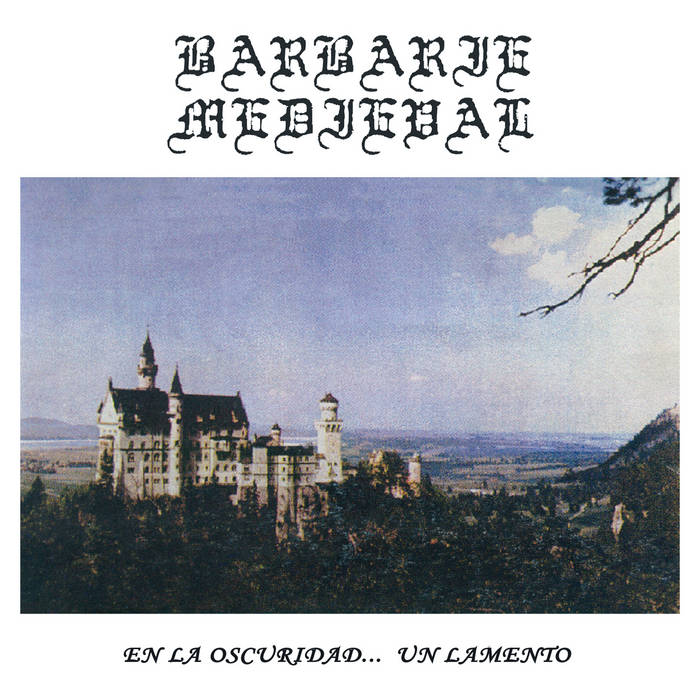
Barbarie Medieval mirror early Rotting Christ in their ability to unpack utterly modest refrains, almost catchy in their lyricism, and allow them to carry the entire piece down a windy path defined by link passages of forward momentum leading into thematic events. Barbarie Medieval take a more jagged, non-linear approach to their Hellenic cousins, which, alongside a rugged atonality, align them closer to death metal.
The production across these demos is surprisingly rich. It retains the rough edges of no thrills fledging extreme metal, but with enough depth and clarity to allow for a greater cinematic exploration of individual riffs as they are approached from various angles. Galloping drums anchor the pieces in a place of continuity, following the guitars in terms of tempo and intensity. The guitar itself adopts a cleaner tone more suited to sophisticated melodic articulation, but one still wholly suited to anomic blasts of lawless violence. Throbbing basslines exchanging harmonic information between each accent grants Barbarie Medieval another lever to pull on in exposing this multi-dimensional interplay. Vocals mirror their Greek peers in adopting a low end distorted howl that still manages to embed a latent melodicism, inseminating an underlayer of drama with each elongated syllable.
The fundamental building blocks of these pieces are about as basic as they come. Sometimes consisting of little more than a two chord interchange. But they are bound together by simple accents that compound on themselves as the rhythmic emphasis develops, carrying themselves forward into more complex, extended forms that eventually thrust the pieces forward into a development section. Lead guitar work rides atop these waves as spontaneous jolts of ancillary commentary, a welcome framing device to events as opposed to structural dictators. It is this very modesty that deceives the listener. The recording may be rough, the playing less than adept. But gradually evolving out of these amateurish building blocks is a nuanced understanding of narrative development, and an ability to use the meshing of older metal styles with the language of extreme metal to weave grand tracts on the nature of being.
 Hate Meditations
Leave a comment