Black metal is post catastrophe music. In this, more than anything, it represented a clear break with the past. Whilst death metal frantically gestured at the limits of a society organised around liberal democracy, black metal assumed its failure had already occurred, and sought meaning beyond the collapse.
Novel as black metal was in this regard, it embedded a planned obsolescence from the outset. One that its key players were well aware of. ‘Hvis Lyset Tar Oss’ probably came the closet to synthesising its apocalypticism with a mature optimism alive to the realities of a “post decline” existence. But the Burzum moment was just that, the briefest glimpse of a possible future never to be fully realised. Following this, black metal split in two. Plagued, on the one hand, by the knowledge of its own increasing obsolescence, propped up on the other as a still viable artform just in need of a little housetraining.
The conflict became firmly entrenched by the early 2000s. Caused in large part by third wave black metal (TWBM) – primarily a product of the USA and Western Europe – embracing the logic of free market capitalism. It saw black metal as a vehicle for individualism, self-expression, self-help. This was a process of mainstreaming that could only be achieved by redefining black metal as an aesthetic form instead of a compositional one. TWBM was therefore essentially a movement in modern rock draping itself in the garments of black metal whilst stubbornly clinging to the optimism inherent to the liberal psyche.
In order to wear the clothes of second wave black metal (SWBM) whilst rejecting its basic premise, TWBM felt duty bound to rehabilitate the music, mark its homework, salvage it from the clutches of a fanbase they deemed to be closed minded and problematic.
This has left an array of open soars. In the press this is presented as a seemingly intractable disagreement, reduced to phrases like “traditionalist”, “elitist”, or “purist”. These proxies lazily characterise the debate as a simple binary between backward fans hostile to new ideas and fans that are open and worldly.
Beneath the buzzwords however, the real stakes of this conflict are about longevity. How does one code longevity into music that has planned obsolescence written into its DNA? TWBM champions answer by pointing to the plethora of black metal since the mid-2000s, from post black metal, to blackgaze, to the many permutations of avant-garde black metal. Sceptics deny these forms of continuity black metal as false profits, aberrations that give too much ground to the requirements of a rockist optimism.
This simmering tension defines the landscape of the modern scene. A feature, not a bug. But is this debate as irreconcilable as it first appears? Both sides generally agree that there is something special about this music, something worth preserving. They are both motivated by the underlying assumption that longevity is desirable, and achievable at least in theory, even if disagreement persists over the validity of how this has played out in practice.
With that in mind, perhaps the balm for these soars has been hiding in plain sight for some three decades now in the form of Summoning.
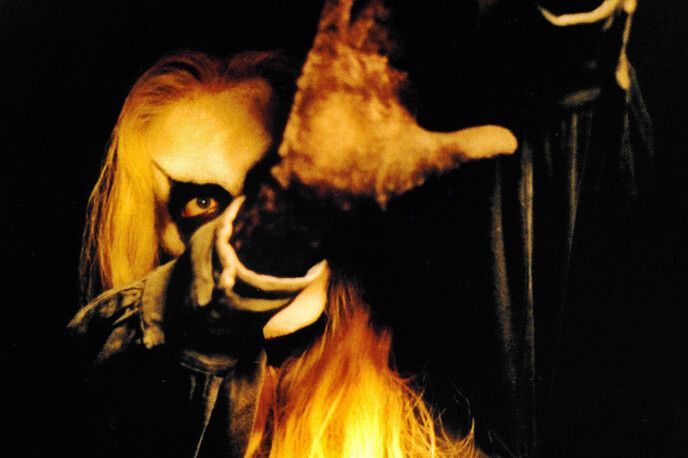
Along with Abigor, Summoning are the most well known alumnus of Austria’s short lived and fanatically eccentric black circle, known as the Black Metal Syndicate. Beneath the notorious idiosyncrasies of these artists, they tended to supplement the tremolo driven winter activism of their Nordic peers with a jagged melodicism, defined by a marked medievalism and frantic, almost manic outbursts of energetic poise. Dense but taut, veering from cadential phrasing to a fraught tonal ambiguity which allowed it to dance around the idea of optimism, hint at it, tease at it. The violent spirit of black metal was retained, but tempered by a strict loyalty to traditional harmonic forms.
This was a sonic expression of what could broadly be characterised as Heroism, meaning a form of optimism in the truest sense. Stirring and motivational certainly, but not reducible to this. The heroism of Summoning has little use for an individual’s sense of purpose in life. Rather, it took the process of world building to an extreme that black metal had thus far not achieved (with the possible exception of the Hellenic scene). The listener is placed into a vast environment on a Summoning album, free to roam and explore at will. But in being beholden to events greater than the individual, it offers the opportunity to contextualise our atomised experiences within the grandiosity of the universe.
Adding conceptual meat to these metaphorical bones, Summoning married this latent heroism with its most obvious scholar, one JRR Tolkien. Leaning on such a significant body of work gave the music a near limitless well of narrative material to draw upon. But whilst their ability to give voice to Tolkien’s world is unmatched (I’m including Howard Shore in this claim), Summoning’s music is more compelling if we approach it not from a programmatic direction (i.e. treating it as a soundtrack to non-musical phenomena), but as music in itself.
Their unique contribution was to supplement the vast, sweeping, impersonal perspective of black metal with a heroic optimism. This bypassed the apparently intractable duality by denying the finality of SWBM and the individualised self-help ethos of TWBM in one fell swoop. To put it facetiously, they gave black metal the gift of a viable shelf life.
The debut was their most characteristically Austrian moment. A frantic, feral cacophony of galloping black metal. Barbaric yet melodically refined. ‘Lugburz’ is sometimes dismissed as a false start. It clearly resided within the shadow of their Nordic influences, and was the only Summoning album to feature real drums. But it established the cyclical repetitions adding subtle variations with each recapitulation, which later became a Summoning hallmark, here articulated through razor sharp guitar lines instead of the signature keyboards.
Following the anomalous ‘Lugburz’, the Summoning discography can roughly be segmented into three eras.
Era one covers 1995’s ‘Minus Morgul’, the first “real” Summoning album, ‘Dol Guldor’ and the ‘Nightshade Forest’ EP in 1997, together arguably constituting their creative peak. This body of work laid the foundation of Summoning lore. It established their unmistakable compositional and philosophical hallmarks, and set them apart as a truly unique entity in the canon of late 90s black metal. Slow but purposeful, ponderous, at times flowery, yet capable off great darkness, rich in thematic import but elegantly simple in execution.
But these albums embedded a contradiction at the heart of their approach. Summoning contrived a boundless open space for the listener to wander through, but the means of its production were a paragon of bedroom black metal, of the home studio. The programmed drums freed them from the harsh realities of the rehearsal room, let alone a gig circuit. Era one more than any is haunted by artificiality. An unreality of synthetised instrumentation and percussion, shockingly plastic reproductions of everything from harpsichords to brass ensembles. Their music, like all good black metal, transcended these limited means. But for all the sense of scale conjured, the proverbial sausage making was insular and claustrophobic, averse to the extraverted quest metal philosophy emanating from these raw materials.
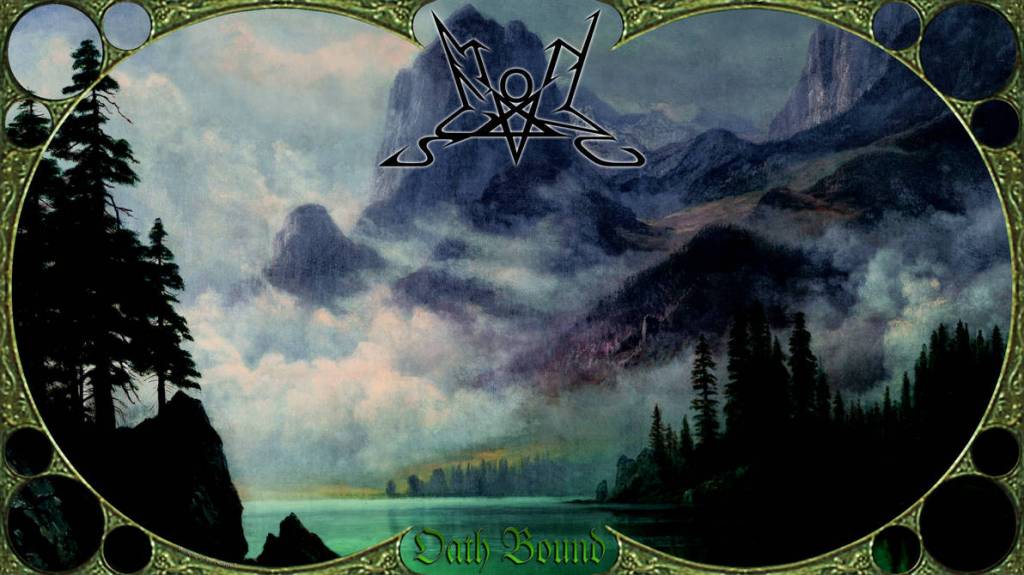
Era two traces 1999’s ‘Stronghold’ through to 2006’s ‘Oath Bound’, accommodating the relatively leftfield pop folk of ‘Let Mortal Heroes Sing Your Fame’. These albums are all highly distinctive in their own right. And that’s precisely the point. Establishing an artistic identity is one thing, developing it entirely another. This can lead to all manner of fascinating deviations. Both members began taking in a wider array of influences, most obviously expressed through their side projects. The martial ambient of Silenius’s Kreuzweg Ost, the darkwave of Protector’s Die verbannten Kinder Evas and the EBM light of his Ice Ages project. These and other neofolk divergences began bleeding into the Summoning format. And on three occasions these cross pollinations achieved a facsimile of success. Each album falls short of blazing an entirely new path. But all three albums were strong statements on their own terms whilst revealing new and unique conceptual avenues ripe for exploration.
After a long hiatus, their third and final era (at the time of writing) covers 2013’s ‘Old Mornings Dawn’ and most recently 2018’s ‘With Doom We Come’. In one sense this constitutes a system reset, in another this is an attempt at modernisation. The budget may be bigger, and with it the dynamics, range of timbres, technical complexity, and overall fluidity of the compositions.
But ultimately these albums still speak the same language as era one. Summoning were responding to a contemporary desire for authenticity. The folk elements are clearly reaching for a more organic, naturalist sheen, a far cry from the jaunty artificiality of their first era, gradually consigned to the “charming” category in a post Wardruna landscape. They craft a slick textural offering capable of competing with modern metal’s cinematic, sincere, polished emotiveness. Despite this, the initial magic of Summoning is retained. As my podcasting buddy Tyler characterised it, “they still manage to evoke the feeling of wandering through a world you have never visited and yet somehow miss”.
But far from a balance sheet of successes and failures, their body of work should instead be viewed as a thesis on black metal longevity. Not simply a consistent band with a long career behind them, but one that demonstrated how black metal can reach forward, stabilise, and evolve whilst remaining loyal to its unique post catastrophic origins.
Few have taken up the call. Summoning have their followers certainly. From clones such as Caladan Brood and Emyn Muil, to intellectual ancestors in Midnight Odyssey, Druadan Forest, or Obsequiae, to a loose collection of bright but content-light folk metal in Saor, Eldamar, or Sojourner. But similar to Darkthrone’s populous offspring, the majority of these artists understand Summoning on an aesthetic level rather than a spiritual one. Ironically the most accurate practitioners of their legacy remains the scattered digital micro scene that is dungeon synth.
Summoning’s career presents black metal with as many challenges as it does possible futures. For one, the contradictions between the naturalist spirit and the artificial means of production. This may not be as intractable as first appears however. All art, to varying degrees, must contend with a discord between its material circumstances and the message it attempts to convey. For second, many would dismiss them as mere soundtrack fodder for the works of Tolkien. Although Summoning remain an entirely separate artistic prospect, living in the long shadow of a more significant and complex cultural institution makes forging meanings from their music outside of this shadow all the more challenging. For third, their music has a tendency to inspire nothing more than naïve escapism over genuine spiritual yearning, a duality they have never decisively reconciled. But I’d argue that refusing to resolve this tension fuels their underlying profundity. The skill and duration with which Summoning have managed to thread this needle makes them truly unique.
In purely utilitarian terms if nothing else, their idiosyncratic approach to black metal provides such an obvious roadmap away from SWBM’s planned obsolescence. It remains a wonder that aside from a small crowd of imitators, few have seriously attempted to grapple with this legacy.
 Hate Meditations
For all of the complaints about redefining black metal in retrospect, I find it hard to believe that whatever was happening with the early days of black metal stretched very far beyond the purely libinal drives of 17 year old kids. The entire magic of it comes from its raw, incoherent, and subterannean voice struggling into form – something unique to young people, maybe boys in particular. This is probably one of the most singular and individualistic moments of any musical genre that I can think of, which is a part of its now universal appeal. The way you’ve characterized it as making broader appeals is at best a byproduct of something more personal and at worst a complete fantasy.
To the extant that I agree with you, I think all of metal lives in the long shadow of its defining moments and that the contradictions inherent in those moments go unresolved. Summoning is an interesting case for many of the reasons you commendibly outlined, but then again, this isn’t Bach.
LikeLiked by 1 person
I can’t think many bands that have inspired a triple albumful of tribute, like the “Homage to Summoning“.
LikeLike