The album
II: Chemognosis – A Shortcut to Mushrooms
Out 26th January on Naturmacht Productions
The current climate of allegedly experimental metal rests on a form of vibe alchemy, this amounts to little more than remixing various textural and aesthetic flourishes, applying them to genres that have remained unchanged for nearly four decades. Despite the praise this receives in less discerning quarters of the metal press, without a fully realised concept marshalling these contrasting forces into an artistic vision, the resulting stylistic chimeras look more like creative indecision or even freeloading than they do strokes of genius.
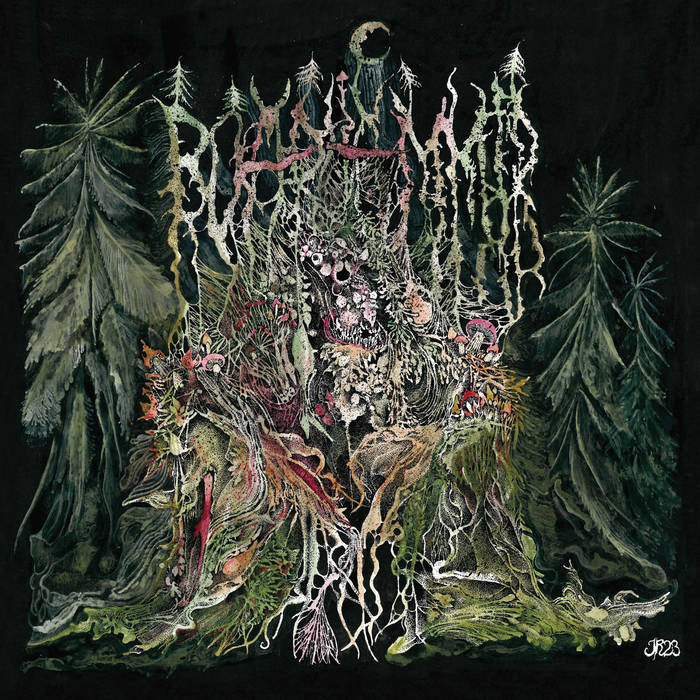
For their debut venture, Boarhammer exploit a murky third way. With the music functioning as a mere accompaniment to a piece of high drama. Extra musical features are so well realised that they form their own centre of gravity, dictating the direction and intent of the artistic whole. A compelling phantasmagoria of occultist metal earns Boarhammer the right to bypass our well rehearsed interrogations on genre loyalty.
That being said, ‘II: Chemognosis – A Shortcut to Mushrooms’ is not entirely agnostic on genre. It traverses the eccentric corners of early black metal, specifically central Europe in the form of Master’s Hammer, Root, and Tormenter. A self-assured heavy metal swagger infects the music with an outrageous self-confidence. Loose psychedelia and even some nods to a stoner metal strain reaching all the way back to early Sabbath knits the album to its rather specific thematic preoccupations: the use of wood in ritual magic. What all these reference points have in common is their fair weather attitude to that fundamental building block of metal: the riff.
Riffs are certainly present and correct in Boarhammer. Some are strikingly well realised. But where death metal or thrash exist entirely by means of a dialog on the nature, form, and order of riffs, Boarhammer treat them as one tool amongst many in their armoury. They provide the backdrop for the spoken word theatrics of the vocal performance. Or else compete for dominance alongside a loose call-and-response topography, a blues holdover still present in some forms of heavy metal.
Alongside this, and chiefly driven by the aforementioned vocals, is a wonderfully disorientating, almost comedically haunting atmosphere stretching its way across the album. Conversational guitar leads, at times reaching a fever pitch of urgency, opinionated percussive interjections, and all manner of amusical ephemera litter the landscape. All of which plays into this idea of dark ritualism. A process of transformation through repetition. A slow and intentional decay of rationality in a desperate attempt to alter consciousness in the quest for new knowledge.
But there is an odd, almost claustrophobic warmth, a veil of comforting familiarity coating the album’s presentation. The production has a homely organicism to it, an intimacy born of the rehearsal room’s informal charm. Again, this is in stark contrast to the sometimes sterile rigidities of modern black metal. And from this casualism comes the lurking dread of possibility, of potential, the threat of the unknown. This world is not under the complete control of the musicians. The incantations and ritual chants evoke the lawless eccentricity of mysticism. The liminal world between the conscious and unconscious, the peripheries of the rational mind at the point where it meets explanatory limits.
It is through this commitment to the moment, maniacal, monstrous, at times almost comedic, that Boarhammer surpass the need for a strict dialog with the intricacies of genre specificity. The commitment not just to their conceptual material, but to melodrama and performance, it is here that the album’s identity is forged, allowing it to informally traverse styles and genres without seeing their work melt into obfuscated mulch. A triumph of occultist performance art told through the language of metal.
And what we learned
The blunt truth is that we live in an age when artistic innovation and progress are not all that common, and usually emanate from a few shadowy corners for brief periods before calcifying into a new norm. Far from being an aspersion on the modern artistic mind, this can chiefly be attributed to material and historical conditions. The abundance of the former and the weight of the latter.
But if we set aside the marketing hyperbole (and their willing stenographers in what passes for today’s media) put in service of metal’s allegedly experimental frontier, what looks like innovation amounts to little more than moving the same old pieces around the board in different configurations.
This is because the majority of modern metal and the discourse surrounding it trades in vibes. These are aesthetic and textural flourishes that can be readily applied to pre-existing genres, which in turn change the surface level feel of the music whilst leaving the core techniques and theory untouched. This is also why metal genres tend to work with the same basic building blocks created in the 1980s. With most innovations since then simply adding a new module or expansion pack to a preexisting genre, hence the exponential rise in prefixes (folk, post, pirate, operatic, goth etc.) over new genres proper (thrash, death, black, heavy).
The intersection between a vibe and a genre can be large, and many seminal albums make effective use of the interaction between the two. Nokturnal Mortum’s ‘Voice of Steel’ for example, is folk metal par excellence, but rooted in a solid foundation of black and heavy metal compositional forms. The rot sets in when the discourse places an artist who does little more than rearrange vibes atop preexisting genres at the vanguard of innovation.
Good metal is relatively easy to put together, truly groundbreaking metal near impossible, and getting harder. This is because each genre communicates in languages established nearly four decades ago. Everything worth saying through this medium has already been said. The temptation to ditch genre development altogether, to take music a-wandering through endless reconfigurations of the same material, has therefore never been greater. But this is a cheat code to originality. The harder – yet far more rewarding – route is to be not only conversant in genre but to add to this language. And as with actual language, the rules are not ironclad, they can be bent and broken, just not as often as metal commentators would have you believe.
The majority of newer self-identifying experimental music sticks close to the rulebook, but cloaks this conservativism with various sleights of hand, whether this be alchemy with other forms of music, or unexpected timbres (a saxophone in death metal for example).
This means that true innovation can sometimes pass us by. It being the result of subtle, gradualist steps toward something wholly new. What made the period from roughly 1985 to 1994 so invigorating was not simply that extreme metal’s foundational texts were written, but the sheer volume and vitality of works that added new chapters. A large number of which managed to achieve a balance between connecting with established languages whilst adding new words and grammar of their own. Whilst this approach is still possible today, the weight of history competing against new releases for airtime makes this task all the more challenging. But then you get releases like Boarhammer’s debut album ‘II: Chemognosis – A Shortcut to Mushrooms’, which completely bypasses both the incrementalist approach and that of experimental pretenders. And they do so via a clear, nigh on fanatical commitment to the moment.
 Hate Meditations
“marketing hyperbole (and their willing stenographers in what passes for today’s media)” – this short caracterization can certainly be applied to any form of art and entertainment in the world of today. Thank you for summing it up so eloquently.
LikeLiked by 1 person
Klaimain91 _ Late ’60s,a Hell’s Angels biker gang drags an opinionated virgin eager to “breaking through to the other side” to a backwoods ancient druid tree for a ritualistic rape.Or the son of a Lemmy/Kronos shamefull one night stand,that neither remembers,met a ’95 – ’00 forest metal band and had a blast,while taking a hearty shit on every other vocalist unimaginably howling only in sync.Perhaps a leather jacketed neckbeard “militiamen” pothead company innocently hunting mushrooms just for fun.I’ll have to listen to them a few more times over till l decide where they leave me,and that’s already a lot compared to 99% of what’s out every month.
LikeLike