A new album from a legacy acts always provides a good opportunity to take stock. Although it must be said that the rate at which older artists “return to form” or “carry the flame” with new material has created a glut of such opportunities lately. But exceptions must be made for a new Godflesh album. Their genre spanning appeal, willingness to engage across borders, ambivalence toward their largely metal audience, and Broadrick’s odd status as experimenter-in-chief within extreme metal (a largely top down narrative imposed from outside the subculture), all this makes for a fascinating swirl of conflicting perspectives whenever Godflesh add to their considerable body of work.
Today they are something of a mascot for a form of coffeehouse metal fandom championed by the likes of The Quietus, Louder Sound, Vice, Invisible Oranges, and the dank underbelly of social media influencers.
Having any overlap in taste with these glorified consumer advice gurus presents an immediate cause for concern. Scanning their content on metal reveals a limited vocabulary, knowledge, and experience propped up by quotes taken at face value from whatever confused aging artist agreed to an interview with them, or else cursory Wikipedia research, leaving any intimate or insightful musical analysis either woefully lacking or dramatically missing the mark, dressed in the language of vibes over form.
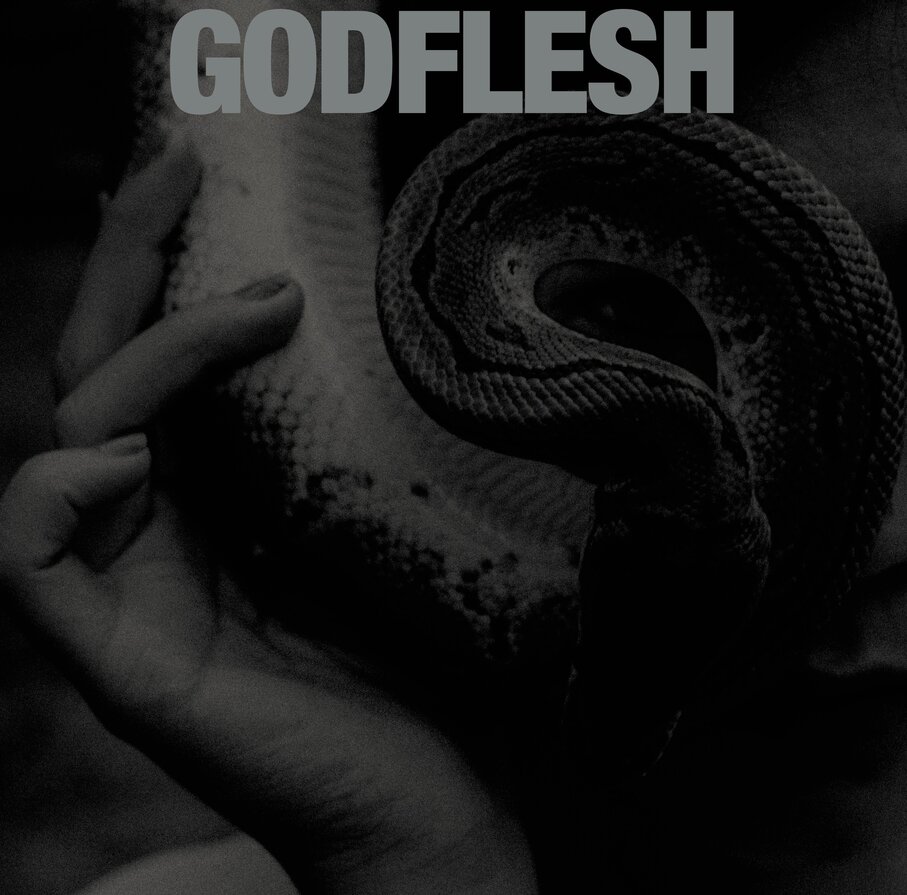
When it comes to the nuts and bolts of just reviewing the damn music and making an evaluative call, the vapidity of this journalism is made apparent. Although Broadrick announced that ‘Purge’ would be a reimagining of 1992’s ‘Pure’, the claim was not borne out by the material despite many in the media swallowing the line wholesale. Beyond regurgitating the band’s own promo blurb, reviewers will tend to offer confused platitudes on the general vibe and style of Godflesh and the usual tedium of marketing hyperbole. But in another, very real sense, the music of Godflesh is tailor made for this style of music criticism.
Metal is a highly form driven music. To be very brief, it is shaped by riffs, and riffs define the structure, and structure defines the meaning of a piece. Subgenres are defined by specific techniques, tones, timbres, and styles. There is much freedom to wander within these parameters, and occasionally (although not as often as media hyperbole would have you believe) an album comes along that smashes the form or develops a novelty to the point of creating a categorically new entity. See Gorguts ‘Obscura’, Nokturnal Mortum’s ‘Voice of Steel’, or Mefitis’s ‘Offscourings’ to name a few post 1995 examples. Accents, flavouring, aesthetics, all are important but secondary to the iron law of compositional forms.
Godflesh by contrast are an entity almost entirely lacking in form, any structure being put purely in service of whatever affectation they happen to be wearing that day. This is with the exception of the universally acclaimed ‘Streetcleaner’, which both articulates a form whilst being the archetype of a form smashing album. Since then, their character and output has always remained peripheral and hard to place. But if we study the form beneath the loaned ephemera, it’s simply alt metal in a variety of different hats, ideal fodder for the hollow vibe chats of modern music journalism.
This is also in part due to the fact that industrial metal is a tag that never established a foundational canon. It became a flavour that could be layered on top of more solidified styles. Industrial metal in its purest form was a promise that never reached fruition. Sonic Violence, Pitchshifter, Skin Chamber, Fear Factory, and Ministry all burnt out or succumbed to pop trappings before they could establish a sophisticated vocabulary.
Or else, in the case of a Scorn and to some extent Godflesh, it became another aesthetic used to adorn linear, beat driven vignettes of limited substance. After the pointed barbs of mechanistic fury that was ‘Streetcleaner’ and ‘Pure’, Godflesh became adept at teeing up a genre concoction only to fail at climaxing it all into a satisfactory artistic resolution. The minimalist post grunge of ‘Selfless’ leads to so much nowhere, the creeping groove metal angst of ‘Songs of Love and Hate’ look stale even by the standards of 1996. The diluted mixing pot of electronica, hip hop, and industrial metal offcuts that was ‘Us and Them’ along with the final capitulation to eco themed groove metal on ‘Hymns’ ended a faltering career with a fitting whimper of indecision.
Post reformation Godflesh offers an equally conflicted picture. Although it’s easy to dismiss ‘A World Lit by Fire’ as yet another flat reunion album, in retrospect the sparse, single minded fury straddling this bulky release has a certain wisdom to it despite the lingering impression of superfluity. ‘Post Self’, cliched title aside, is arguably Godflesh’s most convincing experimental work to date, taking the project in unexpectedly abstract directions to the point that alleged Godflesh enjoyers were unsure of how to digest such a left-field barrage of eccentricity, thus overlooking it entirely.
Running in tandem to all this is a far more compelling subplot of EPs that accent these albums with small provocations. The self titled debut takes an arguably bleaker outlook than ‘Streetcleaner’, presented in a soft, cloying tone of hazy claustrophobia. ‘Slavestate’ offers a vicious concoction of martial doom and minimalist industrial beats, whilst ‘Cold World’ dared to usher melody into the picture. ‘Merciless’ is an out of phase blend of noise rock and drone brought into sharp industrial relief, and more recently the ‘Decline and Fall’ EP offered a tantalising glimpse of a glum, groove driven throb of lackadaisical brutality and abrasively sharp edges, a glimpse at a path not taken for the sake of the blunt object that was ‘A World Lit by Fire’. And so it is with most of these EPs, living in the shadow of the albums that dominate the narrative, aligning them with their Earache label mates in the extreme metal camp out of pure marketing convenience.
So what does ‘Purge’ bring to the table? Tired legacy bands bringing out new material inspires a sense of weariness in me, as I am forced to concoct a take on what will no doubt be another uninspiring slab of flat content creaking under the weight of historical expectation. ‘Purge’, far from being a rewrapped ‘Pure’, – a prospect far less tantalising than Broadrick imagines it to be – functions as a literary review of their entire career. Unfortunately, the experience, far from being celebratory of a lengthy body of work, is the feeling that we may have been duped all along.
Despite the undeniable imagination, masterful arrangement, eclectic mix of influences, and distinctive identity, ‘Purge’ makes apparent that Broadrick may actually have a rather limited creative mind. No matter what angle we approach this from, his work is a constant setup for a payoff that never arrives, a scene that, once set, is never populated by a substantive plot. Each track on ‘Purge’, by mirroring, dumbing down, redoing, or flat out recycling ideas from the Godflesh back catalogue, highlights just how shallow some of these works may actually be.
Even if we ignore Déjà vu, ‘Purge’ looks remarkably phoned in for anyone remotely familiar with Godflesh. When looking at compositional breadth alone – as the metalhead is wont to do – Broadrick may be a limited musician, his output as Godflesh wildly divergent in quality, but one could hardly accuse him of failing to at least attempt to live beyond his means.
There’s a sense in which Broadrick knows that he has done enough by this point to release whatever he likes and be met with the adoration of his target audience (ironically when he genuinely dares, as he did on ‘Post Self’, it is met with crushing ambivalence). And as for that target audience, the loose coalition of cultural floating voters, the non-nativist metal crowd and independent musos have invested too much cultural capital in the Godflesh brand as the thinking person’s metal choice to decry their output at this point. This is a brand that knits together their credibility as open minded and knowing music fans, admitting that one might have been duped somewhere along the way is not an option.
But even if ‘Purge’ is a lurching, clumsy, unfocused delivery mechanism for regurgitated calling cards, it’s a little premature to begin throwing out the Godflesh collection just yet. But it’s certainly worth interrogating the narrative that Broadrick is some shadow genius operating at the nexus of extreme music. More likely he has hit upon a series of happy (and sometimes unhappy but praised regardless) accidents and artistic flukes as opposed to the three dimensional chess of canny genre manipulation.
 Hate Meditations
Leave a comment